
Moving Beyond the Bottle: Your Practical Guide to Weaning
By
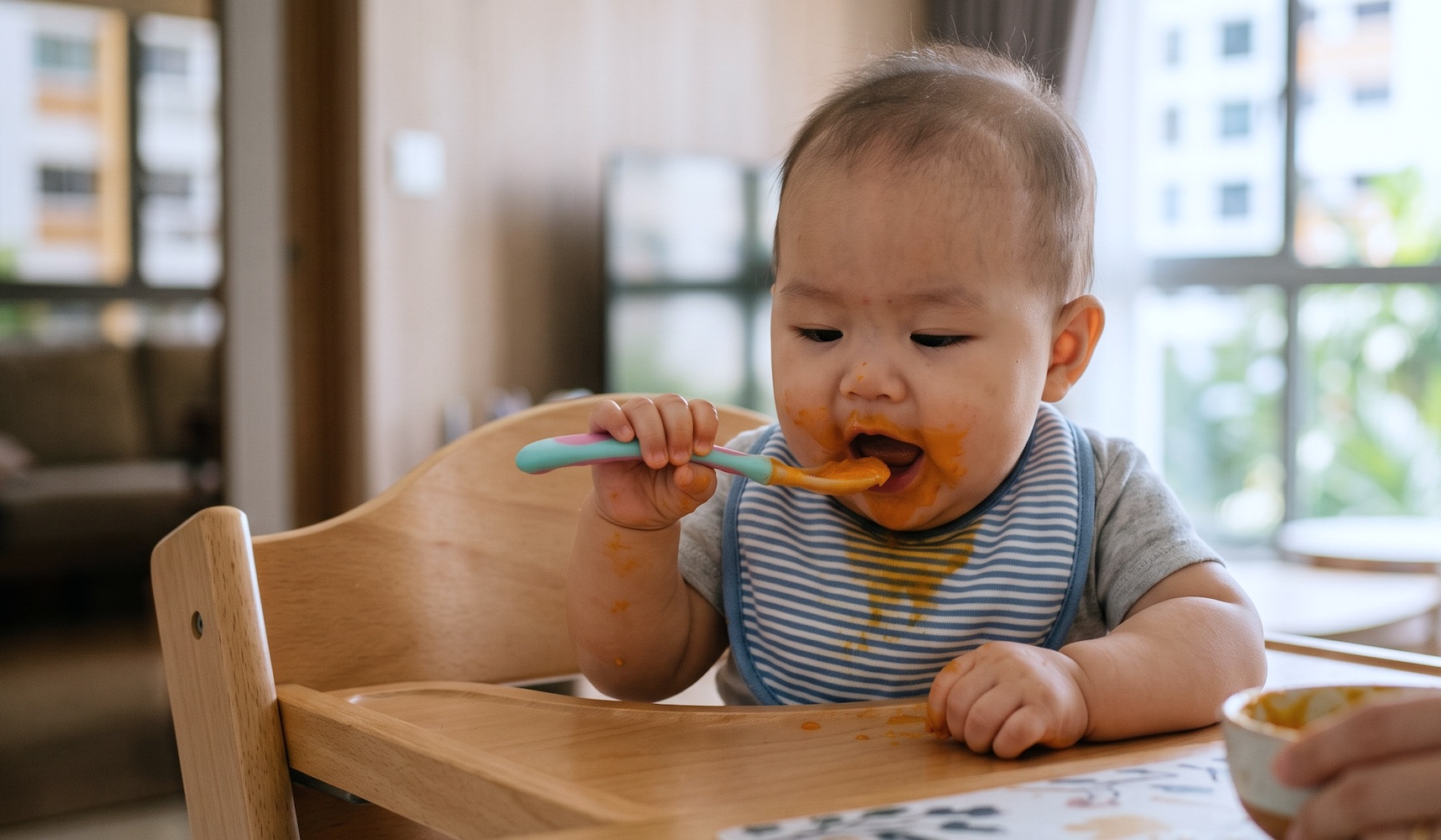
Starting solids feels like a big milestone, but the sudden wave of conflicting online advice can feel overwhelming. You do not need expensive imported purées or specialised blenders. This straightforward checklist keeps weaning safe and highly manageable without disrupting your daily household routines or your domestic helper's schedule.
🎯 1. Read this First
Set your primary mental focus before buying a single puree blender or baby spoon.
-
Food is for fun.Focus entirely on texture exposure rather than consumed volume during these initial months because breast milk or formula still provides the vast majority of your infant's daily nutrition.
🚨 2. Warning Signs
Monitor these critical physical indicators closely to prevent severe allergic reactions or choking hazards during mealtime.
-
Watch for hives.Stop feeding if you notice swelling, red patches, or vomiting.
Seek an evaluation at the nearest polyclinic or emergency room if breathing appears laboured or difficult. -
Identify true choking.Distinguish silent struggling from loud gagging.
If the child cannot make sound or turn blue, administer infant back blows without delay and call for emergency medical assistance. -
Assess trunk control.Do not start meals if your infant slouches sideways in the high chair.
Poor neck stability increases airway blockage risks significantly during the swallowing process.
⏳ 3. Do Ahead
Prepare your kitchen infrastructure, secure the necessary gear, and schedule your introductions before the first spoonful.
-
Check with your doctor.Confirm developmental readiness at the six-month developmental assessment.
Discuss any family history of severe eczema or asthma before introducing highly allergenic items like peanuts or eggs. -
Buy a stable highchair.Select a seat that allows your child's feet to rest flat on a footrest.
Proper 90-degree seating alignment supports safe swallowing and prevents sudden choking episodes. -
Lay down floor protection.Place an easy-to-wipe plastic mat beneath the dining area.
Purée drops will stain floor tiles or condo parquet if left uncleaned during the learning process. -
Plan allergen timings.Schedule new food introductions on weekday mornings.
This ensures local private clinics or polyclinics are open if you need to seek medical attention for an unexpected reaction. -
Stock single-ingredient purees.Purchase plain iron-fortified rice cereal or simple pureed vegetables from the supermarket.
Avoid complex multi-ingredient jars so you can easily trace the source of any digestive issues.
⚡ 4. While It's Happening
Execute these active management steps during the meal to maintain safety and build a positive food relationship.
-
Turn off all screens.Ensure the television is off and smartphones are out of reach.
Distracted infants are much more likely to swallow without chewing properly, raising the risk of gagging. -
Present the spoon slowly.Hold the spoon at eye level and wait for an open mouth.
Never force the utensil inside if the child turns away or closes their lips firmly. -
Remain perfectly calm.Allow the child to gag and cough without panicking or sticking your fingers into their mouth.
Gagging is a normal reflex that pushes oversized pieces forward safely. -
Offer tiny portions.Serve just one or two teaspoons during the initial attempts.
The primary goal is sensory exploration of new textures rather than filling their stomach with solid volume.
🔄 5. Afterward
Follow these post-meal steps to track symptoms, manage the cleanup efficiently, and ensure proper digestion.
-
Inspect the skin.Check around the mouth, neck, and stomach for redness or hives within two hours.
Note down any sudden changes in skin condition inside your digital health tracker. -
Monitor bowel movements.Expect changes in stool consistency and colour over the next day.
Track signs of hard stools or painful straining that indicate your infant needs more hydration. -
Wash the child first.Wipe sticky hands and face before removing them from the highchair.
This prevents mashed pumpkin or cereal from spreading onto your clean sofa or curtains later. -
Store leftovers safely.Discard any purée left in the serving bowl to avoid saliva contamination.
Freeze untouched portions in ice cube trays for no longer than forty-eight hours total.
🚫 6. Don't Bother
Save your mental energy and money by eliminating these unnecessary expenses and outdated feeding practices.
-
Skip specialised baby blenders.Ignore expensive single-purpose food processors marketed specifically for infants.
Your standard household immersion blender or a simple fork works perfectly well for mashing soft ingredients. -
Avoid seasoning the food.Do not add salt, sugar, or soy sauce to make the meal taste better to you.
Infants have sensitive kidneys and prefer experiencing the natural flavours of whole ingredients. -
Ignore clean plate rules.Never stress if your infant rejects the entire meal after two bites.
Forcing them to finish the bowl disrupts their natural ability to recognise fullness cues early.
🧠 7. For Adults
Manage your own stress levels, stay patient, and protect your nervous system during this messy transitional phase.
-
Expect total mess.Accept that food will end up on the floor, walls, and clothes.
Lowering your cleanliness expectations beforehand prevents unnecessary frustration when purees fly across the kitchen table. -
Align with your helper.Brief your domestic helper or parents on the exact feeding rules.
Consistent boundaries across all caregivers prevents confusing the child and reduces your personal management workload. -
Separate your own dining.Feed your infant before you sit down for your own dinner.
Trying to eat your hot meal while managing a messy baby leads to rushed eating and spikes anxiety.
More Parenting Checklists
From school transitions to family trips — get on top of major family milestones with our complete library of practical, zero-fluff trackers.
Operational Guide Only: This checklist is a practical framework designed to streamline family logistics and reduce daily household anxiety. It does not constitute absolute rules. Parental discretion and adjustments should always be made based on your specific circumstances.
Important Medical Disclaimer
This information is for informational and educational purposes only. It is not a substitute for professional medical advice, diagnosis, triage, or treatment. Never disregard professional medical advice, ignore red-flag symptoms, or delay seeking clinical care because of instructions found within this digital tool. In an acute health crisis or emergency, proceed immediately to the nearest 24-hour pediatric clinic or hospital Accident & Emergency (A&E) department.