
The "Upper Primary Shift" (ages 10–12 / P4–P6) is often dominated by the looming shadow of the PSLE, but it is actually the prime window for building island-wide independence and digital savvy. At this age, your child is no longer just a "student"; they are becoming a young citizen who needs to navigate the neighborhood and the internet with a moral compass and a sense of self-care.
Ensuring they are prepared for these milestones is about more than just convenience—it's about mental health. When children have "street smarts" and a solid grasp of their own digital footprint, they feel more in control of their lives. This autonomy acts as a vital counterweight to academic stress, giving them a sense of competence that extends far beyond the classroom walls.
Independent Mobility & Street Smarts
By Primary 4, many Singaporean kids are ready to start solo commutes. This isn't just about getting from home to school; it's about learning how to handle the unexpected—from a sudden tropical downpour to a missed bus—without calling home in a panic.
-
Island-Wide NavigationKnowing how to read an MRT map or use a transport app to find their way to a CCA venue in a different estate.
-
EZ-Link ManagementChecking their own card balance at a General Ticketing Machine and knowing how to top up their funds at the station.
-
Weather PreparednessHabitually checking the weather and remembering to carry an umbrella or raincoat without being nagged.
-
Handling Public Transit DelaysKnowing what to do if a bus is late or an MRT line is down, including identifying alternative routes or using a public phone.
-
Pedestrian IndependenceSafe crossing at unsignalled junctions and understanding the "blind spots" of heavy vehicles in HDB car parks.

Digital Literacy & Ethics
For most P4–P6 students, the personal smartphone becomes a reality. This is the stage where we must move from "blocking" to "coaching." They need to understand that the internet is a permanent public square where their actions have real-world consequences.
-
Privacy SafeguardsSetting strong passwords and understanding why they should never share personal details like their school name or home address online.
-
Critical Thinking (Fake News)Being able to pause and ask "Is this true?" before believing a viral TikTok video or a WhatsApp forward.
-
Cyber-Bullying BoundariesKnowing how to leave a toxic group chat or report a bully, and practicing empathy in their own messages.
-
App-Time Self-RegulationThe ability to put the phone away during dinner or homework without it becoming a major family negotiation.
-
Scam AwarenessRecognizing the common signs of "free gift" or "game credit" scams targeting young gamers.
Kitchen Safety & Personal Wellness
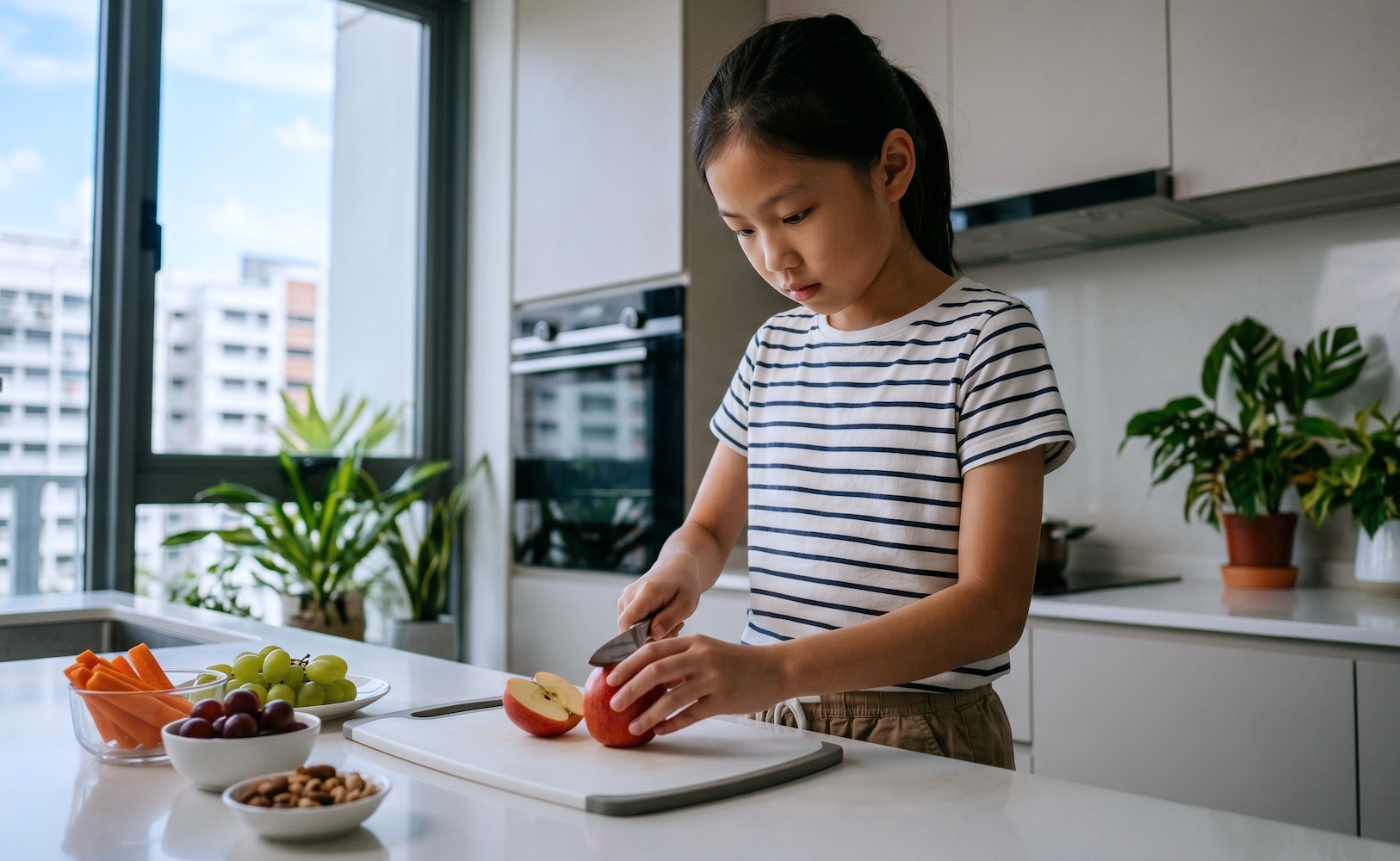
With parents working and kids staying back for CCAs or remedial lessons, Upper Primary is the time to master basic nutrition and home safety. They should be able to look after their physical health and prepare a simple meal if the adults are running late.
-
Safe Appliance UseOperating a microwave, kettle, or toaster safely and understanding what can (and cannot) go into them.
-
Basic Meal PrepBeing able to make a sandwich, fry an egg, or cook a simple bowl of noodles for themselves.
-
Body Hygiene & ChangesTaking full ownership of their daily shower routine and understanding the hygiene needs that come with puberty.
-
Emotional Check-insLearning to name when they are feeling "burnt out" or stressed and knowing how to ask for a break.
-
Bedtime DisciplineTaking responsibility for their own sleep schedule—winding down at a reasonable hour to ensure they are rested for school.
Common Challenges & How to Overcome Them
Managing the transition to Upper Primary often feels like a balancing act between academic pressure and the natural desire for more freedom. Understanding the nuances of this age group helps you guide them toward adulthood without losing the connection you've built.
-
The "PSLE Tunnel Vision"
It is easy for both parents and kids to drop all life-skill learning to focus entirely on exams, which can lead to a child who is academically brilliant but practically helpless.
Try integrating "micro-independence" into their study breaks, such as letting them walk to the neighborhood bakery for a snack or manage their own snack prep to keep their practical muscles active.
-
The Digital Rabbit Hole
With increased phone access, many Upper Primary kids struggle with "infinite scroll" and may stay up late in group chats or watching short-form content.
Establish a "Common Area" charging rule where all phones are parked in the living room by 9:00 PM, helping them prioritize sleep without the constant pull of notifications.
-
Social "Fear of Missing Out" (FOMO)
As friends start meeting up at malls or play areas, kids who aren't allowed to travel solo may feel left out or resentful.
Gradually expand their "safe radius" by letting them go to the nearby library or park solo first, then slowly increasing the distance as they demonstrate they can handle the responsibility.
The Growth Guide
From toddlerhood to young adulthood—get the holistic roadmap every Singaporean parent needs.
Growth Guide: 1 to 18+ Years