
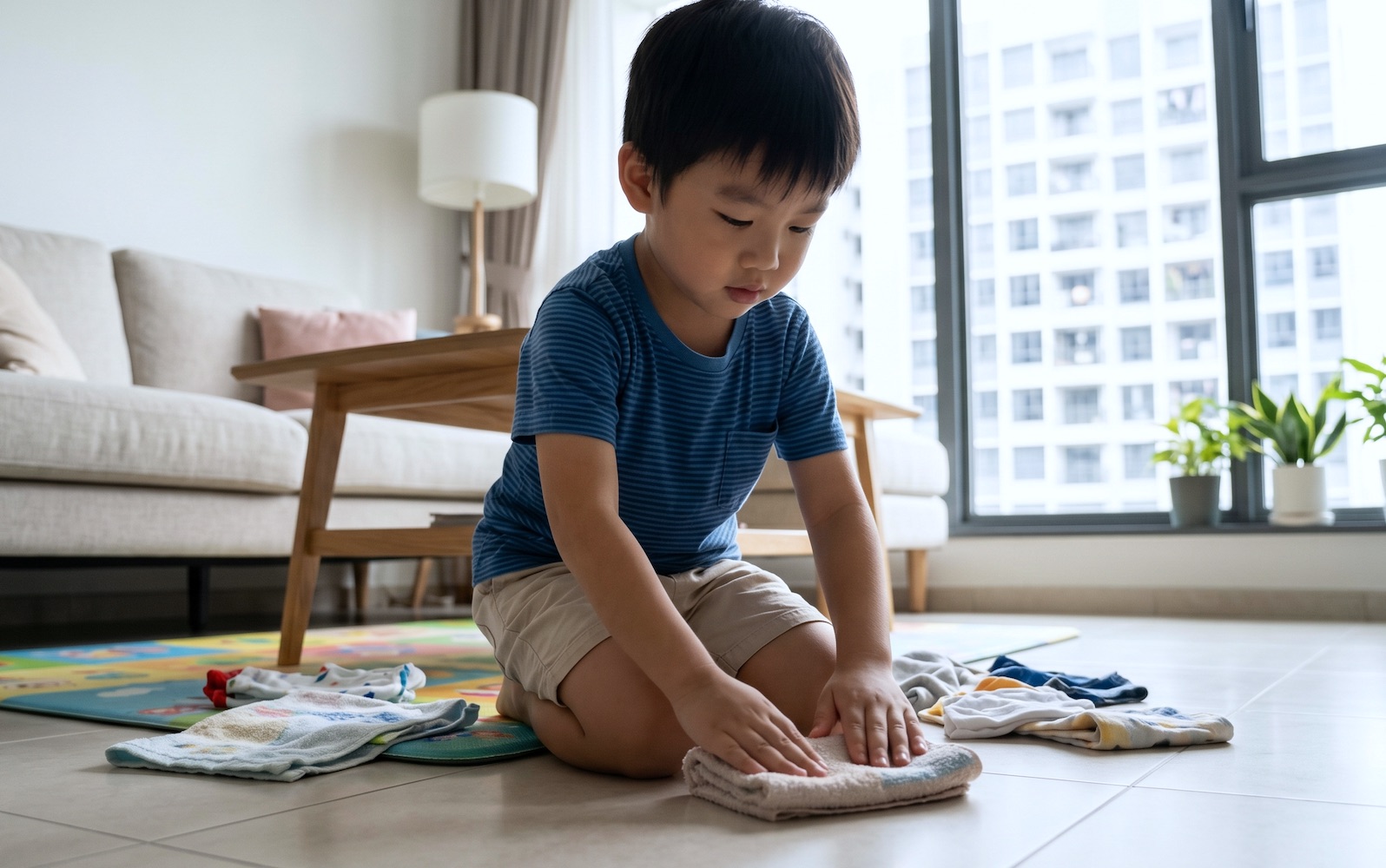
The core focus for children in the "Kindergarten Kickstart" (ages 4–6) is school readiness and personal responsibility. As our little ones prepare for the massive transition to Primary 1, the goal shifts from just "doing things" to "managing things" in an environment that is far more structured and less supervised than preschool.
Ensuring your child hits these milestones early is the best way to prevent P1 "culture shock." When a child can navigate a public toilet cubicle or pack their own bag, they gain the quiet confidence that lets them focus on learning and making friends, rather than stressing over buttons or water bottles. It's about letting them be the "big kid" before that big school gate opens.
Advanced Personal Care & Grooming
P1 uniforms are a significant step up from kindergarten t-shirts; they often involve buttons, zips, and belts. Teaching your child to handle these independently now prevents frantic morning struggles and ensures they can manage themselves after PE or toilet breaks at school.
-
Uniform MasteryFastening buttons, zips, and belts independently, and learning how to tuck in their shirt neatly.
-
Advanced ToiletingNavigating public toilet cubicles solo, including manual flushes and proper cleaning without help.
-
Grooming IndependenceWashing their own face thoroughly and attempting to comb their hair before leaving the house.
-
Shoe CompetencePutting on socks and fastening school shoes, whether they use velcro or are learning to tie basic laces.
-
Personal Item ResponsibilityDeveloping the habit of checking for their own hat, water bottle, and jacket before leaving any location.

School Readiness & Admin Basics
In Primary school, the teacher-to-student ratio jumps significantly. Your child will need to manage their own "admin" tasks that were previously handled by preschool teachers or helpers. Building these habits now fosters a sense of ownership over their daily school life.
-
Simple Bag PackingChecking their bag against a simple daily list or timetable to ensure they have their files and water bottle.
-
Lunchbox AutonomyOpening and closing various types of snack containers and lunchboxes securely without assistance.
-
Multi-Step InstructionsThe ability to listen to, remember, and follow a three-step command (e.g., "Take out your book, turn to page 5, and find a pencil").
-
Canteen SimulationPracticing how to hold a tray steadily and clearing their own plate or trash after a meal.
-
Asking for HelpLearning the social script for politely asking a teacher for help when they are confused or unwell.
Safety Awareness & Social Boundaries
As their world expands, so must their safety skills. Whether they are navigating a crowded mall or the school playground, they need to know how to handle social cues and emergency situations without a parent constantly by their side.
-
Emergency InformationMemorizing their full home address and at least one parent's mobile number by heart.
-
Stranger SafetyUnderstanding the difference between "safe" and "unsafe" strangers and knowing which adults to approach if lost (like a staff member or a mom with kids).
-
Basic Road SafetyLooking both ways and identifying the "Green Man" signal, even when crossing with an adult.
-
Physical BoundariesLearning to say "No" or "Stop" firmly if a peer or adult makes them feel uncomfortable.
-
Identifying Safe SpacesRecognizing "safe zones" in their immediate environment, such as the school General Office or a security counter.
Common Challenges & How to Overcome Them
The transition to P1 readiness isn't always smooth, and "big kid" expectations can sometimes lead to pushback or anxiety. Recognizing these hurdles early allows you to provide the right support without taking over the task for them.
-
Transition Anxiety & "New School" Nerves
Children often feel overwhelmed by the thought of a larger school environment, leading to a temporary regression in skills they've already mastered.
Normalize the feeling by talking through the new routine and visiting the school campus if possible; small "rehearsals" at home of P1 tasks can turn fear into familiarity.
-
The Frustration of "Slow" Motor Skills
Mastering buttons or shoelaces takes time, and many children get discouraged when they can't do it as fast as an adult.
Focus on "effort over speed" by celebrating the attempt rather than the result, and practice these tricky skills during low-stress times like the weekend rather than the morning rush.
-
Reluctance to Speak Up
Some children are naturally shy and may struggle to ask for basic needs, like going to the toilet or needing a Band-Aid, in a busy classroom.
Use role-play at home to practice "finding your brave voice," giving them specific phrases they can use until asking for help feels like second nature.
The Growth Guide
From toddlerhood to young adulthood—get the holistic roadmap every Singaporean parent needs.
Growth Guide: 1 to 18+ Years