
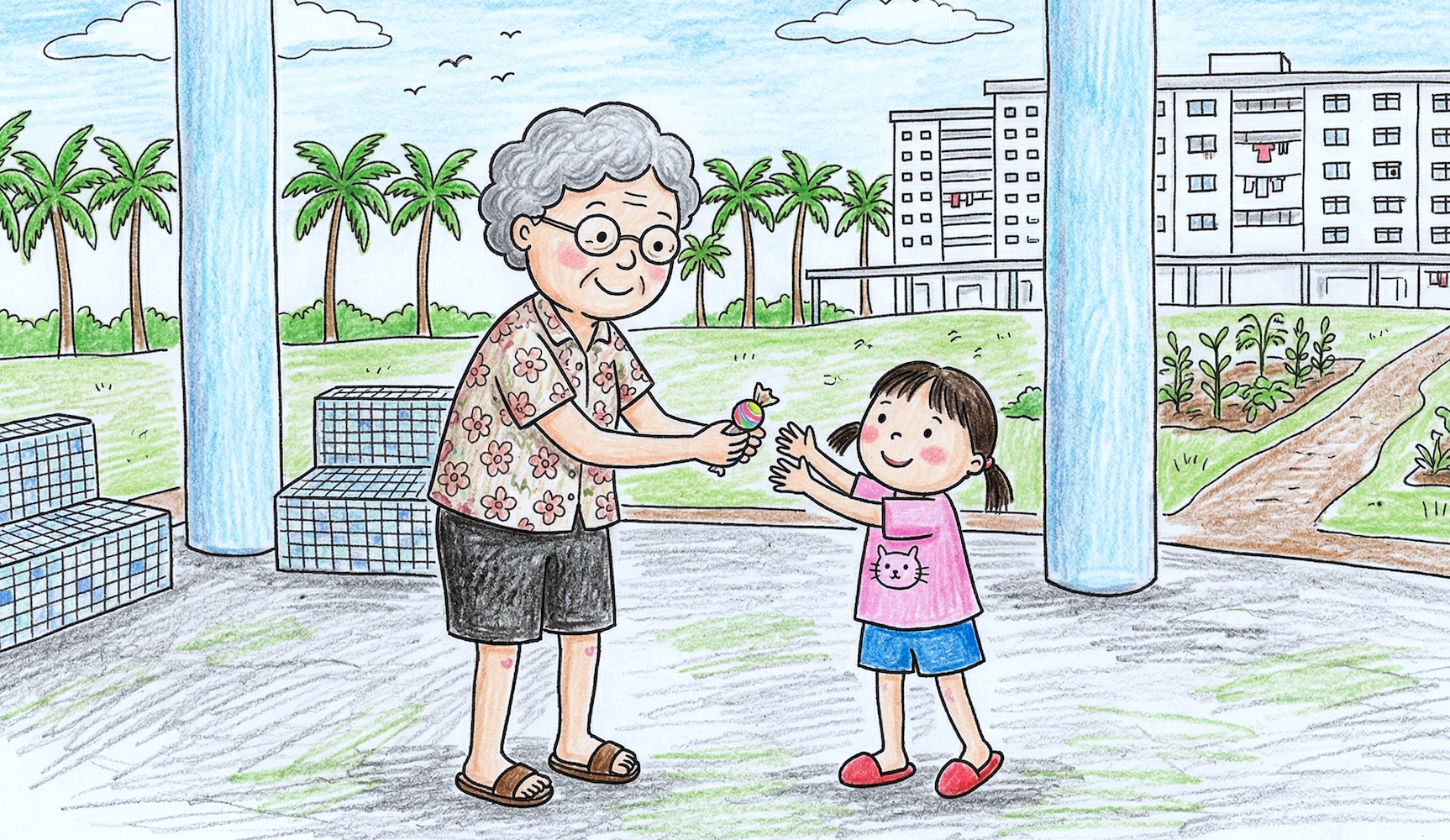
I hear the soft crinkle of a wrapper from the kitchen, and I already know what it is. My nine-year-old son has that specific, mischievous grin, and my seven-year-old daughter is trailing behind him like a little shadow. We had a firm talk about no sweets before dinner, yet here we are. It is hard when you feel like your parenting boundaries are being quietly stepped over by the very people who raised you. You want to keep the peace, but you also want your rules to mean something.
What is actually happening when the wrapper crinkles?
My mother-in-law often thinks she is just being kind when she hands out those forbidden treats. Often, grandparents see themselves as the "fun" department, a role they never got to play when they were the ones dealing with the stress of daily discipline. They are looking for that instant spark of joy in a grandchild's eyes. It is a quick win for them. A way to feel needed. A way to be the favourite.
Sometimes it is about their own upbringing. In many Singaporean households from decades ago, food was the primary love language because words were often too hard to say. Giving a sweet is a silent way of saying, "I love you and I want you to be happy right now." It is rarely a calculated move to undermine your authority, even if it feels like a direct hit to your parenting pride. They might even feel that your rules are a bit too strict compared to how they did things, and this is their subtle way of "softening" the world for the kids.
The lens through which they see that sugar rush
The look in an elderly woman's eyes when she sees her grandson's face light up is something quite primal. If we step back, we might see that they aren't trying to make our lives harder. They are trying to make their own lives meaningful. Instead of seeing it as a breach of contract, try looking at it as a misplaced gesture of affection. They are nearing a stage of life where they want to be remembered for the treats and the smiles, not the broccoli and the bedtimes. It is about their legacy of joy. Really.
My friend told me something that stuck. She realised her parents felt like guests in her home, and giving sweets was the only "power" they felt they had left. When we reframe the intrusive act as a sign of their own need for connection, the anger starts to cool down. It is not you versus them. It is just two different ways of loving the same little people, even if one way involves a bit too much glucose.

Restoring the peace without losing the love
1. Create a Grandparent's Treat Box
Pick a specific box and fill it with snacks that you actually approve of, like dried apricots or those organic fruit leathers. Tell the grandparents that this is their "special magic box" for the kids. It gives them the agency to give a treat without breaking the nutritional bank. This way, they still get to be the provider of joy, but you have curated the menu. It works wonders.
2. The "Grandma's House" Rule
Sometimes it is easier to allow a little bit of slack when the kids are at their house, rather than yours. Make a clear distinction: "At home, we follow these rules, but at Por Por's house, things are a little different." Children are surprisingly good at understanding context. This takes the pressure off you to police every single bite when you aren't there, and it lets the grandparents have their "spoiling" rights in their own territory.
3. Enlist them as the "Health Captain"
Involve your extended family in healthy habits. Ask for their help with a specific health goal, like making sure the kids drink enough water or eat more "cooling" foods. When you give them a "job" that aligns with your goals, they feel like part of the team rather than an outside force. They love feeling like they have a special role in the children's growth. Use that.
4. The "Not Now, But Later" Technique
When you catch them about to hand over a sweet, don't just say "no." Say, "Oh, that looks delicious! Let's save that for after their nap so they can really enjoy it." This acknowledges the gift without letting it ruin the immediate plan. It is a gentle redirect that doesn't make the grandparent feel scolded like a child. Dignity matters. Always.
5. Have the "Why" Conversation
Sit down over a cup of kopi when the kids aren't around. Explain the actual consequences of the sugar—the lack of sleep, the mood swings, or the dental visits. Use "I" statements. "I find it really hard to get them to bed when they've had sugar late in the day." Most grandparents don't want to make your life miserable; they just don't see the aftermath. They see the smile, but they don't see the 10 PM meltdown.
The long game of family ties
The dining table might be covered in sticky crumbs, the juice boxes might be lying empty on the floor, and my son might have that wild, sugar-induced glint in his eye while my daughter jumps on the sofa. It is chaos. But ten years from now, they won't remember the sugar. They will remember the warmth of a grandmother who thought they were the centre of the world. Pick your battles with a soft heart. Is a lollipop worth a broken relationship? Probably not. Just keep the toothbrush handy.
The next time you see that forbidden sweet appearing, ask yourself: Am I more upset about the sugar, or am I upset because I feel like I'm losing control?