
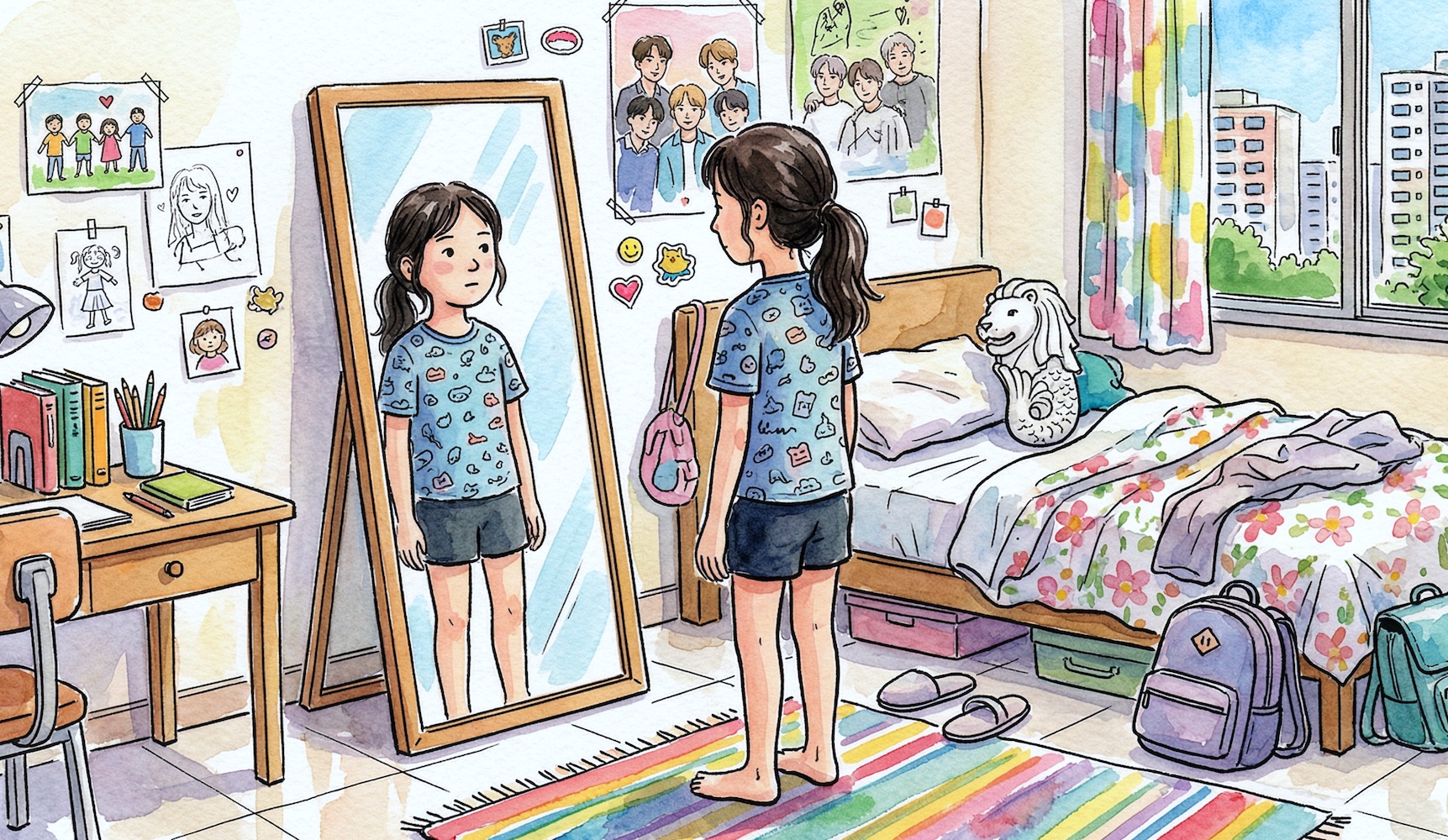
I was sitting at a café in Funan last Sunday, watching a group of girls carefully arrange their iced lattes just to take a photo. One of them looked so frustrated because the lighting wasn't right, her face clouding over a simple drink. It reminded me of a message I got from a mum in my school parent-group yesterday about her daughter crying because her bedroom didn't look like the "minimalist cream" rooms on her feed. It hurts to see them so unsettled. You just want them to be happy with what they have, but the pressure to live a "curated" life is a heavy burden for a pre-teen to carry.
The invisible force pulling them toward the screen
They see these perfectly staged lives during their commute on the MRT or while waiting for tuition to start. It isn't just about clothes. It is about a sense of belonging. The algorithm shows them a world where everything is beige, tidy, and expensive. It makes their own messy desk or the Uniqlo shirt they've worn for two years feel like a failure. This constant stream of comparison never sleeps. It's exhausting for them as it is for us. They aren't just buying a gadget; they are trying to buy a version of themselves that feels "correct" in the eyes of their peers.
What if this isn't actually about the stuff?
Maybe it's not about the fifty-dollar water bottle or the LED strips. When a child asks for these things, they are often trying to figure out who they are. They are building an identity. Think of it as a costume they are trying on to see if it fits. Instead of seeing it as greed, try seeing it as an awkward, clumsy attempt at self-expression. They are just trying to find their place in a very loud world. I noticed this with my own son recently; he wanted a specific brand of bag not because he liked the colour, but because it made him feel like he finally "fit" into the group with his friends in and outside the school gates.

How to turn down the digital noise
1. The "Behind the Scenes" Chat
Sit with them. Watch a few of those "Get Ready With Me" videos together. Point out the ring light reflecting in their eyes or the pile of laundry shoved just out of frame. Show them the mess behind the "aesthetic." Real life is grainy. It is messy. I saw a post on a local parenting forum that suggested asking kids to count how many "cuts" or edits are in a thirty-second clip. It helps them realise it's a production, not a reality.
2. The Orchard Road Reality Check
Take a walk through ION Orchard and look at the window displays. Talk about how professionals spend weeks making those look "perfect" to make us feel like we need more. It helps them see the strings being pulled. It's a game, really. When they see the marketing for what it is—a way to make money—the "magic" of the aesthetic starts to peel off like old wallpaper.
3. A "One In, One Out" Rule
If they want that new oversized hoodie they saw on a "haul" video, they have to find something to donate. It teaches them the weight of things. I looked around my daughter's room and saw the crumpled school socks, the half-finished maths worksheet, the sticky remains of a Milo dinosaur on the nightstand, and the tangled mess of charger cables that seemed to multiply every time I turned my back. Life is loud. This rule forces them to decide if the new "aesthetic" item is worth losing something they already own. Often, it isn't.
4. Focus on "Vibes," Not Brands
If they want a specific room look, help them find a cheaper way. Maybe some fairy lights from a shop in Bugis Street instead of an expensive brand. It turns the "buying" into "making." This shifts the focus to creativity. We tried this with some simple desk organisers from a neighbourhood shop, and the pride she felt in arranging them herself was worth more than any branded item.
The mirror they are really looking into
Your child is looking at a screen to see who they should be, but they are still looking at you to see if they are enough. It's a tough spot to be in. They aren't trying to be difficult; they are just lost in a digital forest. Next time they beg for that "aesthetic" gadget, ask yourself: are they looking for a product, or are they looking for a way to feel seen by me?