
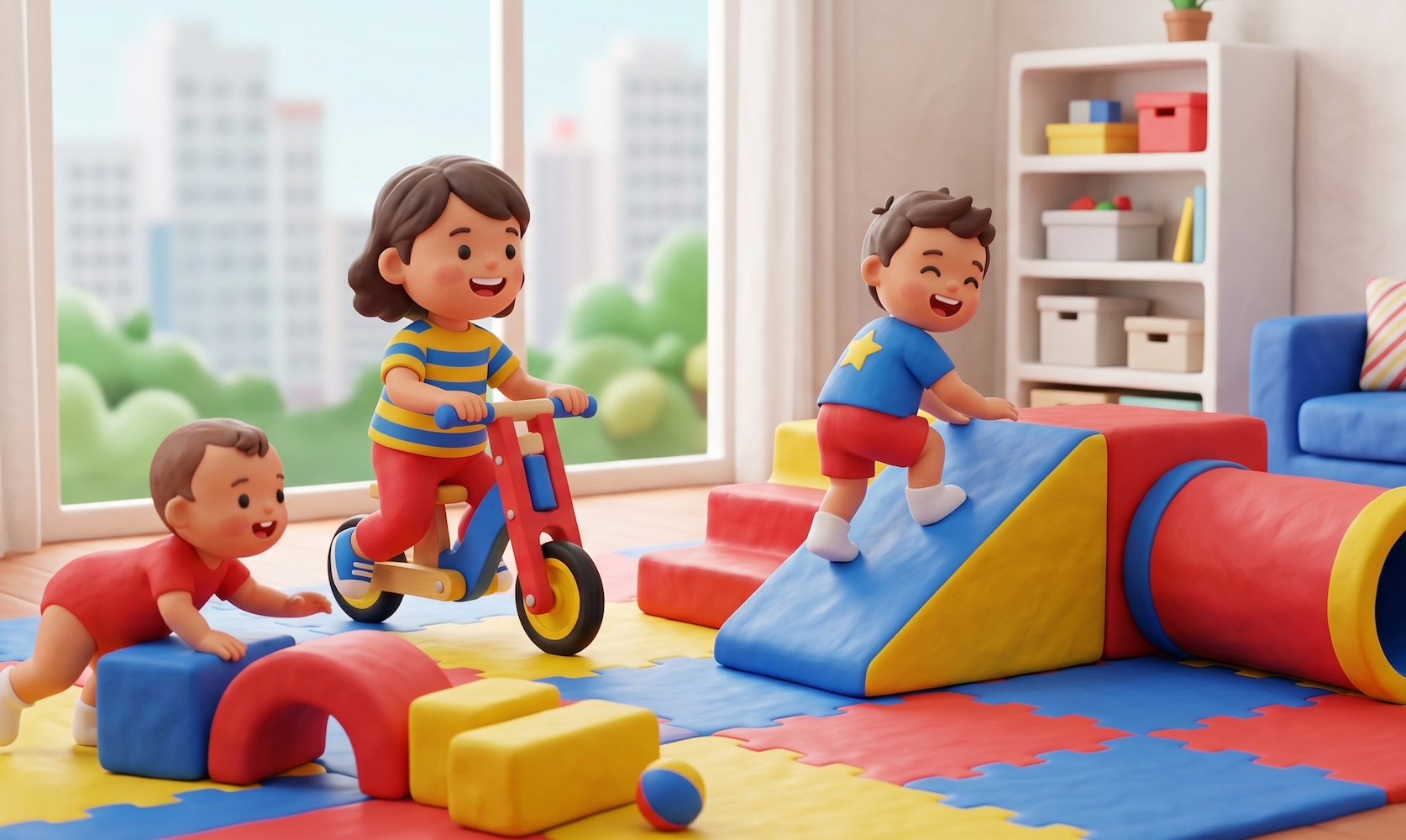
In a city where we often prioritise mental gymnastics before a child can even balance on one leg, it is easy to overlook the physical pillar. But during toddlerhood (ages 1–3), physicality is the "hardware" that allows the mental and emotional "software" to run. It is about moving from an unsteady explorer to a coordinated young individual who knows how to fuel their body and protect their long-term health.
For parents in Singapore, where indoor play hubs and strollers are the default, we have to be recognisably intentional about "active struggle." Building physical strength isn't just about sports; it is about preventative health—like myopia prevention through sunlight and building a palate that doesn't rely on sugar. When we master these physical milestones now, we are building resilient humans who have a healthy relationship with their own physical behaviour.
Gross Motor Mastery & Active Exploration
Outdoor play in Singapore often feels like a battle against the humidity, but those hours spent at the local playground or East Coast Park are non-negotiable. These milestones build the core strength and balance that underpin all future physical confidence.
-
Confident Independent WalkingMoving across different surfaces—from flat mall floors to the uneven grass at the Botanic Gardens—without losing balance.
-
The Two-Foot JumpLearning to clear the ground with both feet simultaneously, a major sign of developing leg strength and bilateral coordination.
-
Staircase NavigationMoving from "crawling up" to walking up stairs while holding a railing (and eventually without) using alternating feet.
-
Ball Skills FoundationsBeing able to kick a ball forward with a bit of power and attempting an overarm throw, even if the aim is still a work in progress.
-
Climbing ResilienceAttempting to climb up low playground structures or onto a chair safely, showing an awareness of their own body's height and centre of gravity.
Fine Motor Skills & Manual Dexterity
In our "helper-rich" environment, it's easy to keep feeding them or zipping their bags for them. But fine motor control is the secret precursor to writing and self-care. It is about favouring independence in the small things.
-
Utensil IndependenceSuccessfully using a spoon and fork to bring food to their mouth; while mess is expected, the goal is the hand-to-mouth organisation.
-
Precision Pincer GraspUsing the thumb and forefinger to pick up tiny items, like raisins or small building blocks, with deliberate control.
-
Stacking & Building AccuracyBeing able to build a tower of 6 to 8 blocks before it topples, showing steady hand-eye coordination and spatial honouring.
-
Page-Turning DexterityTurning the pages of a board book one by one, which requires surprisingly delicate finger-strength control.
-
Active Dressing ParticipationAttempting to pull off socks or push arms through sleeves, showing they recognise how their limbs move in relation to clothing.
Nutrition & Taste Curiosity
This is the "Golden Window" for flavour. If they only eat white rice and plain pasta now, the teenage years will be a struggle. We want to build curious eaters who understand that food is the fuel for their play.
-
The "One-Bite" RuleA willingness to try one small bite of a new food (even if they spit it out) without a full-scale mealtime battle.
-
Rainbow Plate IdentificationIdentifying different coloured vegetables on their plate and understanding that "different colours do different jobs" for their body.
-
Self-Regulated Fullness SignalsBeing able to say or signal "I'm full" and having that respected, preventing the habit of emotional overeating.
-
Water-First HydrationChoosing water as their primary source of hydration rather than expecting juice or sweetened "kid programmes" in a bottle.
-
Textural ToleranceAccepting different food textures—crunchy, mushy, chewy—rather than insisting on everything being pureed or soft.
Preventative Health & Myopia Awareness
Singapore has one of the highest myopia rates in the world. Physical health at age 2 is not just about muscles; it is about protecting their senses and building a standardised foundation for long-term wellness.
-
Daily Outdoor Sun TimeSpending at least 2 hours outdoors daily (in the shade is fine!) to help their eyes develop correctly and delay the onset of myopia.
-
Screen-Free Play DefaultDeveloping a lifestyle where play does not involve a tablet, protecting both their eyes and their developing attention spans.
-
Consistent Sleep HygieneFollowing a predictable bedtime routine that ensures 11–14 hours of total sleep (including naps) for optimal growth and behaviour.
-
Basic Hygiene OwnershipLearning to rub their hands together with soap and "helping" with teeth brushing, understanding that we "wash away germs."
-
Body Boundary AwarenessRecognising the difference between "safe play" and "ouchie play," and knowing when to stop to avoid injury.
Common Challenges & How to Overcome Them
Toddlers are 50% energy, 50% mystery, and 100% fast when you aren't looking. Navigating their physical growth requires us to be "active observers" who allow for small, managed risks.
-
The "Picky Eater" Stand-off
It is normal for toddlers to suddenly reject foods they used to love. This is often a bid for control rather than a change in taste.
Keep serving the "rejected" food without pressure. It can take 15 to 20 exposures before a child truly recognises a new flavour. Don't give up on the broccoli just yet!
-
The "Stroller Trap" Convenience
In Singapore's heat, it is tempting to keep the toddler in the stroller while moving through malls or parks to save time.
Treat the stroller as a backup, not the default. Let them walk the "last mile" to the MRT or the playground to build the leg stamina they will need for school.
-
The Screen-Time Magnet
Using a phone to keep a toddler quiet at a restaurant is a common SG parenting "hack," but it can lead to sedentary habits and eye strain.
Pack a "busy bag" with physical items—stickers, playdough, or small cars. The tactile engagement is far better for their organisational brain and fine motor skills.
The Growth Guide
From toddlerhood to young adulthood—get the holistic roadmap every Singaporean parent needs.
Growth Guide: 1 to 18+ Years