
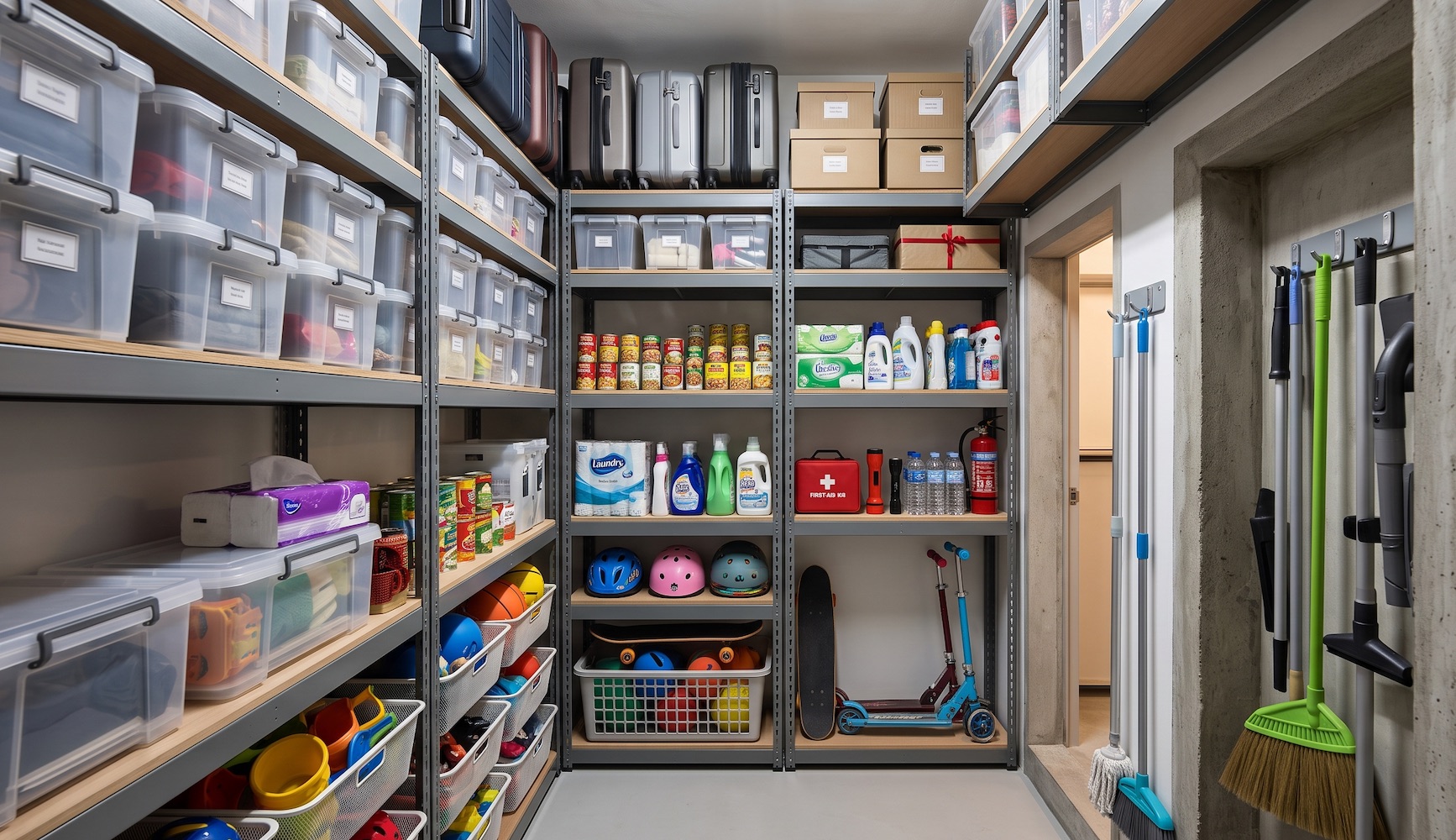
Every family home has that one heavy steel door concealing a windowless sanctuary of forgotten items. The household shelter often becomes a chaotic vault for expired items, festive decorations, and things we promise to sort out tomorrow.
Many parents view this small square footage as a black hole for boxes rather than a functional extension of their living area. Redefining this storage hub can ease daily household management significantly. Here are ten practical ways to reorganise the space effectively.
Practical Rules for Organising Your Household Storage
1. Install heavy-duty boltless racks up to the ceiling
Choose sturdy metal shelving units that fit the exact height and width of the shelter walls without drilling into the reinforced concrete structure. Store heavier boxes at the bottom and lighter, seasonal items on the higher tiers, leaving frequent daily items at chest level.
Vertical space utilisation prevents clutter from piling up on the floor and blocking essential walkways. Family members can locate necessities quickly when items are arranged neatly by height, saving precious minutes during busy school mornings.
2. Use clear plastic containers with matching clip lids
Swap mismatched cardboard boxes for uniform transparent plastic tubs to instantly see what is kept inside each container. Group similar items like spare lightbulbs, batteries, or school art supplies together and secure the lids tightly to prevent dust and humidity from damaging them.
Visual clarity eliminates the need to rummage through multiple boxes during busy weekday mornings when everyone is rushing out. Uniform containers stack neatly together on the racks, creating a sense of visual calm inside the compact room.
3. Label every container clearly using large printed text
Apply bright, readable printed stickers on the front-facing side of each storage bin detailing the exact contents inside. Update these descriptions whenever the contents change or when children grow out of specific toy categories, ensuring the system remains current.
Clear signage empowers children and spouses to find their own belongings independently without constantly asking for help. Household management becomes a shared family responsibility rather than falling solely onto a single parent's shoulders.
4. Create a dedicated zone for extra grocery supplies
Designate one specific eye-level shelf strictly for surplus pantry staples, tissue packets, and laundry detergents bought during supermarket sales. Arrange these items by their expiry dates, placing the oldest products towards the front line for early consumption.
Having a clear view of extra household provisions prevents accidental double-buying during weekly grocery runs. Daily meal preparation runs smoothly when backup ingredients are always accounted for and easy to retrieve from the pantry racks.
5. Keep the central floor area free from clutter
Resist the temptation to pile loose items directly onto the floor space between the shelving units. Reserve the bottom racks for heavy items, ensuring a wide and clear walking path into the deepest corners of the room.
Open floor space allows safe entry and exit without tripping hazards during dark or urgent moments. Retrieving items from the back corners requires significantly less physical effort when the walkway is entirely clear.

6. Store seasonal decorations in separate designated luggage
Pack festive ornaments, red packets, and holiday lights inside old travel suitcases that are seldom used for overseas flights. Tuck these bulky bags away on the highest shelves since they are only required once or twice a year.
Utilising empty luggage maximises existing storage assets without requiring additional furniture purchases. Annual celebrations feel less stressful when festive gear is packed away systematically, keeping the rest of the home clutter-free.
7. Hang frequently used cleaning tools on the wall
Affix removable heavy-duty hooks or a broom organiser grid onto the inner walls or behind the heavy steel door frame. Suspend the mop, cordless vacuum accessories, and dustpans off the floor to keep them upright and tidy.
Vertical hanging keeps damp cleaning tools properly ventilated to prevent unpleasant musty odours from developing in enclosed spaces. Grabbing the broom for quick clean-ups after children's meals becomes effortless for anyone in the house.
8. Dedicate a low shelf for children's outdoor toys
Allocate the bottom-most accessible rack for skateboards, bicycles, sand buckets, and swimming gear. Use open baskets so children can easily reach their favourite toys before heading out to the neighbourhood playground or swimming complex.
Accessibility encourages young children to take ownership of tidying up their play equipment after outdoor activities end. Living areas remain free from muddy wheels and wet pool gear that would otherwise clutter the main entryway.
9. Check expiration dates on stored items twice yearly
Schedule a quick review every June and December to evaluate the status of emergency rations, backup batteries, and canned goods. Discard items that have expired and prioritise consuming products that are nearing their final end dates.
Regular updates prevent the storage room from accumulating useless waste and hosting unwanted dust mites. Safety supplies remain reliable and ready for unexpected household situations, giving parents total confidence in their preparations.
10. Group emergency supplies near the room entrance
Place the first-aid kit, flashlights, bottled water, and essential tools on a shelf right beside the heavy metal door entrance. Keep these items at adult chest height so they are easily accessible but safely out of reach for toddlers.
Proximity ensures that crucial survival gear can be grabbed in pitch darkness without searching through deep layers of storage. Peace of mind comes from knowing the family is prepared for any minor domestic contingencies.
Creating Harmony Behind Closed Doors
An organised store room serves as the quiet engine of a peaceful, well-functioning household. Transforming this heavy-doored space from a neglected junk room into a systematic pantry offers welcome relief to busy parents trying to manage domestic life smoothly.
When everything has a proper place, the entire home feels more spacious and welcoming. Investing a little time into arranging the shelter yields long-term rewards in family harmony and daily efficiency for everyone under the roof.