
We know that feeling in the pit of your stomach. You are at the playground, the sun is setting, and suddenly your seven-year-old is shouting that you are "so mean" right in front of the other mummies. Or worse, they snap at their grandfather while you are queueing for chicken rice, and you feel the collective judgment of the whole hawker centre pressing down on your shoulders. It is exhausting. You feel like you have failed, like everyone thinks your child is "spoilt," and you just want the ground to swallow you up. Please know that you are not alone in this; I have been there too, and it does not mean you are doing a bad job.
Why do they pick the most crowded places to start a fight?
It often feels like a targeted attack, but children usually save their biggest outbursts for when they feel the most pressure. When we are out, we are often distracted—checking our phones, talking to friends, or trying to find a parking space—and children pick up on that loss of connection. They might use "shock value" to get your attention back immediately. It is a blunt tool, but for a child, it is effective. They know the rules change slightly when people are watching, and they might be testing if your boundaries are as solid in public as they are at home.
Another thing to consider is the sheer sensory load of Singaporean life. Some times the noise, the humidity, and the bright lights of a mall can actually trigger a "fight or flight" response in younger kids. Their brains just get fried. When they talk back to a grandparent, it might not be about disrespect at all, but rather a total lack of impulse control because they are tired or hungry. The "spectator effect" makes us see it as a moral failing, but for the child, it is just an explosion of internal noise.
What is your child actually trying to tell you through the shouting?
We often see backtalk as a challenge to our authority. We think, "How dare they speak to me like that?" But if we shift the lens, we might see it as a clumsy attempt at autonomy. Your child is trying to find where they end and you begin. They are practicing having an opinion, even if they are doing it in a way that makes your toes curl with embarrassment. It is a sign of a very secure attachment that they feel safe enough to show you their ugliest side in public, even if that feels like a very "sideways" compliment.
I remember standing near the taxi stand at WWP, my arms full of groceries, my daughter crying because she dropped her gem biscuit, and my son choosing that exact moment to yell that I was "unfair" and "mean" because I wouldn't let him use my phone. My face was hot. I felt small. But then I realised he wasn't trying to humiliate me; he was just exhausted and had no other words left to describe his frustration. When we stop seeing it as a "reputation" problem and start seeing it as a "regulation" problem, the anger starts to melt away. It stops being about the "aunties" watching and starts being about the little person struggling in front of you.

Can a few simple shifts change the way your child speaks to you outdoors?
1. The "Low and Slow" Response
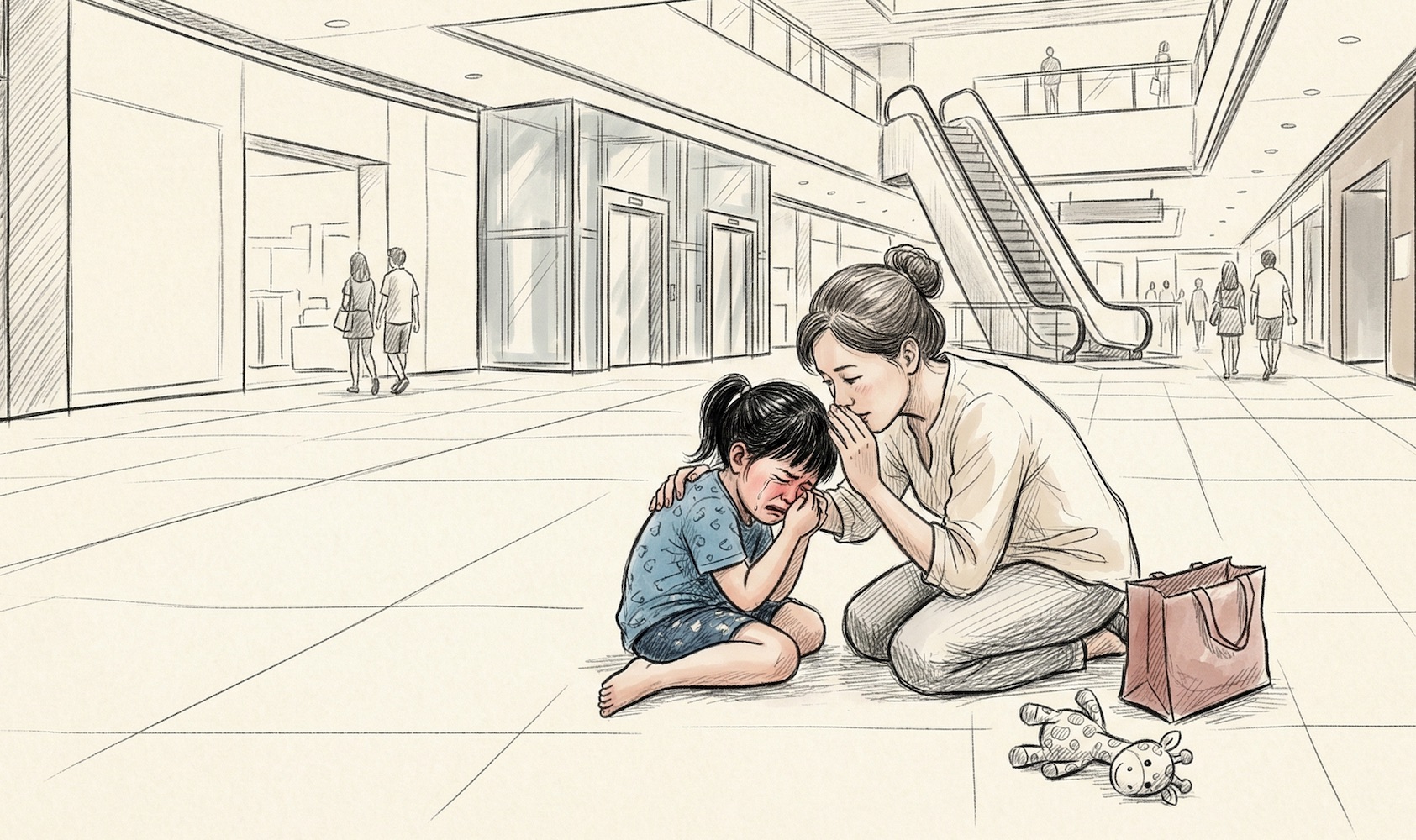
When they go high with their volume, you must go low. If you shout back, you are just proving that "whoever is loudest wins." Instead, lean in close so only they can hear you. This removes the "audience" they might be performing for and brings the focus back to the two of you. Use a whisper if you have to. It forces them to stop shouting just so they can hear what you are saying.
2. The "Pre-Game" Huddle
Before you even step out of the car or the lift, have a quick chat. I usually tell my kids, "We are going to the supermarket now. It will be crowded and we might have to wait. If you feel frustrated, tell me 'Mummy, I need a break' instead of shouting." Give them the scripts they need before the "big feelings" arrive. It gives them a path to follow when they are starting to feel the heat.
3. Validate the Feeling, Not the Tone
You can say, "I can hear that you are very angry that we have to leave the playground, but I won't let you speak to Po Po like that." This acknowledges their internal state while still holding a firm line on the behaviour. It shows them that you are on their side, even when you disagree with their actions. It takes the wind out of their sails because there is nothing left to fight against.
4. The Immediate Exit Plan
If the backtalk continues, do not try to "win" the argument in the middle of the pavement. Just leave. Pack up the bags, take their hand, and walk to a quiet spot or the car. This tells the child that the "privilege" of being out is tied to respectful communication. It also saves your sanity. There is no shame in walking away from a scene to handle it privately where you both feel safer.
Who are you really trying to please when your child acts out?
Most of our anger in these moments comes from what we think strangers are thinking about us. But those strangers? They are usually either glad it is not them, or they are remembering a time it was. Your child's temporary lapse in manners is not a permanent reflection of your parenting. The next time your son or daughter talks back in public, look at them and ask yourself: Am I more worried about my pride, or am I worried about the little heart that is clearly struggling right now? One of those things matters a lot more than the other.