
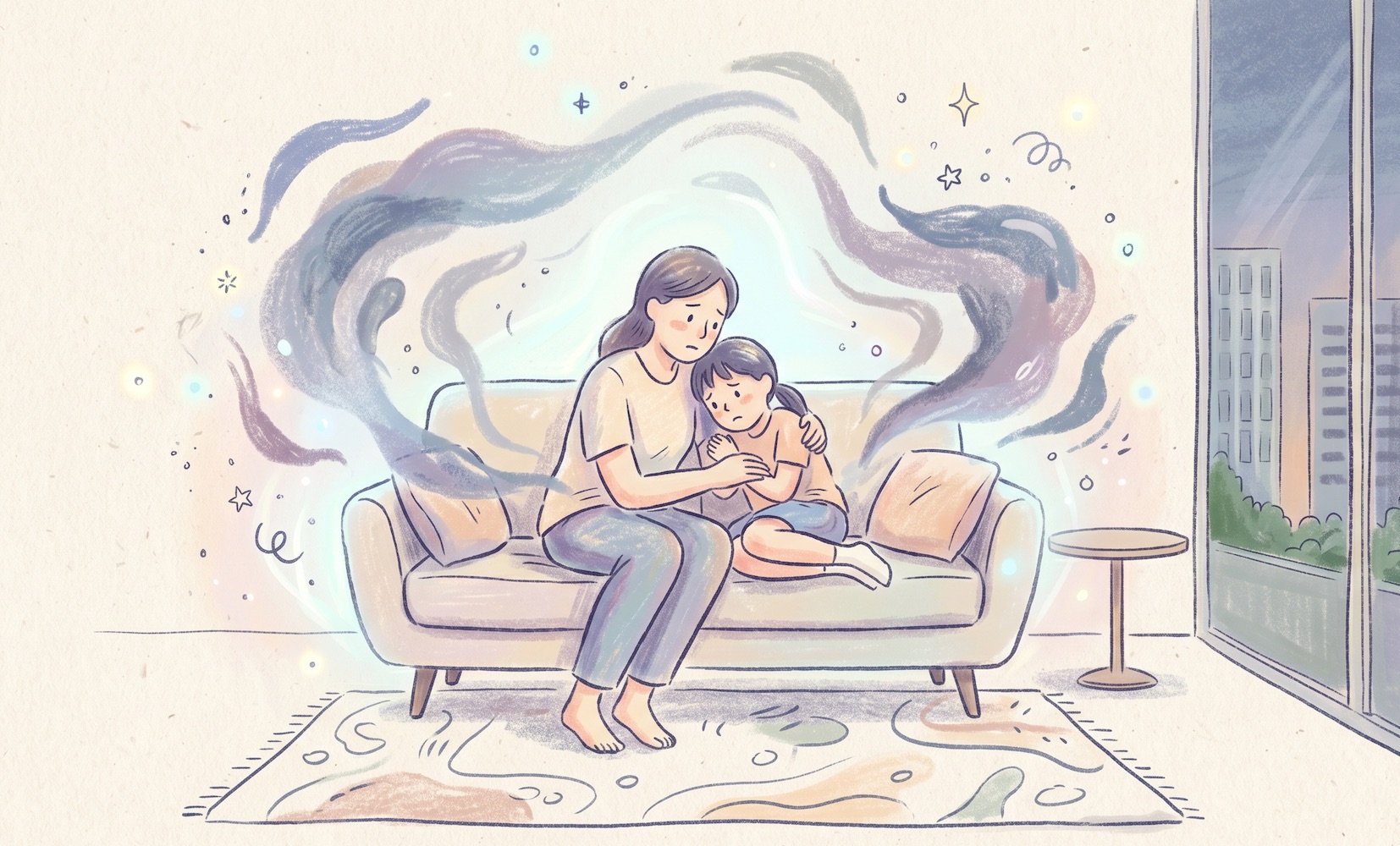
Dear Editor, I'm at my wits' end. My husband and I are finalising our divorce, and my P3 daughter is taking it very hard. Her results are starting to slide, and she has become so withdrawn. She keeps asking why Papa isn't home for dinner anymore or why we can't go on our usual June holidays. I feel so much guilt—how do I explain this without breaking her spirit? I'm stretched between the legal battles and trying to keep her routine steady with CCA and tuition, I'm exhausted. I just want to know if I've ruined her childhood for good.
A Heart-to-Heart on Rebuilding a Home
Take a deep breath. You are navigating one of life's most difficult transitions while trying to be an anchor for your child. It is completely natural to feel like you are failing, but the fact that you are so concerned about her spirit shows you are already doing the most important thing—putting her needs first. In Singapore, where we place so much weight on academic milestones and the "ideal" family image, the stigma of divorce can feel like a heavy shadow over a primary school child who is just starting to find her place in the world.
To move forward, we have to shift our perspective. Your daughter's world isn't "ruined"; it is being reconfigured. A child's resilience in the face of divorce isn't determined by the split itself, but by the level of conflict they are exposed to and the stability of the love they receive afterward. Her grades might dip, and she might be quiet now, but these are her ways of processing grief. If you can provide a "new normal" that is predictable and safe, she will find her footing again. You aren't giving her a broken home; you are working towards a more peaceful one.
Steps to Steady the Ship
1. Establish a predictable "New Normal"
In the high-pressure environment of Singapore primary schools, routine is a child's safety net. Keep her tuition schedule, CCA timings, and weekend enrichment classes as consistent as possible. If Papa used to take her to swimming on Saturdays, try to ensure that transition happens smoothly or find a consistent replacement. Predictability reduces the anxiety of "what happens next."
2. Use the "No-Blame" script
When explaining the situation, use age-appropriate language that removes the burden of guilt from her shoulders. In primary school, children are egocentric and often think they caused the rift. Use a script like: "Mummy and Papa are having a hard time living together, and we've decided it's better for everyone to live in different houses so there is less shouting. We both love you more than anything, and that will never change."
3. Inform the school's ecosystem
Reach out to her Form Teacher and the school counsellor. You don't need to share the "ugly" details, but they need to know why she might be distracted in class or why her homework isn't done. MOE teachers are trained to look out for these transitions, and having them as allies ensures she has a supportive environment during school time.
4. Validating emotional outbursts
Allow her to be angry or sad without trying to "fix" it immediately with gifts or distractions. If she cries about the June holidays, acknowledge it: "I know it's sad that we aren't going together this year. It's okay to be disappointed." Labelling her feelings helps her develop the emotional intelligence to process the trauma rather than burying it.
5. Prioritise mental health over the report card
Accept that her WA results might not be stellar this year. The cognitive load of a divorce is massive for a nine-year-old. Give her permission to "underperform" academically for a season while she heals emotionally. Pitting academic pressure against emotional trauma is a recipe for a breakdown.
What NOT to Do: A Parent's Checklist
-
Using the child as a messengerNever ask her to "Tell Papa to pay the maintenance" or "Ask Mummy why she is late." This forces her into an adult role she isn't equipped to handle.
-
Badmouthing the other parentTo a child, she is 50% Mum and 50% Dad. When you insult the ex-spouse, she feels like you are attacking a part of her own identity.
-
Making her "The Woman/Man of the house"Avoid saying things like "You're the big sister now, you have to be strong for me." Let her remain a child; she shouldn't have to carry your emotional burden.
-
Introducing new partners too soonThe first year post-divorce should be about stabilising the core family unit. Introducing a new "Uncle" or "Aunty" can create confusion and resentment.
-
Keeping the situation a secret until the moveChildren need time to process. Don't wait until the movers are at the door to tell her Papa is moving out. Give her a few weeks' lead time to ask questions and adjust.
The Reality Check
Here is the hard truth: the next year will likely be one of the most difficult of your life, and your daughter will carry the memory of this transition forever. You cannot "undo" the divorce, and you cannot shield her from all the pain. There will be nights where she cries for the other parent, and there will be days where you feel like you're failing. However, a child from a "broken" home who is raised with honesty, stability, and love will often turn out more resilient and empathetic than a child in a high-conflict "intact" home. You are playing the long game now.
Professional Support Resources
-
Specialised centres by MSF that provide counselling and support for divorcing or divorced families in Singapore.
-
Provides legal and emotional support for self-represented litigants and families navigating the family court system.
-
A safe space for women to seek advice on legal rights, housing, and emotional support during matrimonial splits.
-
Offers dedicated programmes for separated and divorced families, including support groups for children.
-
A professional non-profit organisation providing high-quality therapy for families and children dealing with trauma.