
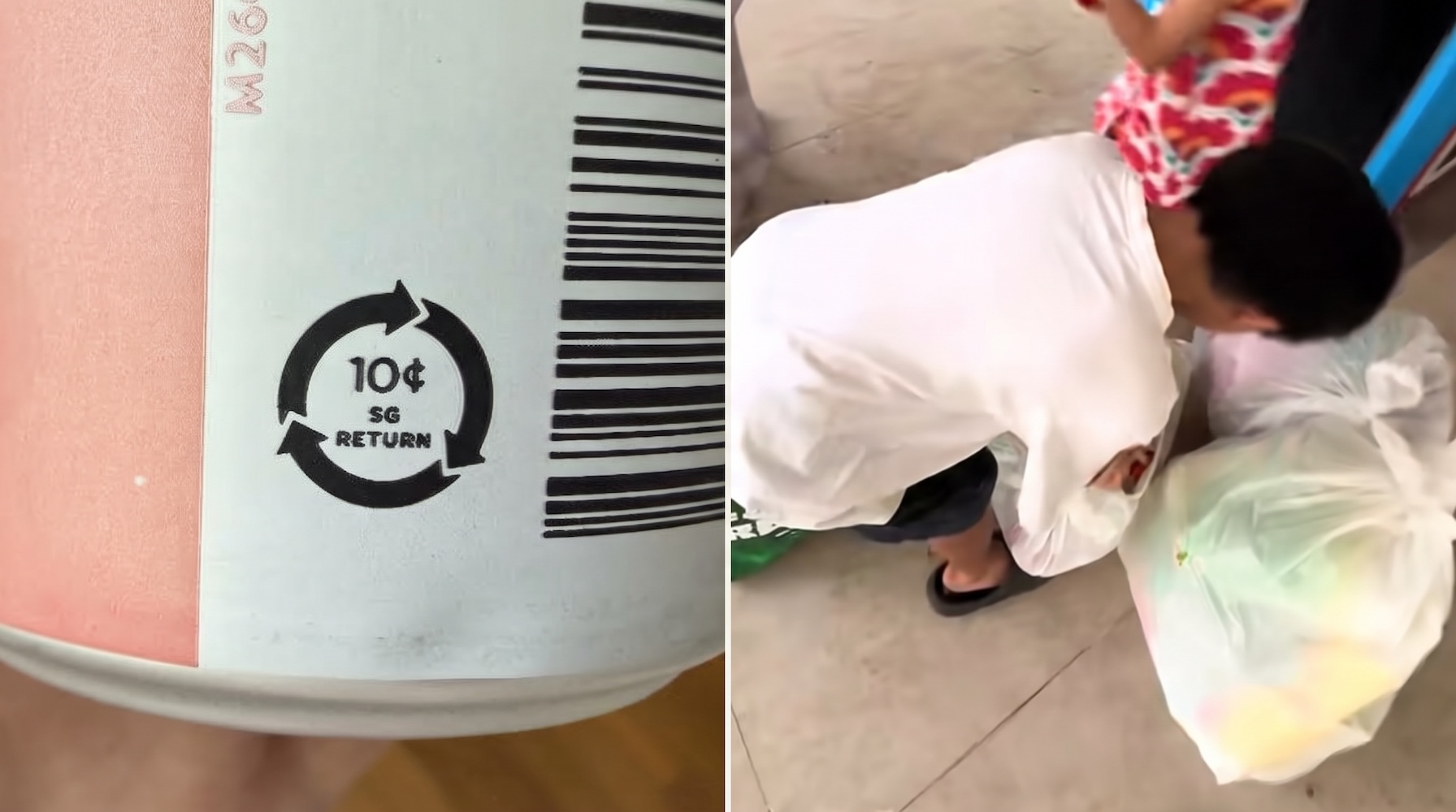
The "Return It Right" beverage container return scheme rolls out in full by the end of September. By now, most of us know how it works: pay a 10-cent deposit on canned and bottled drinks, then get that money back when you return the empty container to a reverse vending machine. Featured right image from Tik Tok @thezackjourney.
Recently, social media featured an eight-year-old and a nine-year-old boy who collected hundreds of containers to trade them in for around $17 to $20. Many people praised their initiative and work ethic.
Wanting our children to learn about saving and the value of work is natural. But as more people start picking up containers across public areas for cash, it brings up questions that our community has not had to face before. When does a recycling programme turn into public scavenging, and where do we draw the line for our children?
What happens if children start asking diners for cans?
It might start with picking up an empty bottle left on a void deck bench. But when a child realises that ten cans buy a snack, the temptation to gather more will grow.
We could easily see children walking up to tables at coffeeshops to ask, "Uncle, aunty, can I take your empty can?" That puts children in an awkward spot where they might get scolded by busy stall owners or dismissed by strangers.
How should adults respond?
If a child comes to your table and asks for your empty can, how should you respond? Handing it over feels like a simple kindness, but it also reinforces the habit. Refusing might make you feel mean.
As parents, we need to set clear boundaries at home. Recycling is an act of civic responsibility that starts in our own kitchens. It should not turn into hunting through the neighbourhood for other people's trash.
Are children safe while doing this?
Discarded drink containers in public bins are dirty. They contain saliva, mould, and sweet drinks that attract ants, bees, and cockroaches. Public bins also contain jagged aluminium edges and broken glass.
In the videos online, children handled rubbish bags with bare hands. Are young children mindful of basic hygiene, or does digging through public rubbish expose them to cuts and germs?
Are we taking away from people who rely on this?
In our neighbourhoods, some elderly folk collect cardboard boxes and drink cans to support themselves. To these seniors, that money helps pay for their daily meals.
To our children, earning ten dollars is just extra pocket money for toys or treats. When children collect cans in public spaces as a weekend activity, how does that affect the seniors who depend on those deposits?
Do businesses need to step up?
Many diners leave their empty cans on tables or tray return stations because they do not want to carry them to a machine. If coffeeshops and food centres set up dedicated collection bins near tray return points, cleaners could manage those containers directly.
Leaving them on open tables invites anyone to pick through them. What responsibility do food outlets have in managing this waste properly?
Where do we go from here as parents?
The scheme will change daily habits across our neighbourhoods. As parents and neighbours, we want our children to grow up resourceful and environmentally conscious.
But we also have to ask what kind of behaviour we are encouraging. How should we guide our children when money is tied to public rubbish, and what role should our community play in setting those boundaries?