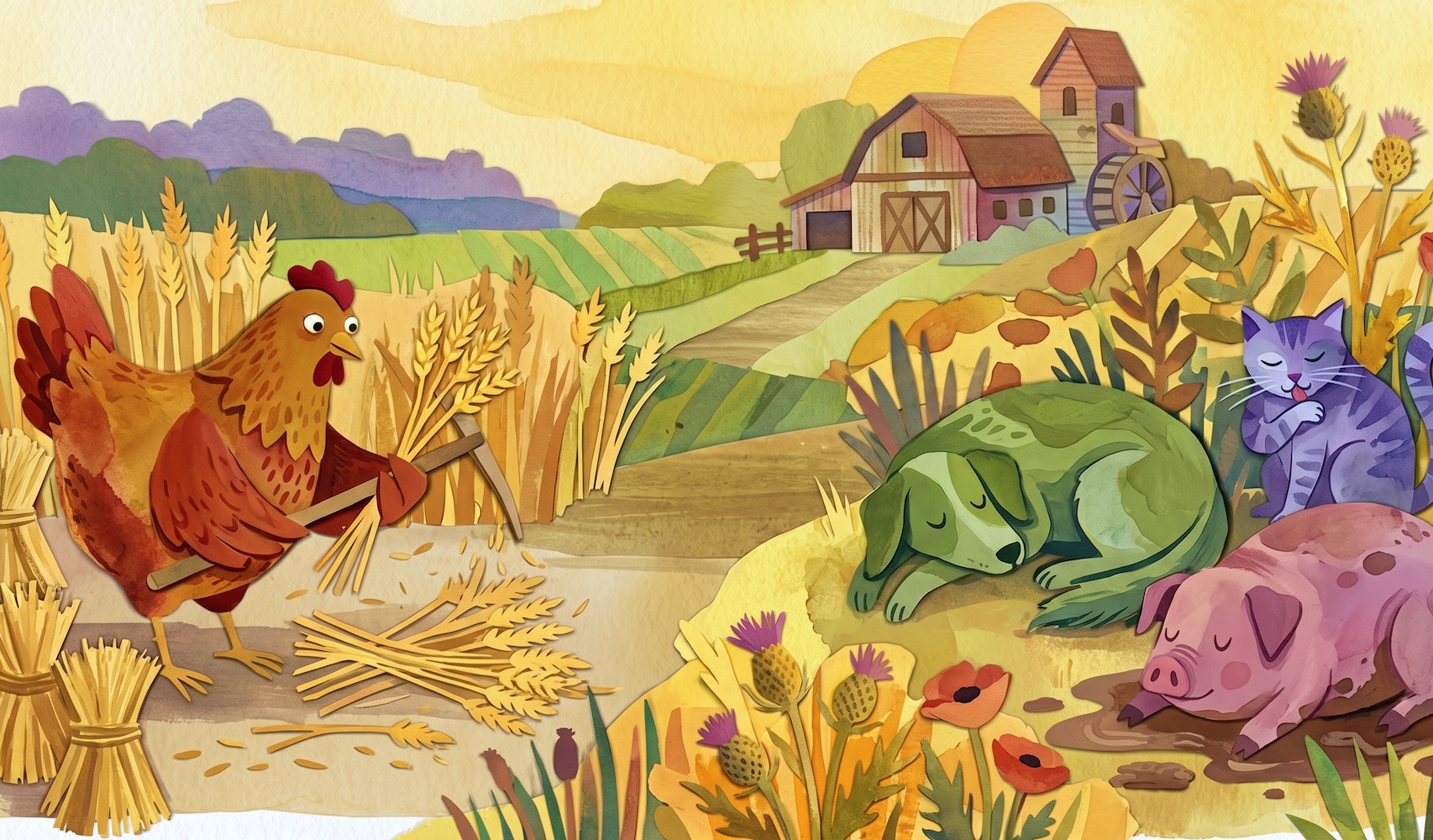
The Little Red Hen: The Secret of Hard Work

A grain of wheat, a very busy hen, and a group of friends who only wanted to help with the eating. The Little Red Hen is a classic tale that helps children understand the value of hard work and why "helping out" is the only way to share in the reward.

Hard WorkContributionResponsibility

The Little Red Hen

Once upon a time, there was a Little Red Hen who lived on a farm with her friends: a sleepy Dog, a lazy Cat, and a noisy Duck. One morning, while she was scratching in the dirt, she found a tiny grain of wheat. "Look!" she clucked. "Who will help me plant this wheat?"

The Dog yawned. "Not I," he said. The Cat stretched her paws. "Not I," she said. The Duck quacked loudly. "Not I," he said.

The Little Red Hen sighed. "Very well then, I will do it myself." And she did! She dug a hole and tucked the wheat into the dark, cool soil. Soon, the wheat grew tall and golden. "Who will help me cut the wheat?" she asked.

The Dog wagged his tail but stayed in the shade. "Not I," he said. The Cat licked her fur. "Not I," she said. The Duck paddled in the pond. "Not I," he said.

"Very well then," said the Little Red Hen, "I will do it myself." And she did! She cut the wheat, took it to the mill to be ground into flour, and carried the heavy sack all the way home. Finally, it was time to bake. The house began to smell delicious—warm, crusty, and sweet. "Who will help me eat this bread?" the Little Red Hen asked.

"I will!" barked the Dog, jumping up. "I will!" meowed the Cat, running to the table. "I will!" quacked the Duck, flapping his wings.

But the Little Red Hen shook her head. "No," she said firmly. "I planted the wheat, I cut the wheat, and I baked the bread all by myself. Now, I am going to eat it all by myself." And she did! From that day on, the Dog, the Cat, and the Duck learned that if you want to share the bread, you have to help with the work.

Bringing the Story Home

Use these notes to translate the story into a meaningful conversations.

Lesson behind the Tale

Many hands make the bread taste better. When we all work together, the job gets done faster and everyone feels proud. But if we wait for someone else to do all the "heavy lifting," we can't expect to share in the fun at the end. Being a helper is how we earn our place at the table!

Relating to Our World

Many young children live in "The Little Red Hen's House," but they are the ones saying "Not I!" while parents or helpers do the planting and the baking. Because our logistics are so efficient, kids can lose sight of the Process. They see the "Bread" (the clean room, the cooked dinner, the packed bag) but never see the "Wheat."

We can use this story to build a culture of Contribution. We want our 3-7 year olds to realise that they aren't just "guests" in the house—they are part of the team. By giving them small, age-appropriate jobs, we move them away from being the "Sleepy Dog" and toward being a proud member of the family "Farm."

Opening the Dialogue

"The Dog, the Cat, and the Duck all wanted to eat the bread at the end. Do you think it was fair for the Hen to eat it all by herself?"

  • If they say 'Yes' "It's true—she did all the hard work! If the others didn't help with the planting, they didn't really 'help' make the bread exist. How do you think the friends felt when they didn't get any?"
  • If they say 'No, she should share' "Sharing is a very kind thing to do. But do you think the friends would have enjoyed the bread more if they had helped? Next time, maybe they can all work together so they can have a big picnic!"

"The Little Red Hen had to do everything by herself. Does it feel better when we do a chore together, or when you have to do it all alone?"

  • If they say 'Together' "I agree! It's much more fun when we are a team. When we tidy the toys together, it's like we are all 'planting the wheat' so we can have more time to play later."
  • If they say 'Alone' "Sometimes it's nice to be in charge, like the Little Red Hen. It makes the 'bread' feel like a very special prize that you earned all by yourself. You should be very proud when you finish a job on your own!"

Putting it into Practice

For the next seven days, stop nagging your kids to do chores. Instead, post a simple "Baker's Chart" on the fridge. A few times this week, call out a casual request for help into the living room (e.g., "Who will help me clear the table?"). The first child to step up and do it earns a star on the chart. Once the family collects three stars, celebrate with a special reward like a favourite snack or a game night, explicitly reminding them: because everyone helped "bake the bread," everyone gets to enjoy it!

Build Character, One Story at a Time

Nurturing values like integrity and courage doesn't happen overnight. Explore our full library of stories designed to help parents navigate every milestone.

Browse More Stories About Life

Recommend for You