The Sword of Damocles: Guiding Your Teen Through the Pressures of High Achievement

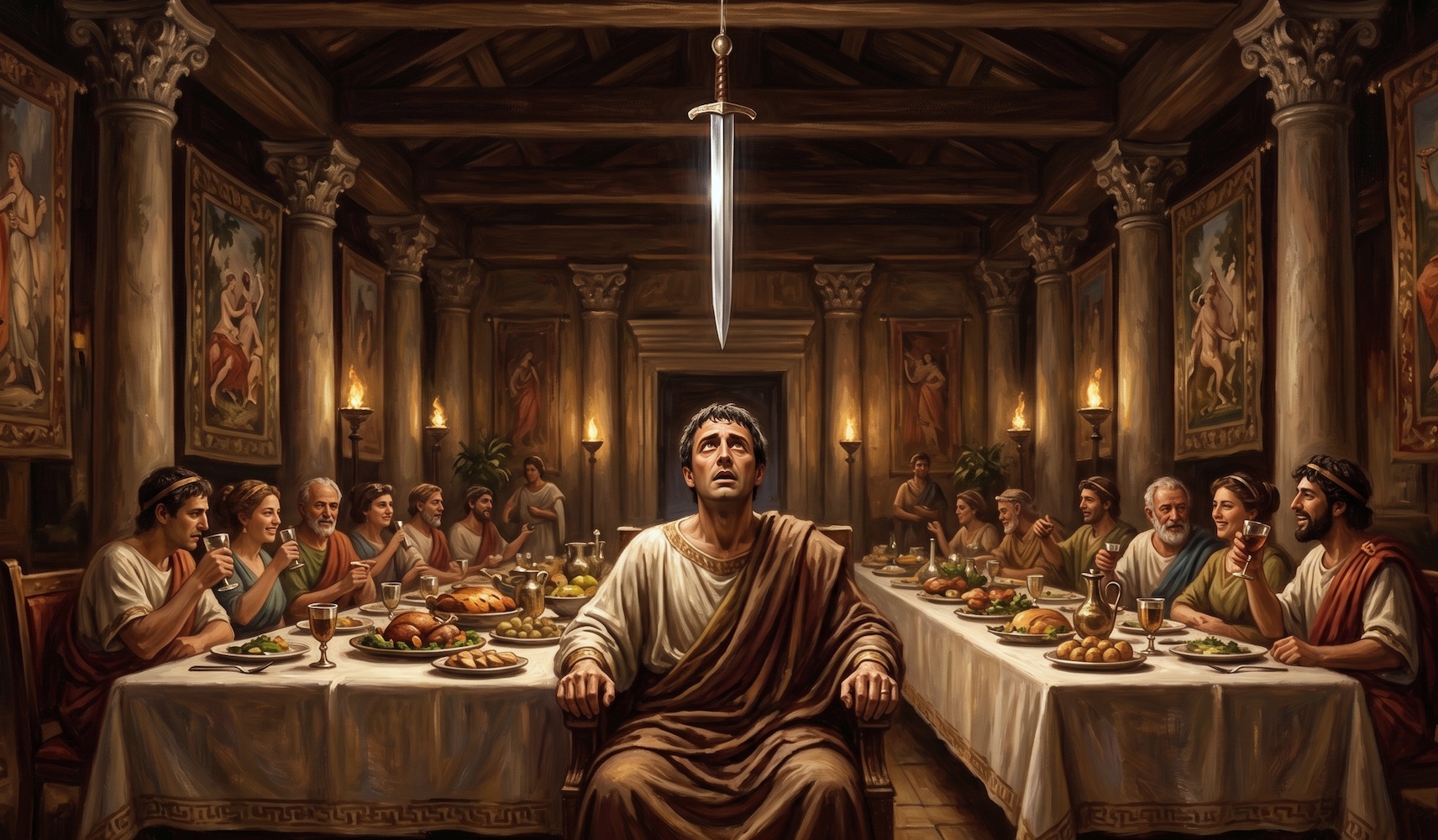
Behind the luxury of the throne, Damocles discovers a razor-sharp sword dangling over his head by a single horsehair. The classic parable The Sword of Damocles teaches that high status, top leadership roles, and power are never just about prestige—they come with a heavy burden of constant responsibility, public scrutiny, and hidden stress.

PerspectiveEmpathyLeadershipManaging Stress

The Sword of Damocles: The Hidden Weight of Being at the Top

Long ago in ancient Greece, there was a king named Dionysius who ruled a wealthy city. From the outside, he had the most perfect life imaginable. He had mountains of gold, a massive palace, a private army, and servants who did absolutely everything for him. He ate the finest food and wore the most expensive clothes every single day.

In his court, there was a young man named Damocles. Damocles was incredibly jealous of the king. He constantly complained to his friends, saying, "The king is so lucky. He has everything. If I could just be king for one single day, I would be completely happy for the rest of my life."

The king heard about this and decided to teach Damocles a lesson. "Since you think my life is so easy," the king said, "I will let you swap places with me tomorrow. You can sit on my throne and see what it feels like."

The next morning, Damocles was thrilled. He put on royal robes, wore a gold crown, and sat on the plush throne. Servants bowed to him, played beautiful music, and brought him an incredible feast of delicious meat and sweet desserts. Damocles felt like a celebrity. He looked down at everyone, thinking this was the best day of his life.

But just as he leaned back to take a drink, he happened to look straight up at the ceiling. His body went totally cold, and he stopped smiling instantly.

Hanging directly over his head was a massive, heavy, razor-sharp sword. The pointy edge was aimed right between his eyes. And the scariest part? The sword wasn't held up by a strong chain—it was dangling by a single, thin piece of horsehair. A tiny gust of wind or one wrong move could snap the hair, sending the deadly blade crashing down on him.

Suddenly, the amazing food tasted like cardboard. The beautiful music sounded terrifying. Damocles' hands shook so much he couldn't even pick up his cup, and he couldn't enjoy any of the luxury around him. He couldn't take his eyes off the sharp blade hanging by a thread. He couldn't stand the fear for another minute, so he jumped off the throne and begged the king, "Please let me leave. I don't want to be king anymore. Take back the wealth and the power—I can't enjoy any of it while that sword is hanging over my head!"


Share This

Bringing the Story Home

Use these notes to translate the story into a meaningful conversations.

Lesson behind the Tale

Every achievement comes with a hidden pressure. When we look at people who are successful, popular, or in charge, we only see the gold crown and the feast. We assume their lives are completely flawless. But the story reminds us that being at the top always comes with an invisible sword—the heavy pressure to perform, the worry about making a mistake, and the stress of keeping up a perfect reputation. True maturity means looking past the glitz and realising that everyone carries their own hidden stress.

Relating to Our World

Teenagers too encounter their own versions of the king's throne. They look at the Student Council President, the captain of the sports team, the top student in the Express or IP stream, or the peer who gets hundreds of likes online, and they feel a massive wave of envy. They think these high-profile peers have it completely easy and never have to worry about anything.

What our teenagers don't see is the sharp sword hanging by a single thread over those exact students' heads. The top student is often stressed out of their mind, terrified that a single bad test grade will disappoint everyone. The CCA leader is struggling to balance schoolwork while dealing with team drama. When we don't teach our teens to look for the "horsehair," they get a warped view of success. They either feel bad about themselves for not being "perfect," or they chase these titles blindly, only to experience an emotional crash when they get the role and realise how stressful it actually is.

Opening the Dialogue

"When you look at the top achievers or the most popular kids at school, do you feel like they have a perfect life, or do you think they are balancing a 'sword' of pressure that nobody else sees?"

  • If your teen says 'They have it easy/everything is perfect for them' "It definitely looks that way from the outside—the crown looks shiny. But if you talk to them privately, you'll find that many of them are terrified of messing up. The pressure from teachers, tutors, and parents to keep hitting those top marks is crazy. Envy usually disappears when you realise the person you are jealous of might actually be struggling to sleep at night because of stress."
  • If your teen points out that those students are probably stressed too "You have really good observation skills. It takes a lot of maturity to see past the surface. When we see a friend under that kind of pressure, the best thing we can do is just treat them like a normal person, not just a title. Sometimes the best gift you can give a high-achieving friend is a space where they can just relax and not have to be perfect."

"Think about your own current goals—like getting an EXCO role in your CCA or hitting a certain grade target. What is the 'sword' or worry that comes with that goal, and how can we make sure it doesn't stress you out?"

  • If your teen admits they are terrified of failing or not being good enough "Thanks for telling me that. That fear of dropping the ball is totally real. But remember, you don't have to carry that pressure alone. Having high standards is great, but your worth as a person isn't tied to keeping that sword from shaking. If the pressure ever feels too heavy, tell me so we can step back. Your peace of mind is way more important than a title."
  • If your teen says they don't really feel any pressure and just want to try their best "That is the absolute best mindset to have. It means you are looking at the goal as a fun challenge rather than a threat. Keep holding onto that. If you can go after big goals without letting the fear of failure hang over your head like a weapon, you've unlocked the real secret to doing well without burning out."

Putting it into Practice

If your teenager is currently chasing a high-status position—like student council, a CCA captaincy, or a class leadership role—use this exercise to shift their focus from the glory of the title to the weight of the responsibility. Sit down and help them map out the hidden "swords" that come with the position they want.

Have them list three major stressors or conflicts they will have to handle once they get the role (e.g., having to reprimand their own friends, dealing with public criticism when a project fails, or sacrificing their personal time to stay late). Challenge them to identify one specific coping strategy or boundary they will use to handle that pressure. This exercise forces them to look past the flashy "feast" of a title and ensures they are mentally prepared for the sharp reality of leadership before they step into the hot seat.

Build Character, One Story at a Time

Nurturing values like integrity and courage doesn't happen overnight. Explore our full library of stories designed to help parents navigate every milestone.

Browse More Stories About Life

Recommend for You