
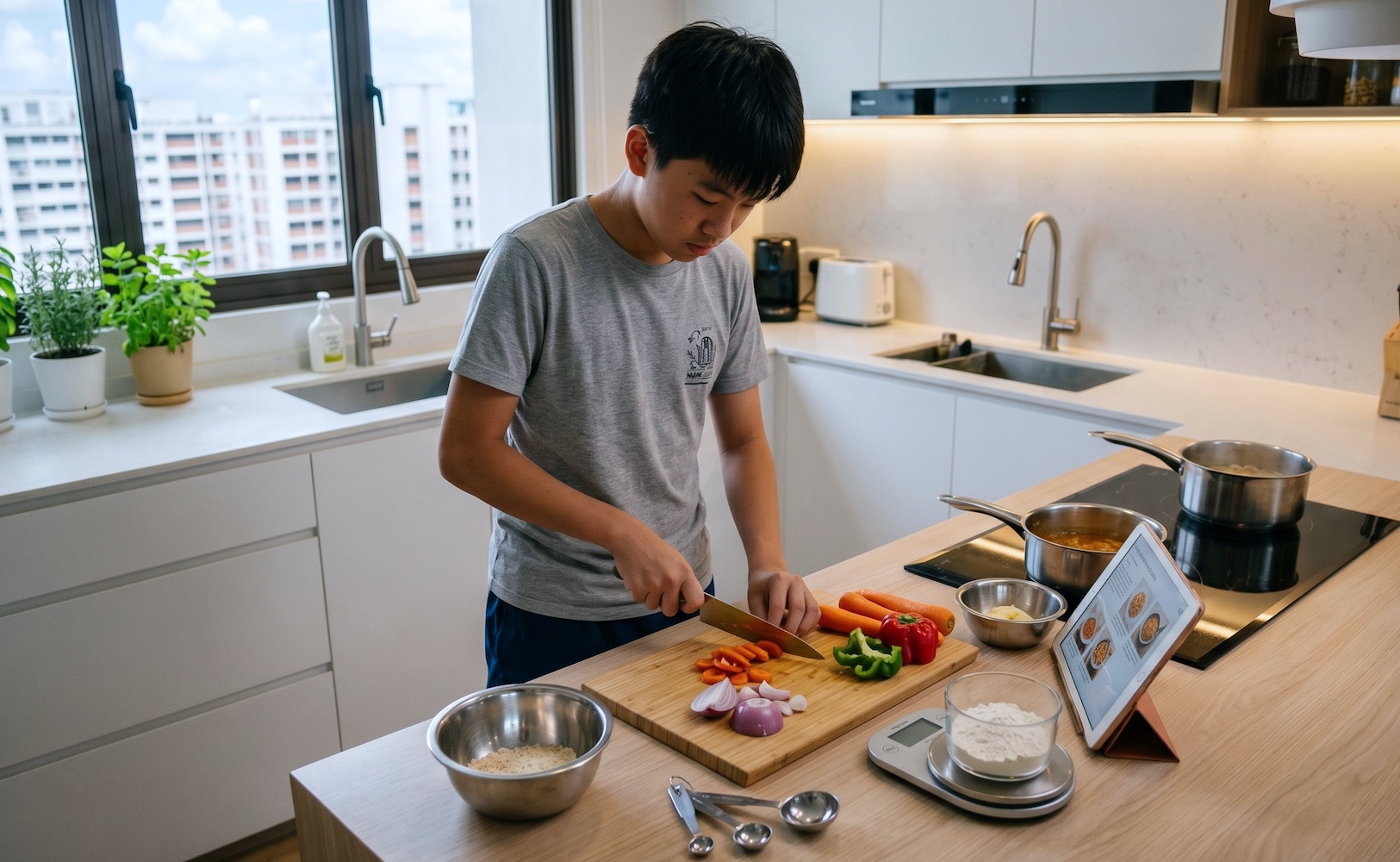
The "Upper Secondary Shift" (ages 15–16 / Sec 3–4/5) is often seen as the "Exam Year," but in terms of growth, it is really the phase of Social Responsibility and Resilience. This is the last stop before the relative freedom of Tertiary life or National Service, and the focus shifts from just managing their own schedules to understanding how they fit into a larger, more complex social and digital world.
It is vital to prioritise these skills now because they serve as an emotional buffer against the intense stress of the O-Levels or N-Levels. When a teen feels capable of managing their own mental health, navigating digital ethics, and resolving conflicts independently, they are far less likely to crumble under academic pressure. We want them to leave Secondary School not just with a good certificate, but with a resilient mindset and a solid moral compass.
Digital Ethics & Cyber Security
By 15, your teen's digital footprint is expanding rapidly. They aren't just consumers of content; they are creators and participants in a global square. Teaching them to move beyond "don't talk to strangers" to high-level digital ethics and personal security is non-negotiable for their future safety and reputation.
-
Advanced Security HabitsSetting up Two-Factor Authentication (2FA) and understanding why they should never reuse passwords across school and personal accounts.
-
Digital Footprint AwarenessUnderstanding that "permanent" truly means permanent, and pausing to consider future job or university prospects before posting content.
-
Intellectual Property EthicsRecognising the importance of crediting creators and understanding the basics of plagiarism beyond just school assignments.
-
Critical News AnalysisIdentifying sophisticated deepfakes, clickbait, and biased reporting in their social media feeds to avoid spreading misinformation.
-
Cyber-Ethics & AllyshipKnowing how to safely stand up for others online and understanding the legal implications of doxxing or online harassment in Singapore.

Resilience & Emotional Stewardship
The pressure of Sec 3 and 4 can be a lot to carry. This is the time to teach them how to "steward" their own emotions. Resilience isn't about working until you break; it's about knowing your limits and having the tools to navigate high-stakes social and academic environments.
-
Recognising BurnoutBeing able to identify the physical and mental signs of overstress and taking proactive steps to rest before a "crash" happens.
-
Conflict ResolutionLearning how to have difficult conversations with peers or teachers politely and firmly without needing a parent to intervene.
-
The Power of "No"Setting healthy boundaries with friends regarding social outings or late-night gaming sessions to prioritise their own well-being.
-
Empathy in Social CirclesNavigating the complexities of teenage relationships and dating with respect, empathy, and clear communication.
-
Stress Management ToolkitDeveloping at least two healthy coping mechanisms—like journaling, exercise, or a creative hobby—that aren't screen-based.
Financial & Life Admin Stewardship
As they prepare for the "Adulting Lite" phase of Poly or JC, teens need to handle more than just pocket money. They need to understand the value of time and resources, and start taking ownership of the "boring" paperwork that keeps life running smoothly.
-
Weekly Social BudgetingManaging a fixed weekly or monthly allowance that covers meals, transport, and social hangouts without asking for "top-ups."
-
Basic First Aid & HealthKnowing how to treat minor injuries, understanding their own medical allergies, and when a symptom requires a doctor's visit.
-
Document ManagementTaking responsibility for their own IC, Passport, and school certificates, and knowing exactly where they are stored.
-
Time PrioritisationUsing a digital or physical calendar to balance school projects, CCA leadership, and family time without "forgetting" commitments.
-
Advanced Domestic SkillsMastering home basics like ironing their own uniform, basic sewing (fixing a button), and simple grocery shopping.
Common Challenges & How to Overcome Them
The Sec 3 and 4 years are a balancing act between high expectations and the natural teenage urge to pull away from parental advice. It's a time for us to step back and act as a safety net, letting them stumble over small hurdles so they don't trip over big ones later.
-
The Exam Tunnel-Vision Trap
During the O-Level or N-Level year, it is common for all life-skill learning to stop as families focus exclusively on grades, leading to a teen who is academically prepared but life-helpless.
Try to keep one "non-academic" responsibility active, like managing their own laundry or a weekly meal prep, to remind them that their value—and their capability—extends beyond a scorecard.
-
Digital Comparison & Burnout
Upper secondary students often face intense social pressure via Instagram or TikTok, leading to a constant cycle of comparison that can drain their confidence.
Foster a "tech-free" ritual once a week, like a family walk or dinner, where the focus is on real-world connection, helping them disconnect from the highlight reels of their peers.
The Social "Over-Commitment" StruggleWith increased freedom, many teens struggle to balance social invitations with their growing academic and CCA loads, leading to exhaustion and missed deadlines.
Sit down and look at their weekly schedule together as "consultants," helping them visualise where their time goes and encouraging them to pick their "Big Rocks" first before adding social extras.
The Growth Guide
From toddlerhood to young adulthood—get the holistic roadmap every Singaporean parent needs.
Growth Guide: 1 to 18+ Years