
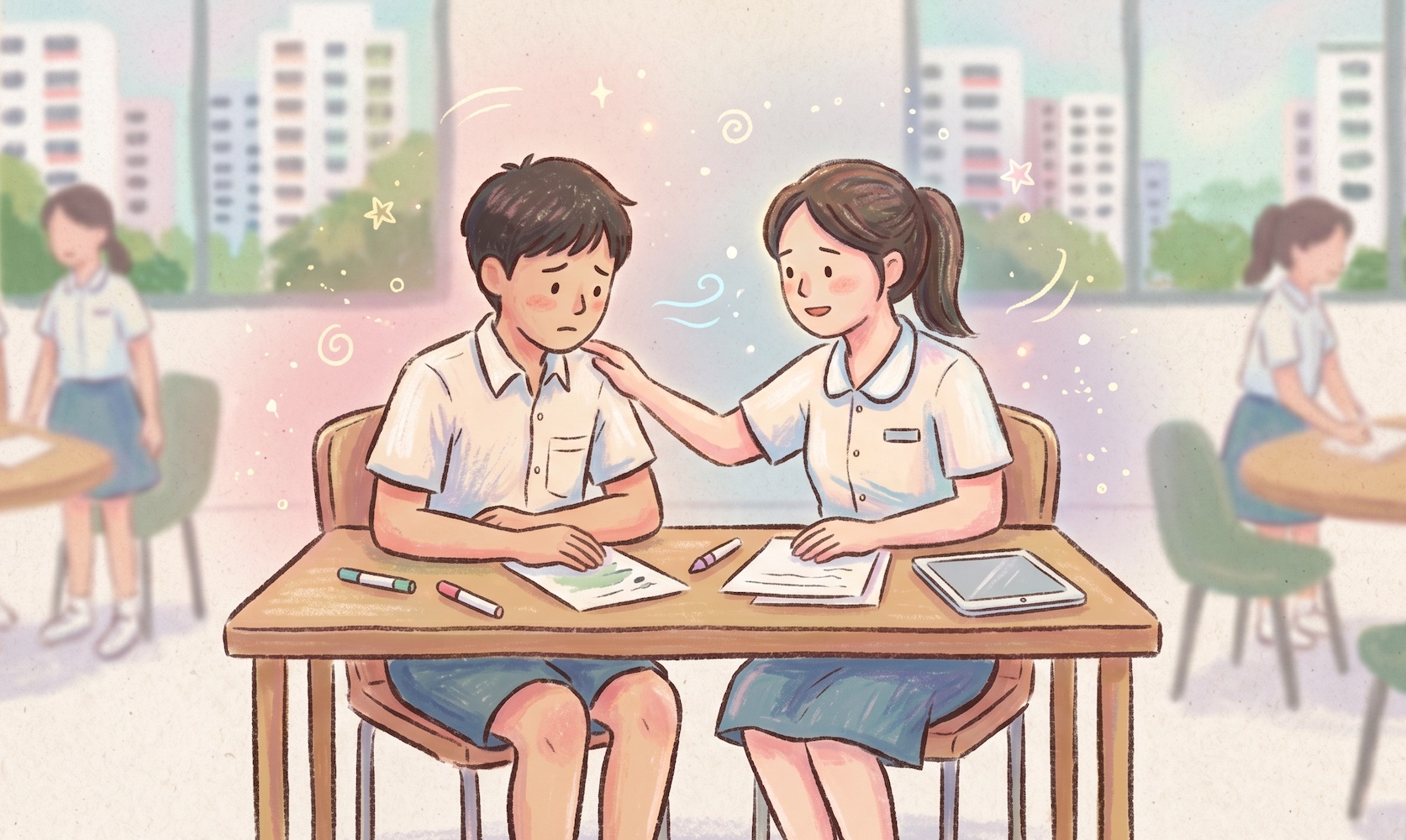
Welcome to the era of new uniforms, longer commutes, and the inevitable "door slam." The transition to Lower Secondary (ages 13–14 / Sec 1–2) is one of the most intense developmental leaps. In Singapore, it's not just the curriculum that gets harder; the social ecosystem becomes a sprawling, 24/7 digital and physical web. The core emotional focus here is Emotional Boundaries & Digital Empathy.
At this stage, your young individual is trying to figure out where they fit in. Peer approval starts to feel like oxygen, and the fear of "missing out" (FOMO) can lead to social exhaustion. Success in Sec 1 and 2 isn't measured by a GPA—it's measured by their ability to protect their own mental space while navigating the intense group dynamics of CCAs and group chats. We are moving from being their "protectors" to becoming their "consultants," helping them build the boundaries they need for a lifetime of healthy relationships.
Identity & Internal Boundaries
The "Approval Trap" is real at 13. Helping your teen anchor their self-worth in things other than "likes" or peer validation is crucial for their long-term mental health.
-
Self-Identity SeparationUnderstanding that they can have different opinions from their "squad" without losing their friendships.
-
The Power of "Not Now"Having the emotional strength to decline a social outing or a late-night call when they are feeling tired or overwhelmed.
-
Internalising ValuesRecognising what *they* actually value (e.g., honesty, effort, kindness) versus just following the trend of the month.
-
Managing "Sec 1 Shock"Bouncing back from the initial dip in grades that often happens when jumping from Pri school to the Sec school workload.
-
Seeking Adult PerspectiveKnowing they can come to a parent or mentor for a "reality check" when social drama feels like the end of the world.
Social Intelligence & Group Dynamics
CCAs and new class groups mean new power dynamics. Learning to navigate these with empathy and assertiveness prevents your teen from becoming a "people pleaser" or a bystander to bullying.
-
Assertive CommunicationExpressing a disagreement politely and firmly (e.g., "I don't think that's a good idea") instead of being passive-aggressive.
-
Recognising Toxic TraitsIdentifying when a "friendship" is actually a one-way street or a source of constant anxiety.
-
Collaborative Problem SolvingNavigating group projects or CCA responsibilities by focusing on the task rather than getting bogged down in personalities.
-
Empathy for the "Outsider"Maintaining the social awareness to include those who might be struggling to fit into the new school environment.
-
Accepting RejectionHandling not getting into a preferred CCA or leadership role without it crushing their self-esteem.
Digital Resilience & Ethics
WhatsApp and Discord are the new playgrounds, but they have no "closing time." Digital empathy is about understanding that the person on the other side of the screen has real feelings.
-
The "Pause Before Post" RuleManaging the impulse to send a snarky or angry reply in a group chat, knowing the permanent nature of digital footprints.
-
Digital AllyshipRefusing to participate in (or "like") messages that mock or sideline others in a chat.
-
Managing FOMOThe emotional maturity to put the phone in another room to focus on sleep or hobbies without feeling panicked.
-
Identifying Online ManipulationQuestioning why certain content makes them feel bad about themselves or their lifestyle.
-
Reporting with IntegrityKnowing how to mute or report inappropriate content or harassment without feeling like a "snitch."
Common Challenges & How to Overcome Them
The Sec 1 transition is a marathon, not a sprint. Recognising the signs of "hidden" stress helps you intervene before a small crack becomes a break.
-
The 24/7 Group Chat Burnout
Teens often feel an obligation to reply to every message immediately, leading to chronic sleep deprivation and "social fatigue."
Help them set "Chat Hours" or use "Do Not Disturb" modes. Model this yourself—show them that the world doesn't end if you don't reply to a message at 10 PM.
-
The "Cool" Peer Pressure Shift
In Lower Secondary, the definition of "cool" often shifts toward rebellion or cynicism, which can clash with your family values.
Instead of lecturing, ask curious questions: "Why do you think [Person] acts that way?" Help them see the difference between being "popular" and being "respected."
-
Academic "Imposter Syndrome"
Coming from being a "top student" in Primary school to being "average" in a competitive Secondary school can be an emotional gut-punch.
Remind them that their school is full of high-performers, and focus on their *personal* growth rather than their class ranking. Shift the goal from "Be the Best" to "Be Your Best."
The Growth Guide
From toddlerhood to young adulthood—get the holistic roadmap every Singaporean parent needs.
Growth Guide