
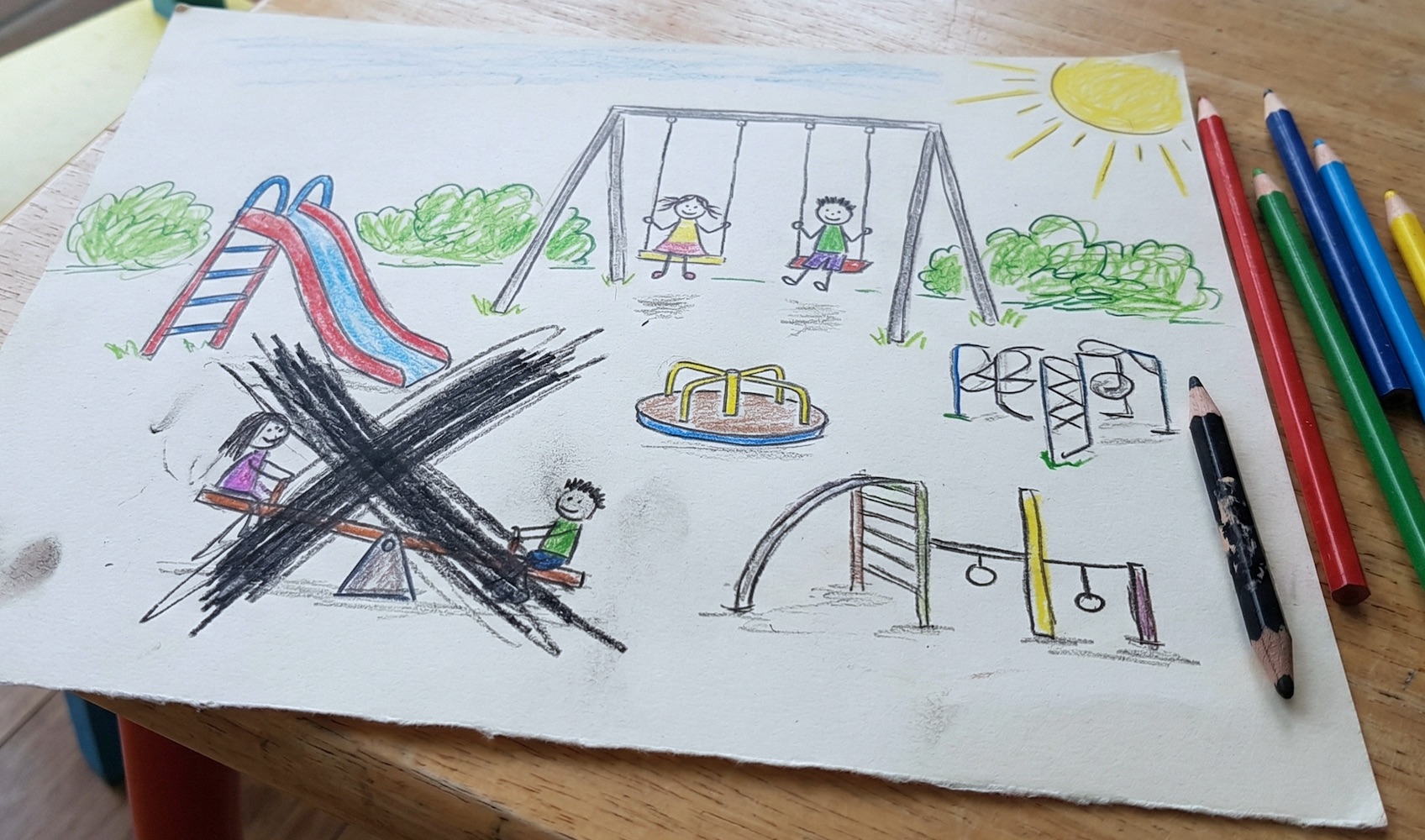
We see that look in your eyes when your little one's face turns red, the pencil snaps, and that drawing they spent twenty minutes on ends up in a jagged heap on the floor. It is exhausting, isn't it? My heart sink when I hear stories like these. You want to tell them it's "just a drawing," but to them, that tiny smudge is a mountain. You aren't alone in this frustration, and I want you to know that your child isn't being "difficult" on purpose. They are just lost in a very big feeling.
Why does a tiny smudge feel like a catastrophe?
The pencil lead snaps. A tiny grey smudge appears where a straight line should be, and suddenly, the air in the room feels thick with a storm that hasn't quite broken yet. Sometimes, our children have this vivid, beautiful image in their heads of how a "B" should look or how a cat's tail should curve. When their hands cannot match that dream, the gap feels like a total failure. It is a clash between their growing imagination and their still-developing motor skills. Frustrating. Very.
I've noticed that for some kids, there is a deep fear of "less than." In a world that often measures us by the neatness of our margins, some children start to believe that their worth is tied to the page. If the page is "ruined," they feel they are ruined too. I remember sitting on the floor of some (now forgotten) sketching workshop at the mall with my son while he sobbed over a crooked letter 'S', his face red, his breath hitching, and the surrounding children feeling like a heavy blanket on his small, shaking shoulders. He felt small.
What if this isn't actually about the homework?
The smell of damp paper. The sight of a small hand trembling over a notebook. It is easy to see defiance when what we are actually looking at is a heart that is simply terrified of being "wrong." Stop seeing the "drama." Look at the vulnerability instead. When my daughter crumpled her colouring book last week, I realised she wasn't trying to be difficult. She was simply drowning in a feeling she didn't have the words to name yet. We often think they are being too "sensitive," but really, they are showing us they have high standards and no tools to deal with the disappointment when things go south. It is a cry for help with their big, messy emotions, not a critique of your parenting.

How do we mend the paper and the spirit?
1. Let them see your "Oops" moments
Spill the coffee. Forget the keys. When you do, narrate it. "Oh dear, I missed the turning to the car park! That's okay, I'll just go around again." Let them see that adults mess up and the world doesn't end. Normalise the bungle. If we act like we are perfect, they will think they have to be too.
2. Focus on the "Middle" instead of the "End"
Instead of saying "What a pretty house," try "I saw how hard you worked on those windows." Shift the spotlight. Praising the effort builds a better mindset. It just means liking the struggle as much as the prize. And honestly? It works.
3. Create a "Mistake Kit"
Give them Washi tape, stickers, or even white-out. Make fixing the error a creative task. "That smudge looks like a little cloud, shall we add some rain?" It turns a "ruined" work into a new project. My kids love using those sparkly tapes from the stationary shop at Junction 8 for this. It gives them a way out that doesn't involve the bin.
4. The "Pause and Breathe" Bridge
When the tension rises, stop. Don't talk about the drawing. Just offer a hug or a glass of cold water. Sometimes the brain just needs a physical "reset" to get out of that fight-or-flight mode. The paper can wait. The child cannot. We can go back to the table after we've felt the cold water on our tongues.
5. The "Tomorrow" Perspective
Keep a folder of "almost" drawings. Looking back at them a week later helps a child see that the "disaster" wasn't actually that bad once the big feelings have faded. It builds perspective. They see that the sun still rose the next day even with a wonky circle on their page.
The beauty in the jagged edges
Your child's work doesn't need to be framed to be valuable, and neither does their progress. We are all works in progress, full of smudges and uneven lines. We shouldn't expect them to be finished masterpieces when they are still just the first sketch. Next time the paper starts to rip, just stay quiet and wait. Why are we so afraid of a little bit of mess?