
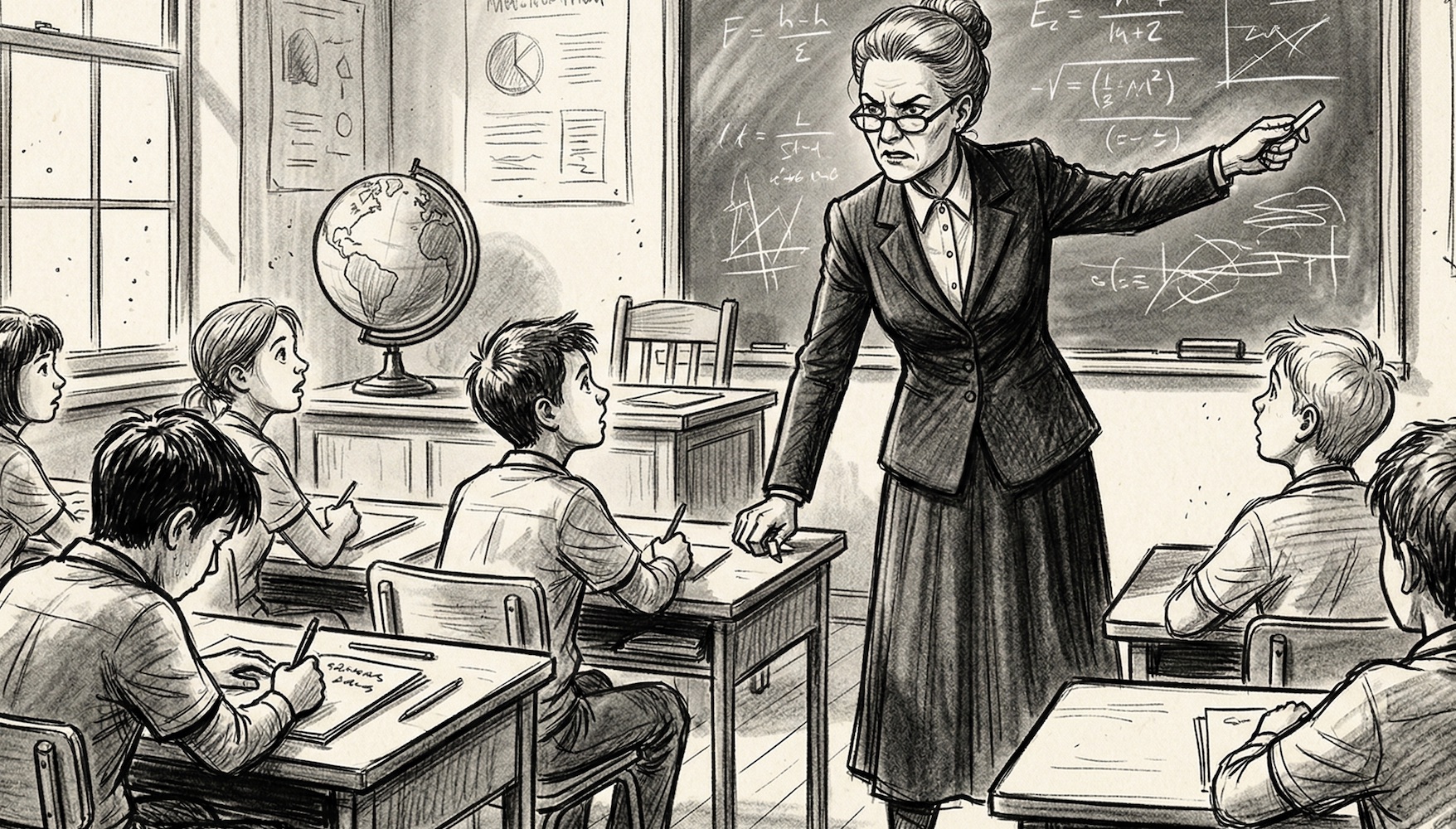
A friend told me over the weekend that her son was terrified of going to school. Her little boy, usually full of stories about Minecraft and recess snacks, had become a shadow of himself because of a teacher who seemed to find fault in every single thing he did. It broke my heart. We all want our children to feel safe and happy when we drop them off at the school gate, but sometimes, the reality is a teacher who is overly fierce or just plain unreasonable. It is a tough spot for any parent to be in, feeling that tug-of-war between wanting to protect your child and wanting them to respect authority.
The hidden weight behind the red pen
Teachers are human, even if we sometimes forget that when we see them in their uniforms or professional wear. Often, a teacher who seems "fierce" is actually a person under an immense amount of pressure from the system, the school board, or even their own high expectations. I saw this myself once when a teacher I knew was juggling thirty-five students, three CCAs, and a mounting pile of admin work that never seemed to end. The stress. The noise. The exhaustion.
Sometimes, it is about a mismatch in personality. Your child might be a dreamer who needs a gentle nudge, while the teacher believes a sharp voice is the only way to keep order in a crowded Singaporean classroom. It is not necessarily personal, though it certainly feels that way when your child comes home with puffy eyes and a slumped posture. Some people just have a naturally "loud" or "strict" way of communicating that they do not realise is coming across as scary to a seven or nine-year-old.
The playground lesson you did not see coming
It is easy to see the teacher as the "villain" in our child's story, but there is another way to look at this mess. Think of this as a safe, low-stakes training ground for the real world. One day, your child will have a boss who is grumpy, a colleague who is demanding, or a client who is never satisfied with the work. Dealing with a difficult teacher now—with you as their safety net—can actually help them build a backbone. It is about learning that not everyone will like us or be kind to us, and that is okay.
We can shift from "How do I stop this teacher?" to "How do I help my child handle this person?". This changes the energy from a fight into a lesson. My son once had a coach who yelled constantly, and instead of pulling him out, we talked about why some people use their "big voices" when they are worried about results. It did not make the yelling nice, but it made it less scary for him. The fear lost its grip.

Five ways to turn down the heat
1. Listen until the cup is empty
When your child comes home complaining about "Mrs Vijay" or whoever is making their life hard, just listen. Do not jump in to defend the school or fix the problem right away. Let them vent. Sometimes they just need to know that home is the one place where they are always right and always safe. A simple "That sounds really hard, tell me more" works wonders. Let the tears come if they need to.
2. The "Detective" roleplay
Get down on the floor and play a game of "What happened next?". Use their toys or just act it out. This helps you see exactly what is triggering the teacher and how your child is responding. You might find out the "fierce" behaviour only happens when the whole class is being noisy, or when your child forgets to pack their file. It gives you a clear picture without the emotional filter. Knowledge is power.
3. Write the "Bridge" email
Instead of an angry call, send a polite, curious email. Use phrases like "I noticed my child has been a bit anxious lately about school, and I wanted to check in to see how he is doing in your class." This shows the teacher you are on the same team. It is not an attack; it is a bridge. Most teachers will soften when they realise a parent is actually interested in helping, rather than just blaming. It works.
4. Teach the "Mental Umbrella"
Explain to your child that the teacher's mood is like rain. It is happening, but it does not have to soak them. They can put up a "mental umbrella." When the teacher starts shouting or being unreasonable, your child can tell themselves, "This is not about me, the teacher is just having a bad day." This small bit of mental distance can stop the words from hurting so deeply. It keeps them dry.
5. Focus on the "Small Wins"
In a tough school year, celebrate the tiny things. If they managed to hand in their homework on time despite being scared, treat them to a Milo dinosaur or a trip to the playground at East Coast Park. Remind them that they are doing a great job in a hard situation. Your praise needs to be louder than the teacher's scolding. Much louder.
The question to ask before tomorrow's assembly
We cannot always change the people our children meet, but we can change how much power those people have over our children's hearts. You are their anchor, their safe harbour, and the person who knows their true worth regardless of what a report book says. Your child is learning that they can survive a difficult person, and that is a quiet, powerful kind of strength. When you tuck them in tonight, ask yourself this: Am I teaching my child to be a victim of this situation, or am I teaching them how to be a person who can handle any weather?