

We recognise that heavy feeling in your chest. You've finished the third rendition of the book about the hungry caterpillar, tucked the bolster in just right, and kissed their forehead for the final time. You finally reach the door, your mind already drifting to that quiet episode of a K-drama or the warm cup of tea waiting on the table. Then, the voice calls out. "Mummy, I'm thirsty." It is exhausting.
The hidden script behind the "one more story" plea
The sound of the tap running in the toilet during the second "potty break" of the hour is a specific kind of stress. You might think they are just being stubborn. But often, it's about the sun going down. When the house gets quiet and the lights go dim, the world feels very big and they feel very small. Sometimes, children use these requests to test if you are still there. They aren't thirsty for water; they are thirsty for the reassurance that they aren't alone in the dark.
Other times, it is just a case of missing out. They hear the muffled sound of the television or the clink of a spoon against a bowl in the kitchen and they wonder what magic is happening without them. It is a struggle for control too. In a day filled with "wear your shoes" and "finish your broccoli," bedtime is the one area where they can effectively pause the world. They find a way to win a few more minutes of your undivided attention. The humidity. The silence. The stalling.
The shift from seeing a battle to seeing a bridge
We often view these requests as a hurdle to our own rest. We see a child who is being difficult or manipulative. What if we looked at it as a bid for connection instead? How often have we seen the dad who looked absolutely defeated by his toddler's demands, and it reminded us that we often react to the behaviour rather than the underlying need. Reframing this means realising that your child is actually saying, "I'm not ready to let go of the day yet."
When we change our perspective, the frustration starts to melt. Instead of an obstacle, the "one more glass of water" becomes a tiny bridge they are trying to build toward us. It doesn't mean we give in to every whim, but it means we respond with a soft heart rather than a clenched jaw. The night is a long time for a little person. This perspective will change how you breathe while you're standing by their bed.
Practical shifts to stop the bedtime loop
The smell of lavender oil and the cool air from the unit. These are the markers of the end of the day. But if the routine has broken down, you need a new plan. I remember sitting on the cold floor of the hallway, leaning my head against the wood of the doorframe while my son asked for a tissue, then a different blanket, then a story about a dragon that liked chicken rice, all while my own legs were cramping and the kitchen sink was still full of greasy plates from dinner. I felt trapped.
1. The Bedtime Ticket System
Give them two physical "tickets" every night. They can exchange a ticket for one extra request—a sip of water, a quick hug, or a question about why the sky is blue. Once the tickets are gone, they stay in bed. It teaches them to choose what they really need.
2. The Five-Minute Connection Dump
Before the final lights out, spend five minutes just lying there. No phones. No "hurry up." Just talk about the best part of their day or the funniest thing they saw at school. I find that when their "emotional tank" is full, they don't feel the need to leak out of bed to find you later.
3. Clear Transition Warnings
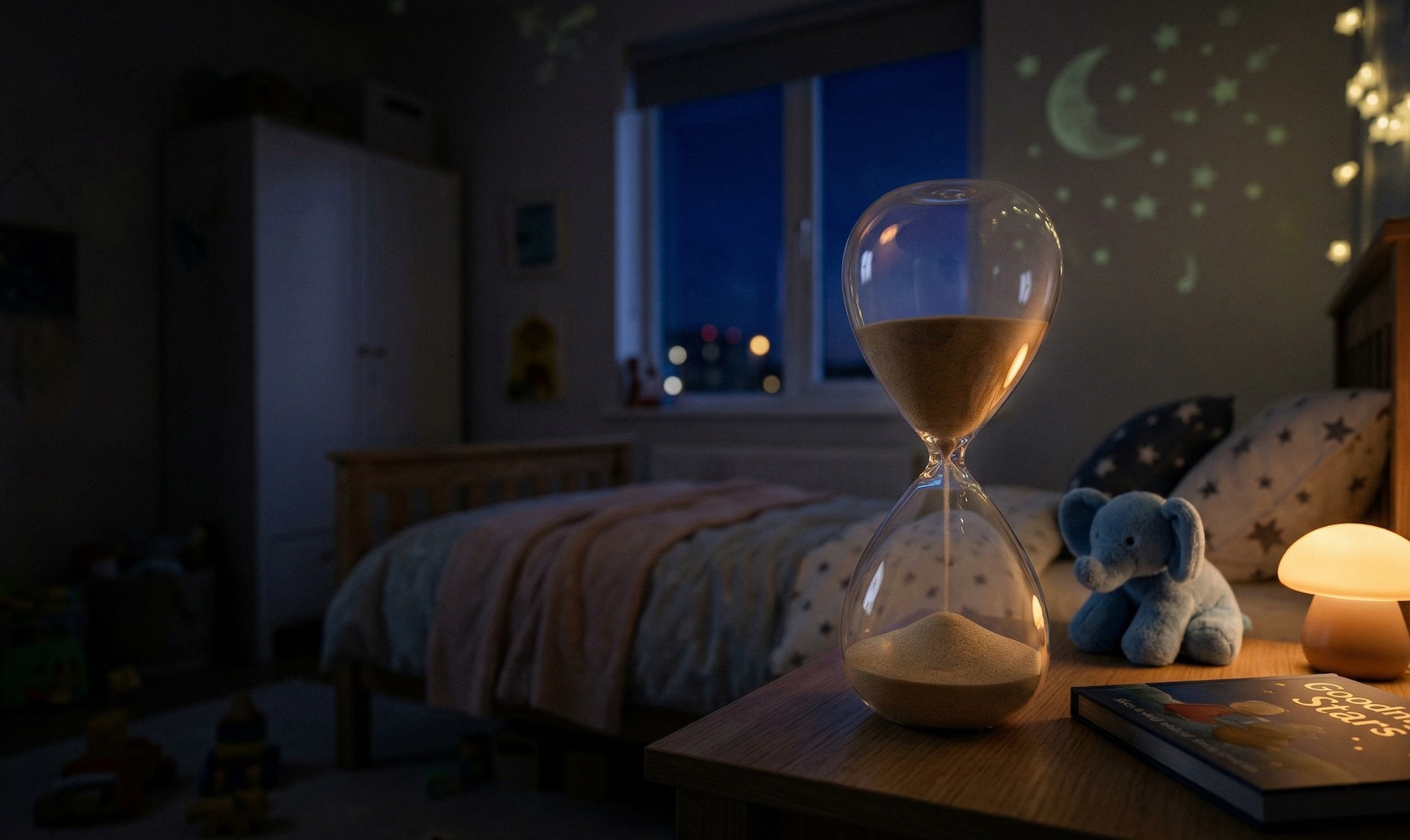
Avoid the sudden "okay, lights out now." Use a timer or a routine that they can see. I tell my daughter, "When this sand timer finishes, we do our final hug." It gives them a sense of control over the ending. They see the end coming from a distance, like a car approaching a red light.
4. The "Check-In" Promise
Tell them you will come back and check on them in five minutes if they stay quiet. This removes the fear that you've disappeared. They know you're just on the other side of the door, perhaps folding clothes or checking your emails. Knowing you're coming back allows them to relax into sleep.
A different way to greet the dark
The house is finally still, and you can hear the distant hum of the lift outside your front door. It's easy to resent the time stolen by these requests, but these years are short. One day, you will walk past their room and they'll be fast asleep without a single word, or they'll be teenagers with their doors locked. Will you miss the "one more water" when the house is finally, truly quiet?