The morning heat is already heavy, clinging to the back of my neck as we step onto the pavement. My nine-year-old is busy inspecting a line of ants, while the younger one, now six, is trying to balance on the edge of a concrete planter. We are not heading to a mall or a tuition centre. Today, our classroom is the stretch of green connecting our neighbourhood to the rest of the island. The Park Connector Network (PCN) transforms Singapore's urban landscape into an intentional classroom, where children engage in sensory foraging and biophilic play to build emotional resilience, physical health, and a deep, lasting connection to the natural world outside their door.
Nature is the only teacher that doesn't demand a tuition fee or a graded assessment.
"Look, the rain tree is sleeping," my six-year-old whispered, pointing at the folded leaves as the clouds darkened. This simple observation is the start of something deeper. We spend so much of our lives under fluorescent lights, but out here, the air feels different. It is restorative. It allows us to breathe without the weight of a schedule. This is not about reaching a destination; it is about the quiet moments between the steps.
The Unscripted Lesson
The humidity. The low hum of the PIE in the distance. The sudden flash of a Kingfisher's blue wings. We often think learning needs a desk and a screen, but the most profound growth happens when we let the environment lead the way. My girls do not need a syllabus to tell them how the wind feels before a storm. They feel it on their skin.

I saw a similar sentiment in an MOE guide recently, which mentioned how outdoor environments provide authentic contexts for learning things like language and maths through sensory exploration. But being a solo parent, trying to manage two different energy levels on a hot trail isn't exactly the easiest job. One wants to sprint; the other wants to poke a dead snail with a stick for twenty minutes. It is a messy, exhausting balance.
To keep the peace, I have stopped trying to "teach" them. Instead, I carry a small magnifying glass and a sketchbook. We do not look for specific facts. We look for patterns. If they find a leaf with a strange hole, that is the lesson for the day. No pressure. No right answers. Just the search.
Soft Fascinations
Logic suggests that if we want our children to focus better, we should give them more structured tasks. I used to believe that. However, the constant "hard" focus required by school and screens leads to mental fatigue. Nature offers "soft fascination"—the ability to pay attention without effort, which actually allows the brain to recover and rest.
This isn't just a hunch I had while walking near Kallang; NParks research confirms that exposure to flora and fauna in nature playgardens improves concentration and strengthens mental well-being in children. I've seen this play out on the weekends when the girls come home from a PCN trek. They are physically tired, yes, but their minds seem quieter. They bicker less. They settle into their drawing or reading with a focus that I cannot force on a Tuesday evening after work.
Sensory Math
"How many Yellow Flame seeds can you find before we reach the next bridge?" I asked, mostly to keep them moving toward the shade. The girls started scouring the grass, their eyes sharp and deliberate. We were not just walking; we were counting, categorising, and comparing.
I noticed the 2024 Physical Education syllabus now places a heavy emphasis on outdoor education to build holistic well-being. It is heartening to see the system recognise what many of us feel instinctively. On the trail, math is the distance between the tree and the canal. Language is the way they describe the "scratchy" bark or the "sticky" sap. We are building a vocabulary of the senses.
We sat by the canal watching the silt swirl, the dragonflies dart between the reeds, a lone crow pecking at a discarded wrapper, and the sunlight catching the ripples in a way that made the girls go completely silent. It was quiet. This is where we practice "foraging" for observations. I ask them to find three things that are the same colour as their shoes. It turns a boring walk into a treasure hunt for the mind.
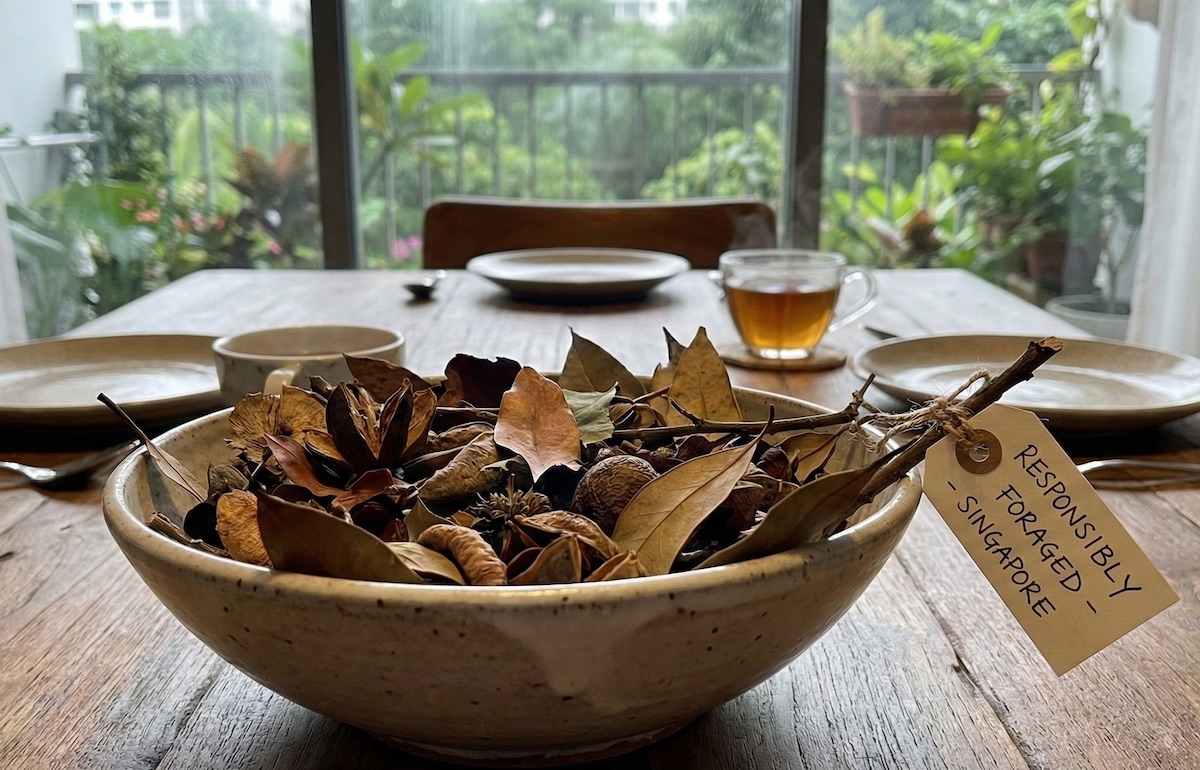
At home, we keep a "nature bowl" on the dining table. We don't take things from the parks—we follow the rules—but we collect things from our own small urban garden or things we are allowed to pick up, like fallen seeds. It serves as a reminder of the world outside our walls.
The Emotional Buffer
Living in a city means we are constantly dealing with the mess of noise and crowds. For a child, this sensory input can be overwhelming. The PCN acts as a buffer. It is a space where the rules of the "concrete world" are suspended. Here, they can get mud on their shins and sweat on their brows without anyone tutting at them. This freedom is where emotional resilience is built.
The Design Guidelines for Nature Playgardens highlight how biophilic spaces offer more opportunities for emotional development than traditional plastic playgrounds. It sounds expensive and grand, but I see it in the way my eldest helps her sister over a fallen branch. They are learning to manage risk and provide support in a way that a sterile environment just doesn't allow. "Can we stay five more minutes?" my eldest asked, and for once, I didn't check my watch.
Legacy Over Luxury
I want my daughters to remember these mornings. When they are older, I don't want them to think of their childhood as a series of malls and indoor play centres. I want them to remember the smell of the earth after a sudden downpour and the way the light filters through the canopy of an Angsana. This is the legacy I am trying to build—a sense of belonging to the earth that no one can take away from them.
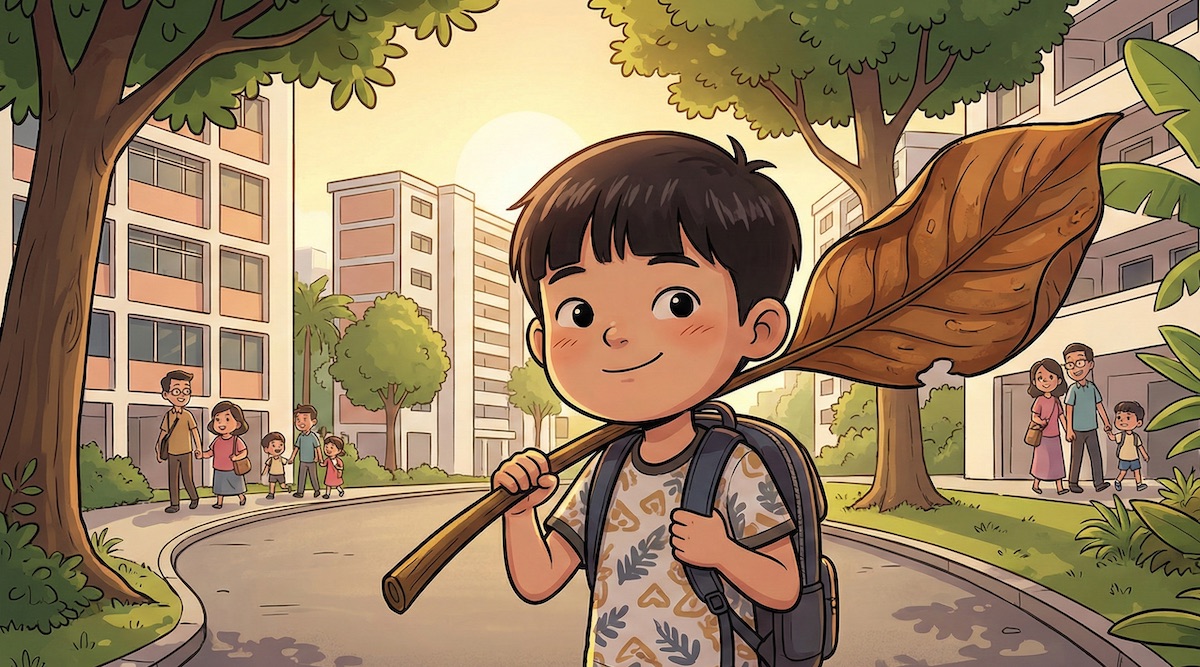
According to the Parks for Health Framework launched in 2025, the restorative qualities of our greenery are a primary tool for emotional health. It is a relief to have this validated, especially when the HPB Grow Well SG initiative points toward more personalised health plans for students. My plan for them is simple: more dirt, more sky, more stillness. It is the most minimalist, yet richest, gift I can offer.
We finish our walk near the petrol station, the transition back to the "real" world feeling abrupt. But as we wait for the lift, I notice my youngest still has a small seed pod tucked into her pocket. She caught me looking and smiled. We are back in the building, but a piece of the trail came home with us.
True wealth is found in the things we do not need to buy, and the peace we do not need to travel far to find.
If the path ends, do we stop walking? If you are heading out this weekend, the stretch near the Kallang River is particularly beautiful just after 8 in the morning. Bring a flask of coffee; the stillness is better than any cafe.