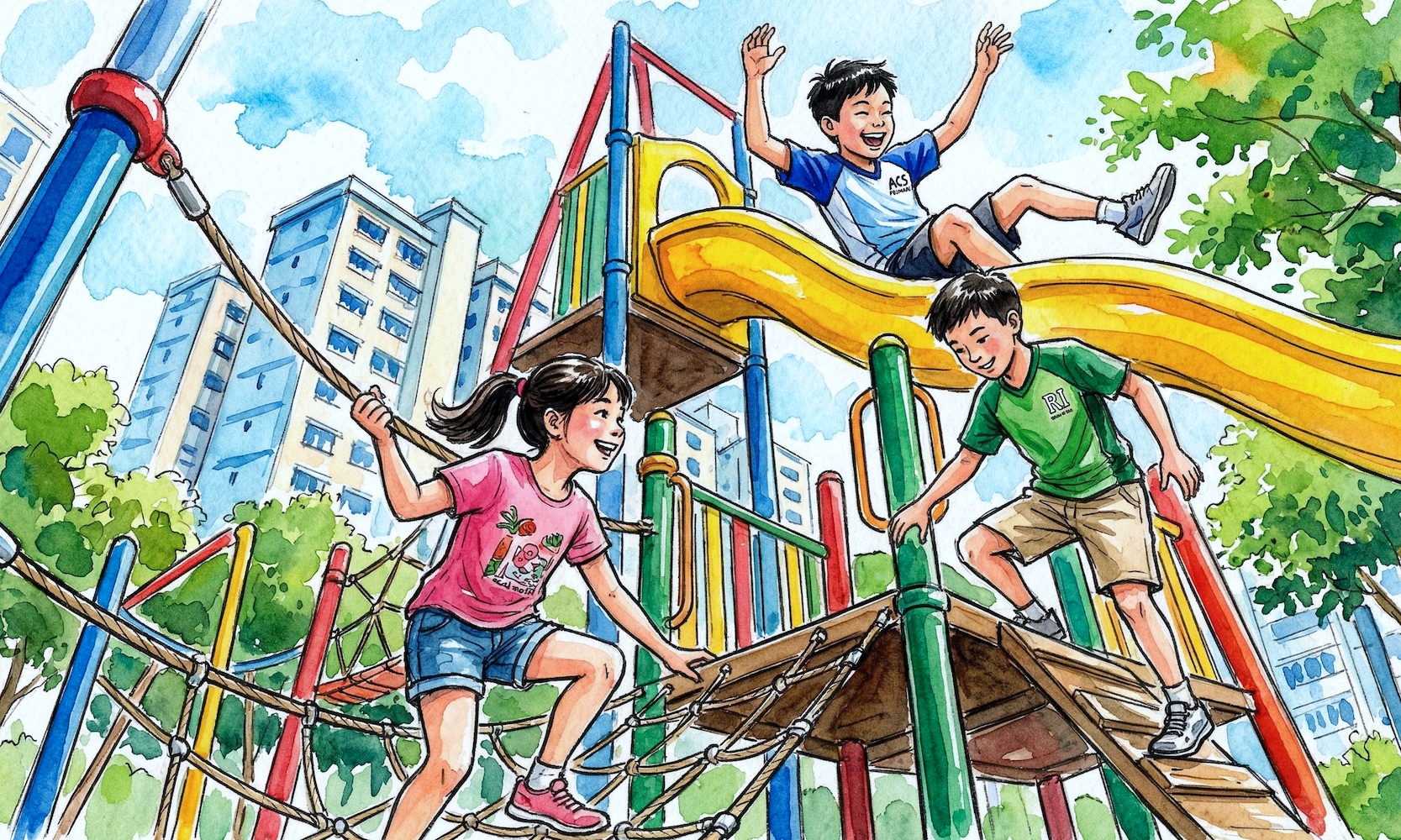
We have all been there, standing by the stone benches watching our children clutch a blue plastic bucket like it was her only prize in the world. And when other children attempt to reached for it, and the scream they let out will echo right through the void deck. Our faces go hot when other parents look over for a second, making us feel that sharp sting of shame. We wonder if everyone thinks we are raising a "bully" or if you've failed at teaching simple kindness.
Between the humidity making your shirt stick to your back, the aunties watching from the stone benches near the letterboxes, and the high-pitched squeals of children chasing each other around the yellow slides, it is easy to feel your pulse quicken when your child refuses to budge. It is hard. But please, take a breath. Your child is simply learning how to exist in a world that suddenly requires them to give up what they love most.
The hidden wiring behind the "mine" phase
The smell of rain on hot concrete always reminds me of how intense playground emotions can be. Most of the time, what we call bullying at this age is just a brain under construction. Small children don't have a fully developed prefrontal cortex, which is the part of the brain that handles "waiting" or "thinking before acting." To a three-year-old, that toy isn't just an object; it feels like an extension of their own body. Giving it away feels like losing a limb.
The concept of "later" doesn't exist for them yet. They live in a permanent "now." When we tell them to share, they don't hear "you'll get it back in two minutes." They hear "this is gone forever." It is a survival instinct, albeit a very loud one. My son used to do this at the playground outside his preschool, and it took me a long time to realise he wasn't being mean; he was just terrified of losing control over his small world.
Why your child isn't actually the villain of the playground
We often look at our kids through the eyes of the other parents. We see a "grabber" or a "shover." But what if we looked at them as a student who hasn't been taught the lesson yet? If your child struggled with a maths problem, you wouldn't call them a "bad student." You would just see a gap in their knowledge. Social skills are no different. They are just as difficult to master as long division or riding a bike without training wheels.
Instead of seeing a power struggle, try to see a child who is overwhelmed by big feelings. They are testing boundaries to see what happens when they say "no." It's an experiment. When we stop viewing it as a moral failing, we can stay calm enough to actually help them. Once you stop worrying about the "bully" label, watch your own stress levels dropped, which will actually make your kids less defensive.
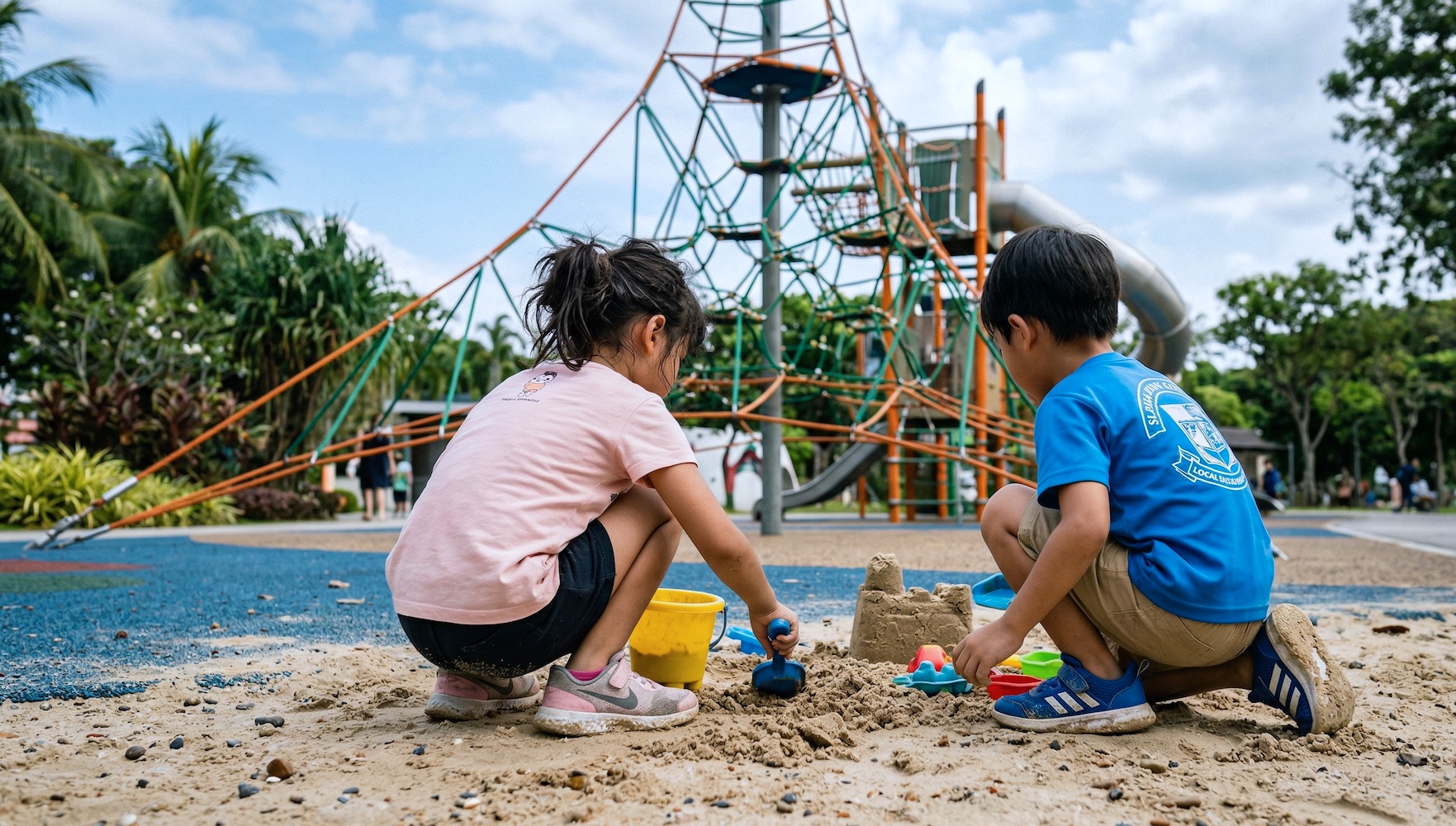
Ways to handle the void deck drama
1. The "One More Go" ritual
The lift door opens and the chaos starts. Before you even reach the pavement, set a clear boundary. Instead of a sudden "time's up," give them a specific number of turns. "Three more slides, then it's the next person's turn." It gives them a sense of agency and a countdown that their brain can actually process. I've found this works wonders compared to the vague "five more minutes."
2. Be the "Sportscaster"
Narrate the scene without judging it. "Oh, you're holding the spade very tight. You're not ready to let go yet. And the other boy is waiting. He looks a bit sad." This helps your child build empathy by putting words to the emotions happening in front of them. It takes the pressure off "obeying" and puts the focus on "observing."
3. Practise the "Trade"
Sharing is a huge ask, but trading is a negotiation. Teach them to ask, "Can I trade you this stick for that ball?" It gives them a tool to use instead of their fists. We did this at the Curiosity Cove recently and it turned a potential meltdown into a very serious business deal between two children.
4. Stay within arm's reach
If you know your child is going through a "grabbing" phase, don't sit on the far bench with your phone. Be the "shadow." When you see their body language stiffen, get down on their level before the push happens. Your physical presence provides a safety net that helps them regulate their own energy. Just being there, a hand on a shoulder, can prevent a lot of tears.
5. Use "Long-Turn" sharing
Sometimes, we force kids to give up a toy the second someone else wants it. This actually makes them more possessive. Try allowing "long turns." Let them play until they are truly done. When they finally put the toy down of their own accord, they realise that giving it up didn't hurt. It builds a sense of security.
The truth about the next time they grab a toy
Your child is not their worst moment at the playground. They are a work in progress, much like the rest of us. The next time you see that little hand reach out to shove or hear that sharp "No!", remember that they are looking to you to see how to handle a conflict. Your quiet, steady presence is the best teacher they will ever have. When you look at them in that heated moment, ask yourself: am I reacting to my child's behaviour, or am I reacting to the fear of what the other parents think of me?