
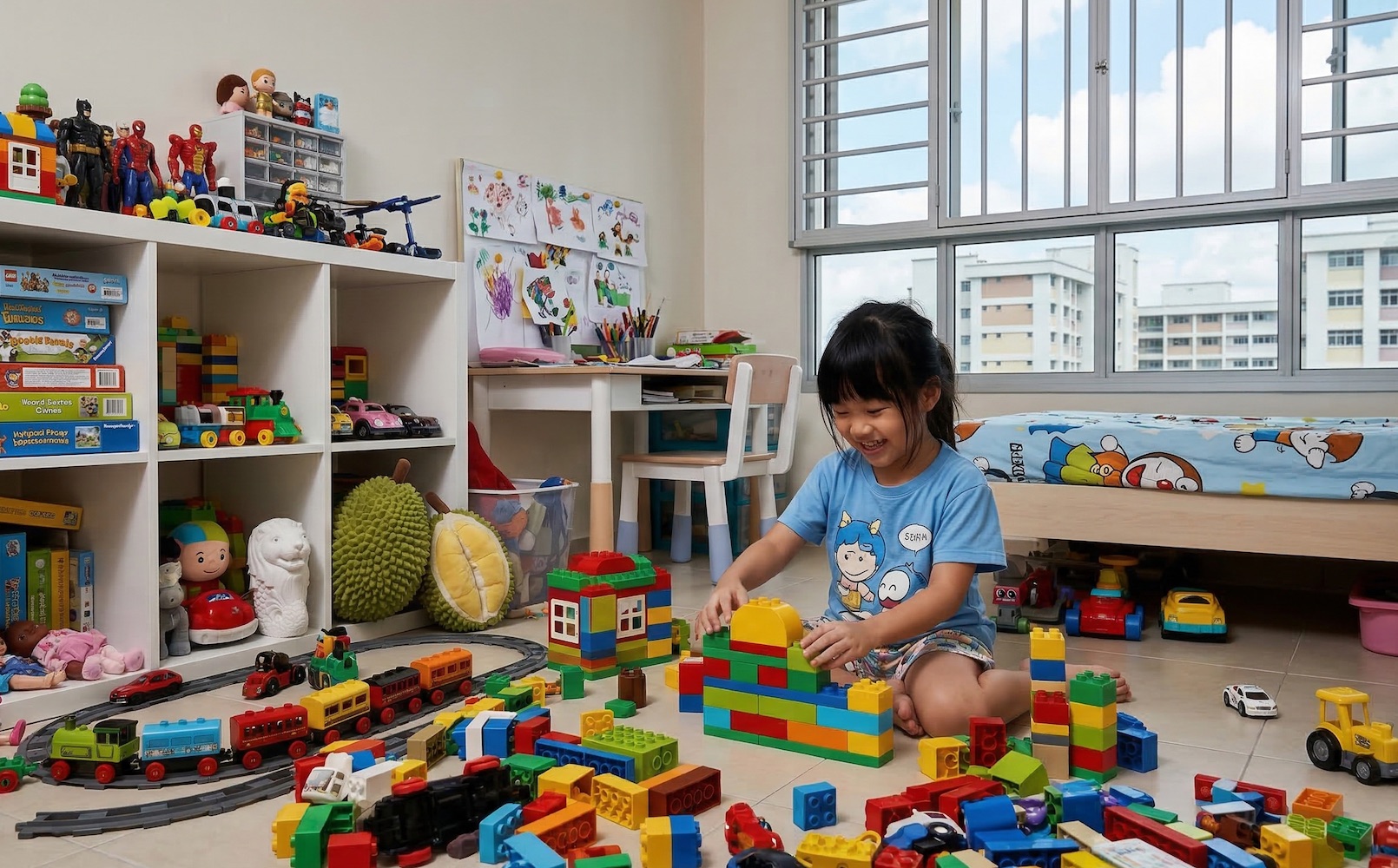
You've bought the Lego sets, the drawing blocks, and the books, yet they stand there waiting for you to programme their next move. I hear this from so many mums—the feeling that we must be the "Chief Entertainment Officer" or we aren't doing our jobs. But I want to tell you, quite gently, that you can put down the clipboard. You don't need to fix this silence for them.
The hidden reason your child's brain is actually "stuck"
The whirring of the fan, the distant sound of a car alarm in the multi-story car park, and the ticking of the clock can feel incredibly heavy to a child used to constant input. One reason this happens is the sheer amount of structure we provide in Singapore. From back-to-back tuition to organised dance practice at the studio, our children's lives are often a series of instructions given by adults. When that structure vanishes on a Sunday afternoon, they simply haven't built the "muscle" to decide what happens next. They aren't being difficult; they are genuinely lost without a map.
There's also the dopamine factor, and digital stimulation from screens do set a very high bar for excitement. If they are used to the fast-paced colour of a tablet screen, the "real world" of a wooden block or a blank piece of paper feels painfully slow. Their brains are waiting for a ping or a buzz that isn't coming. It's a bit of a "withdrawal" from the fast lane. And honestly? It's uncomfortable for them.
What happens when we stop being the Chief Entertainment Officer

We often see boredom as a gap that needs filling, like a hole in the pavement that needs patching up before someone trips. What if we saw it as a clearing instead? When we rush to provide an activity, we take away the chance for them to look inside themselves. It's like always giving them a lift to the MRT station instead of letting them figure out the bus route; they never learn the way. By backing off, we allow them to feel that itch of boredom until it turns into an itch of curiosity. It's a shift from "What will Mum let me do?" to "What do I want to do?"
The simple shifts that turn quiet afternoons around
1. Use the "Boredom Jar" strategy
Sit down together when everyone is in a good mood and write down twenty simple tasks on slips of paper. These shouldn't be "big" things, just small sparks like "build a fort using all the pillows" or "draw a picture of a monster eating laksa." Put them in a jar. The next time the "I'm bored" chorus starts, they can pick one. It provides a tiny bit of direction without you having to come up with the idea on the spot. It works.
2. The "Ten-Minute Connection" bridge
Sometimes "I'm bored" is actually code for "I miss you." I've noticed with my daughter that if I stop what I'm doing and sit on the floor with her for just ten minutes—no phone, no chores—she gets her "fill" of me. After those ten minutes, I'll say, "I'm going to finish the laundry now, you carry on with your play." Usually, she's then settled enough to find her own rhythm. It's about filling their cup before asking them to pour for themselves.
3. Create a "Yes" space
The primary school years bring a lot of pressure with spelling tests and swimming lessons and birthday parties at indoor playgrounds where the music is too loud, but sometimes the quietest moments at home are the hardest to handle because we worry about the mess. If they want to pull all the cushions off the sofa to make a "ship" in the living room, let them. A "Yes" space means a corner of the home where they don't have to ask permission to move things around. My living room often looks like a disaster zone by 4 p.m., but the kids are busy. It's worth it.
4. Introduce the "Contribution" choice
This is a classic "mum" move that about developing independence. When they complain they have nothing to do, offer two choices: "You can find something to play with, or you can help me wipe down the dining table and fold the towels." Usually, the prospect of chores sends them scurrying back to their toy box very quickly. It's a gentle reminder that their entertainment is their own responsibility. If they choose the chores? Well, at least the towels get folded.
The quiet truth about raising independent thinkers
Your job isn't to be a clown or a cruise director. When you leave them to sit in that uncomfortable "nothingness," you are giving them the gift of their own imagination. The next time you see them moping by the window, remember that some of the best ideas in the world were born because someone was bored enough to start dreaming. The stillness. The waiting. The spark.
If you don't provide the spark today, what fire might they start on their own tomorrow?