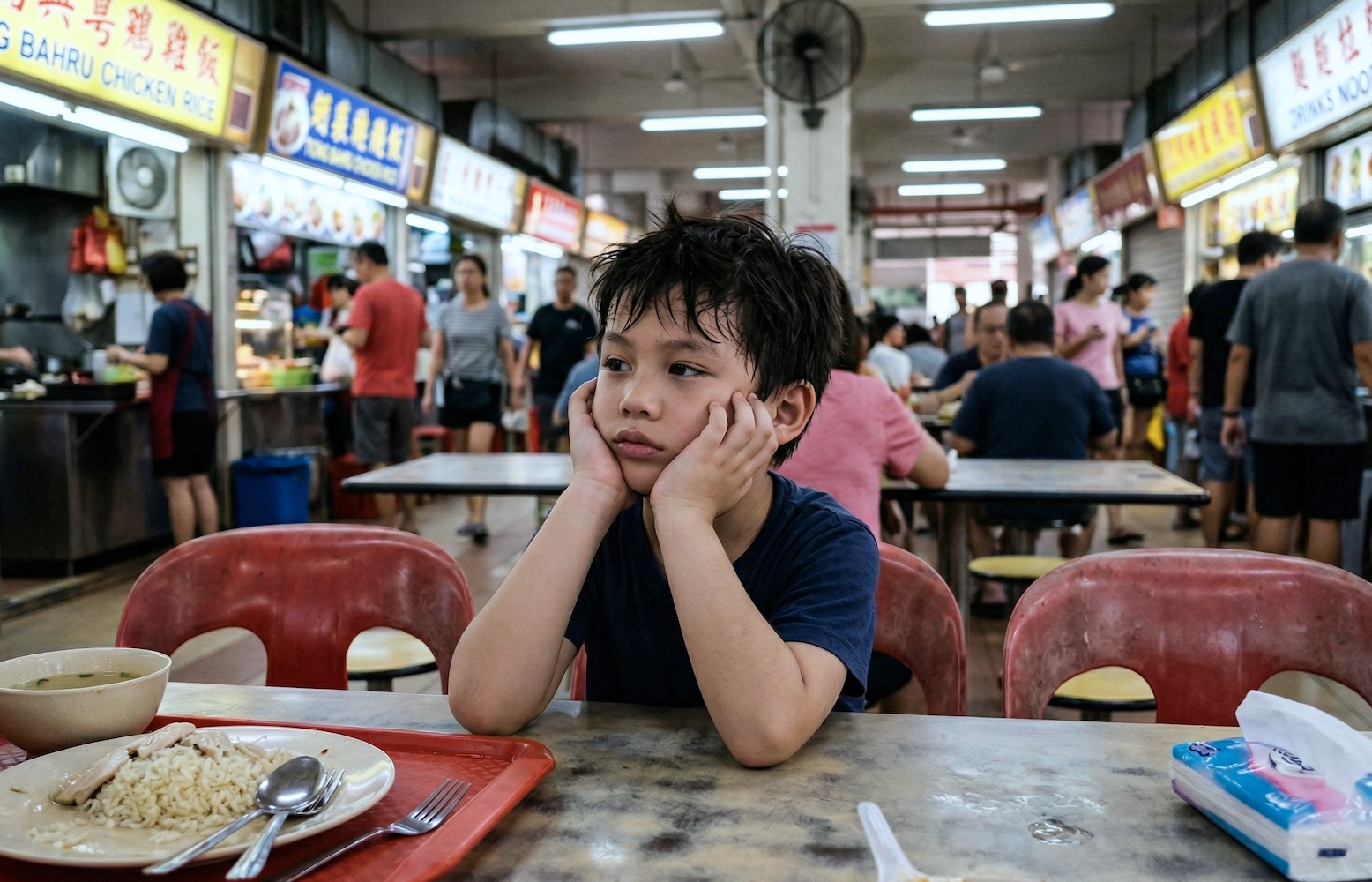
Kiddo sat firmly with her arms crossed. The steam from your laksa being lovely, but she wanted fries. Just fries. Not the beautiful handmade fishball noodles you had queued ten minutes for. This is a common scene for many of us. I was talking to a group of mums at the playground last week, and we all laughed because "beige" seems to be the official colour of childhood dining in Singapore. You are not alone in this, and your frustration is completely valid.
The hidden reason behind the "beige food" demand
The clatter of melamine plates, the uncle shouting orders for Kopi-O, the heat rising from the laksa stall, and the sheer volume of people moving around can make a small child feel like the world is just too loud and too fast. It is loud. When everything feels chaotic, kids look for an anchor. Plain chicken rice is consistent. A fry is a fry, whether you buy it in Jurong or Bedok. It tastes the same every single time. New foods represent a risk they might not have the energy to take after a long day of school or play. It is less about being stubborn and more about finding a "safe" point in a very busy environment.
Some children also have a higher sensitivity to textures. Think about a prawn mee. It has yellow noodles, beansprouts, prawns with tails, and maybe some kangkong. That is a lot of sensory data for a seven-year-old to process at once. Fries? They are just crunchy and salty. Simple. Easy.
What if your child isn't actually being "difficult"?
The smell of burnt garlic. The sticky floor. The auntie with the trolley. Sometimes, our kids aren't fighting the food; they're fighting the chaos of the hawker centre itself. We often see pickiness as a battle of wills. We think they are trying to "win" or that we are failing to raise an adventurous eater. If we stop seeing it as a defiance and start seeing it as a coping mechanism, the air in the room changes. They are just trying to feel okay in a place that feels a bit too much. It is a boundary they are drawing to feel safe. When we realise this, we can stop being the "food police" and start being their teammate.
Small shifts that change the dinner table dynamic
1. The "No-Pressure" Plate
Buy your own meal—maybe some carrot cake or mee pok—and put a tiny portion on a separate saucer next to their "safe" chicken rice. Don't ask them to eat it. Don't even mention it. Let it just sit there. Exposure without demand lowers their guard. One day, they might just pick up a piece of egg out of pure curiosity. Or they won't. And that's fine too.
2. Use the "Same, But Different" Rule
If they only eat plain chicken rice, try a tiny variation. Ask for the rice but maybe a slice of cucumber on the side. Or try the roasted chicken instead of the steamed one. Keep the core the same but tweak one tiny detail. It builds the "bravery muscle" without causing a total meltdown at the table. Small wins lead to bigger ones later.
3. Manage the sensory load
Before you even talk about food, find the quietest corner of the food court. Avoid the tables right next to the tray return point or the busiest drink stall. If the environment is calmer, their brain has more room to think about trying a new taste. A child who is overstimulated will never be an adventurous eater. Peace first, protein second.
4. The "Food Tour" Game
Before you sit down, walk through the stalls together. Let them point at things that look "interesting" without the expectation of buying them. "Look at how that uncle flips the prata!" or "That fish is so big!" Make the food centre a place of discovery rather than a place of conflict. If they feel like they have some say in the exploration, they might eventually want to participate in the eating.
5. Pack a "Bridge" Food
Sometimes I carry a small container of cherry tomatoes or grapes from home. It is a familiar, healthy food they love. If they have their "safe" fruit, they might feel more comfortable sitting while you eat something different. It stops the meal from becoming a total nutritional loss and keeps everyone's spirits up. It saves you from that "nothing but oil" guilt.
The one thing to remember when the tray is still full
Think about the last time you sat at a crowded Maxwell Food Centre with the sun beating down, the queue for the famous stall winding past your table, and your child refusing to eat anything but the crumbs of a cracker. It feels like the end of the world. But it isn't. Their palate will grow as their world expands. Most of us grew up to eat more than just plain rice, and they will too. Your job isn't to force the broccoli; it's to keep the relationship sweet. When you look at them tonight, ask yourself this: Is the conflict over the carrot really worth the distance it's putting between you?