
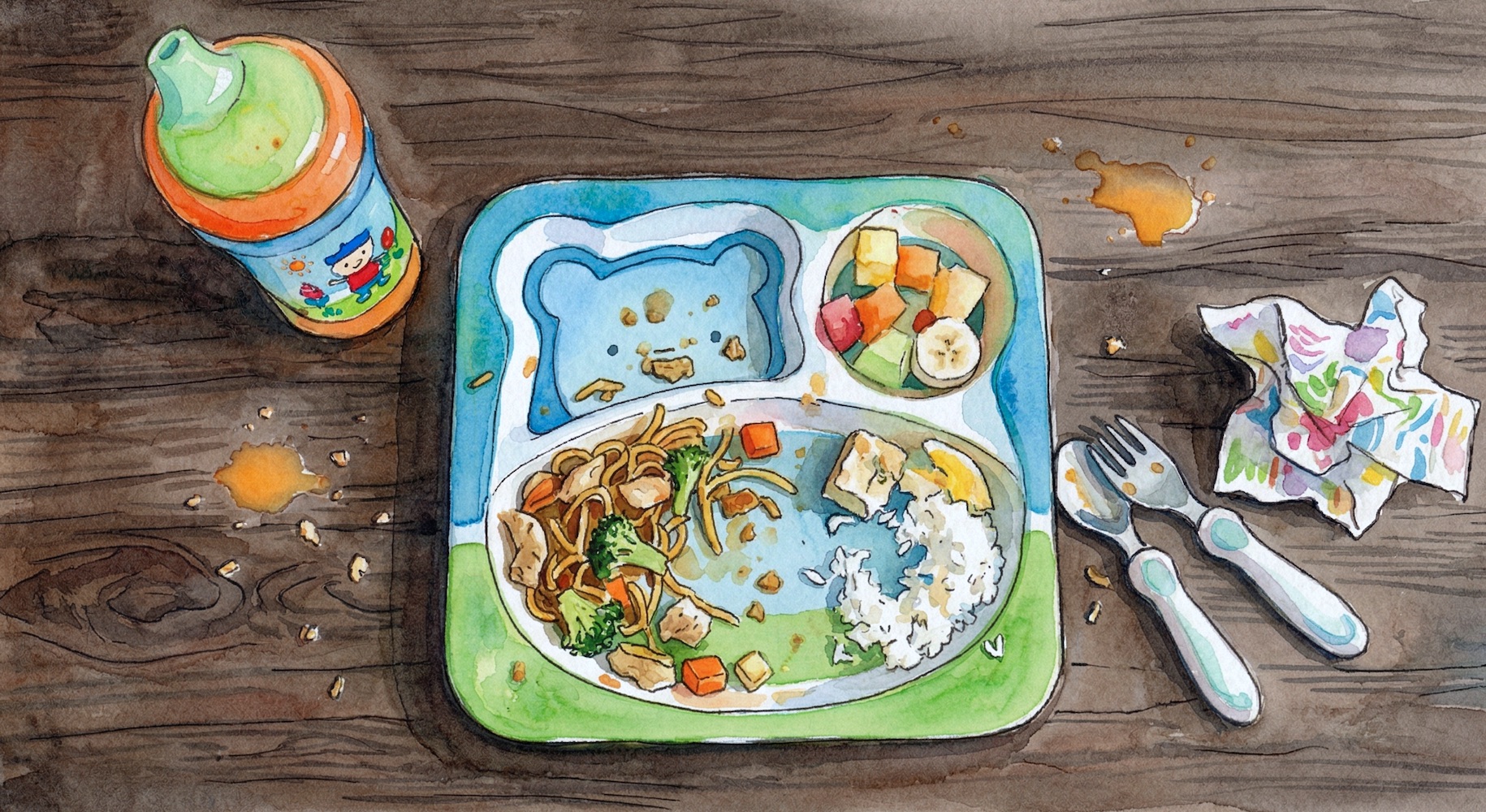
When the steamed broccoli hits the floor for the third time and your partner sighs that specific, sharp sigh. It feels like a personal failure, doesn't it? Like if you had just started solids differently, or if they didn't give in to that biscuit at 4 PM, we wouldn't be here staring at a cold plate of pasta while the tension in the room thickens. But let me tell you something I realised back when my oldest was transitioning to primary school: the food isn't the real enemy here.
It is the blame. We point fingers because it is easier to have a target than to admit we are both out of our depth with a stubborn toddler. The guilt is real.
Is it really about the nuggets?
We often think the feeding war is about nutrition, but usually, it's about control and different ways of showing love. One parent might see a "no" as a rejection of their hard work in the kitchen, while the other sees it as a battle for authority that must be won. A mum once told me how her husband's family used clean plates as a measure of good parenting, which put so much invisible pressure on their own dinner table.
Another reason is simple exhaustion. When we are tired, we look for a why to fix the what. It is easier to point a finger at a partner's lenient style than to accept that a preschooler simply has developing taste buds that might hate the texture of steamed carrots today. I remember standing in my kitchen at 7 PM, watching the steam rise from a bowl of unwanted fish soup, feeling like my heart was being squeezed by a giant, invisible hand of guilt. I felt small.
The secret hidden under the high chair
The cold linoleum under my feet and the sound of the fridge humming in the dark. That is where I usually find my clarity. Instead of seeing your partner as the person spoiling the child or being too harsh, try seeing the dinner table as a lab. Your child is the scientist, testing limits and textures. You and your partner are the lab assistants. When one assistant gets frustrated, the experiment doesn't fail; it just needs a shift in protocol. It is not your way versus my way. It is our way of supporting a tiny person who is currently terrified of anything green.

The roadmap to a quieter kitchen
1. The Division of Responsibility
Try this concept next time: You decide what, when, and where the food is served. The child decides whether to eat and how much. By sticking to this, you and your partner stop being the food police. It removes the need to argue about one more bite because the boundary is already set. No more deals. No more bribes.
2. The Safe Food Anchor
Always ensure there is one thing on the table you know they will eat, even if it is just plain rice or bread. This lowers the stakes for everyone. No more frantic cooking of a second meal at 8 PM while the kitchen lights hum and your back aches from standing all day. Peace.
3. Unified Front Meetings
Talk about food when the kids are asleep. Not during the battle. Sit down with a cup of Milo and agree on two basic rules. Maybe no screens at the table is one. Stick to them like glue. If one parent falters, don't correct them in front of the child. Wait until the kitchen is quiet. The silence. The stillness.
4. Model the Mess
Show them that you enjoy food. If you are both picking at your own salads while glaring at each other, the child picks up on that sour energy. Eat together. Laugh about a silly thing that happened at the waterpark. Make the table a place of connection, not a courtroom. Sometimes it feels like a never-ending cycle of washing the same plastic bowls, wiping up spilled orange juice, picking up stray grains of rice from the floor, and wondering if they will ever grow tall enough to reach the top shelf without help.
What happens when the plates stay full?
We are all just trying to grow healthy humans. Sometimes that means they eat three bowls of rice, and sometimes it means they live on air and spite for forty-eight hours. It passes. Truly. I've seen it with my own two, where a week of refusing spinach turned into a sudden love for vegetable dumplings. Your marriage is worth more than a serving of peas. Don't let a chicken wing come between you and the person who helps you fold the laundry at midnight.
The next time the "fault" word enters your mind, ask yourself: If I weren't so tired right now, would this half-eaten plate actually matter?