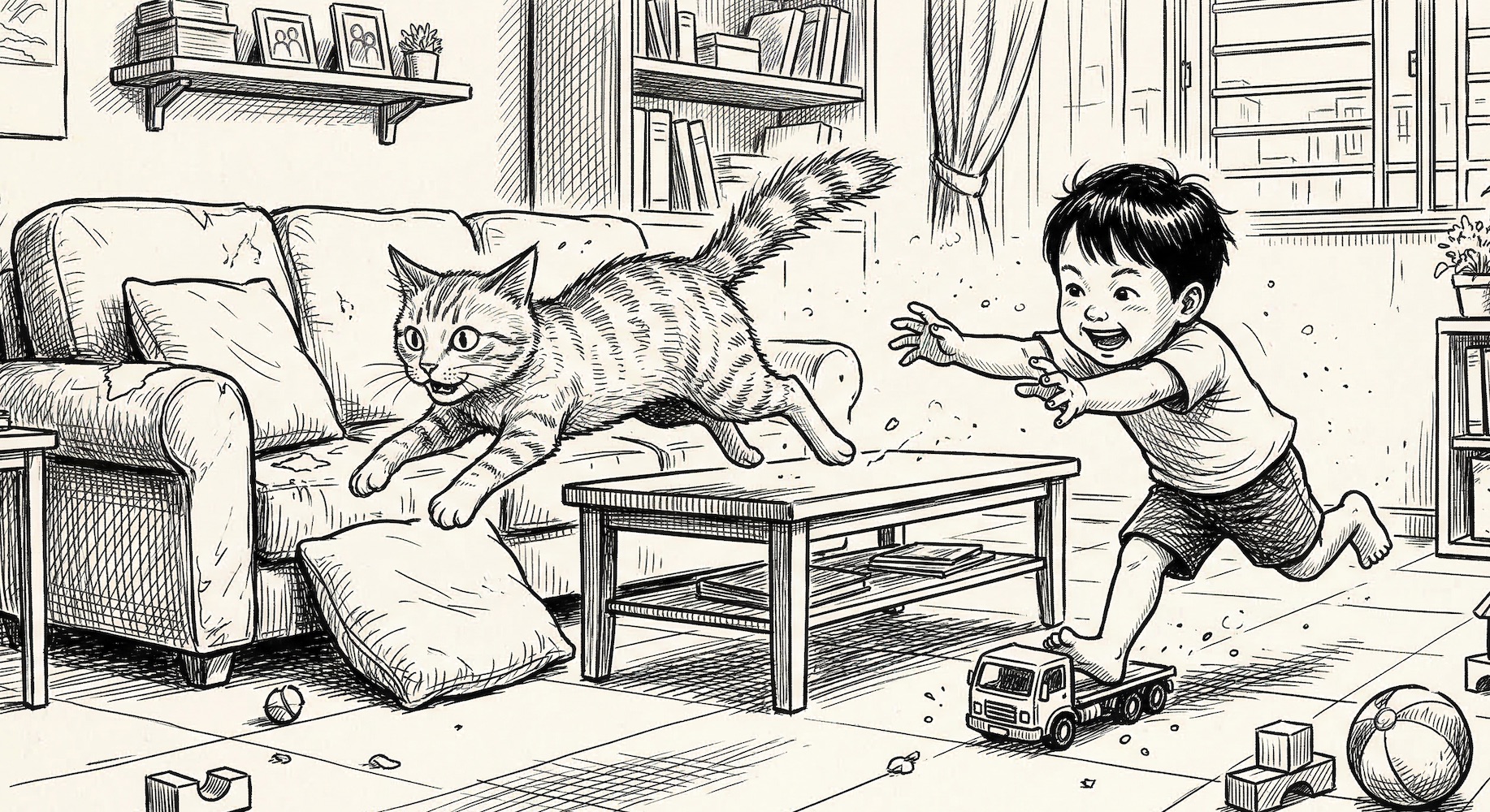
HIt is a bit jarring when you see your child, who usually shares his snacks so nicely, suddenly pulling the dog's tail or pouncing on the cat like a wrestler. My own son, now nine, had a phase where he thought our neighbour's tabby was a soft toy. It can feel like you have failed at teaching kindness, but honestly? It is a very common hurdle. We were just at the Bishan-Ang Mo Kio Park last weekend, and I saw a toddler doing the exact same thing to a Golden Retriever. It happens. You are not a bad parent, and your child is not "mean."
Why is my child treating our pet like a plushie?
According to some parents, their kids often do not realise animals feel pain the same way we do. To a seven-year-old, the dog is a playmate that does not talk back, which makes it easy to forget there is a living, breathing soul under all that fur. Sometimes, they are just looking for a big reaction. If the dog yelps or the cat scurries away, it is "exciting" feedback for a developing brain that is still figuring out cause and effect. The sticky fingers, the sudden shriek of the cat, the fur flying everywhere, and that sinking feeling in my stomach as I rushed over to separate them made for a very long, very exhausting Tuesday afternoon. It was loud.
Another thing? It is often about poor impulse control. Children's "brakes" might not be fully developed yet. They see a fluffy tail, they want to grab it. The thought of "this might hurt" does not even register until the deed is already done. It is not malice; it is just a lack of a filter between the "want" and the "do."
Could this actually be a sign of deep curiosity?
We often jump to "aggression," but what if we looked at it as a clumsy attempt at connection? If we reframe this, we see a child who desperately wants to engage with another creature but lacks the motor skills or the emotional vocabulary to do it right. They are testing the "physics" of the living world. When you stop seeing it as a moral failing and start seeing it as a skill gap, the way you react changes. You move from being a police officer to being a coach. It works much better for your blood pressure.
What can we change before someone gets bitten or scratched?
1. The "Two-Finger" Stroke
Try this brilliant tip for younger kids. Instead of letting them use their whole hand—which leads to grabbing—teach them to use only two fingers to pet the "safe" spots. It forces them to be delicate. We practised this on my daughter's stuffed rabbit first before moving to the real cat. It turned petting into a deliberate, quiet act rather than a frantic one.
2. Narrate the Animal's Feelings
Give the pet a voice. When the dog tucks its tail, say, "Oh, look at Bobby's ears. He's telling us he's a bit scared right now and needs some space." By naming the emotion for the animal, you are building the child's empathy muscles. You are helping them translate "dog language" into "human language."
3. Create a "No-Touch" Zone
Every pet needs a flat-sized sanctuary where they are 100% off-limits. Whether it is a specific crate, a bed in the corner of the hall, or a spot under the dining table, make it a rule that when the pet is there, we leave them be. This teaches the child about consent and boundaries. It gives the animal a way to opt out of play without needing to use their teeth.
4. Model "Gentle Hands"
Kids are little mirrors. If they see us rushing the dog off the sofa or being impatient with the cat, they will do the same. I try to make a big show of being very soft and slow when I approach our pets. I talk to them quietly. It sets a tone for the whole house. A bit of peace goes a long way.
What if the pet is actually their first big teacher?
You are teaching your child how to care for something smaller and more vulnerable than themselves, and that is a lesson that stays for life. It is okay if it takes time to stick. They are learning the weight of their own strength and the value of a quiet moment. Next time you see those little hands reaching out too fast, take a deep breath before you react. What does your child see when they look into the eyes of your family pet, and how can you help them see the life that is there?