The Big Kid years (ages 4 to 6) are a transformative time for families in Singapore. As your child moves through Kindergarten, the conversation naturally shifts toward Primary 1 readiness. This isn't just about academics; it's about developing the self-reliance and emotional stamina they'll need for a longer school day. Habit building at this stage moves away from simple redirection and toward empowerment—giving them the tools to manage their own day-to-day life.
In this guide, we review common case studies that every local parent will recognise. To help navigate these situations, we use a 3-stage framework. By following this sequence, you can move away from nagging and instead become a designer of your child's success. Here is how to understand the loop we will use to solve each case study:
Design a physical cue
Parents can take the lead by changing the environment or using a physical object to signal that it's time to start the habit.
Perform a tiny behaviour
The child can perform a small, manageable movement. We keep this tiny so the child can easily succeed and feel confident.
Enjoy a logical win
The child receives a result or reward. This satisfaction helps the brain want to repeat the cycle tomorrow.
Jump to a situation and learn how to build the habit:
- Independent Dressing
- Independent Showering
- Packing the School Bag
- Managing Shoes & Socks
- Lift & Commute Manners
- Waiting for Turns to Speak
- Managing Losing Games
- Greeting Helpers/Elders
- Setting the Table
- Clearing the Meal Plate
- Screen Time Exit
- Tidying Small Toys
- Independent Brushing
- Sneezing & Nose Manners
- Bedtime Reading Habit
Cluster 1: School Readiness & Autonomy
With Primary 1 on the horizon, Cluster 1 focuses on self-management. In a typical Singaporean morning, time is the enemy. However, if we continue to do everything for our preschoolers, they enter the formal school system feeling helpless. These five habits are designed to shift the burden of logistics from the parent to the child, building the confidence they need to navigate a school day without a 1-to-1 adult guide.
1. Independent Dressing for School
Morning routines are often a race where parents end up dressing the child just to get out the door. The child often remains passive, viewing dressing as something that happens to them rather than something they do. This happens because the sequence of uniform-wearing feels like one giant, daunting task.
To solve this, parents can break the uniform into a physical timeline. By creating a habit that rewards the completion of the sequence, the child learns to associate waking up with a specific, successful flow of movements.
Lay a clothing trail
Parents can place the uniform items in a linear row on the floor or a low chair the night before, in the exact order they should be worn.
Step into each item
The child can put on each item in the trail order as they walk toward their bedroom door, completing the sequence independently.
Earn a breakfast choice
The fully dressed child gets the immediate win of picking their breakfast cereal, spread, or the fun character mug they want to use.
2. Independent Showering
Moving from being bathed to showering alone is a major milestone for a 5-year-old. Resistance usually happens because the child finds the sequence confusing or the water temperature/pressure unpredictable. They fear getting soap in their eyes or missing a spot, which makes them cling to the parent for help.
Parents can design a habit that makes the shower a self-guided experience. By using visual prompts, we remove the need for verbal nagging and allow the child to take pride in their hygiene.
Post a visual sequence
Parents can stick a laminated 4-step chart (Wet, Soap, Scrub, Rinse) inside the shower area at the child's eye level.
Tap the sequence wall
The child can tap each icon on the laminated chart as they complete that specific part of their wash.
Enjoy a warm towel hug
The child is greeted with a fresh towel and enthusiastic praise for being an independent washer, followed by a warm hug.
3. Packing the School Bag
A common Primary 1 struggle is a child forgetting their water bottle, hat, or communications book. If parents do the packing, the child never learns to associate their physical objects with the school day. They view their bag as a magic container that parents fill.
Parents can build a launchpad habit to automate this ownership. By creating a physical space for school items, we help the child develop a mental checklist that will serve them throughout their primary school years.
Design a "ready tray"
Parents can place a dedicated tray or basket by the front door with the communications book, water bottle, and snack box.
Perform a "bag-pat" check
The child can tap the bottle, book, and bag before zipping everything securely shut for the next day.
Earn the "P1 Ready" star
The child receives a small sticker on their home chart or a special high-five for being P1-ready and organised.
4. Managing Shoes and Socks
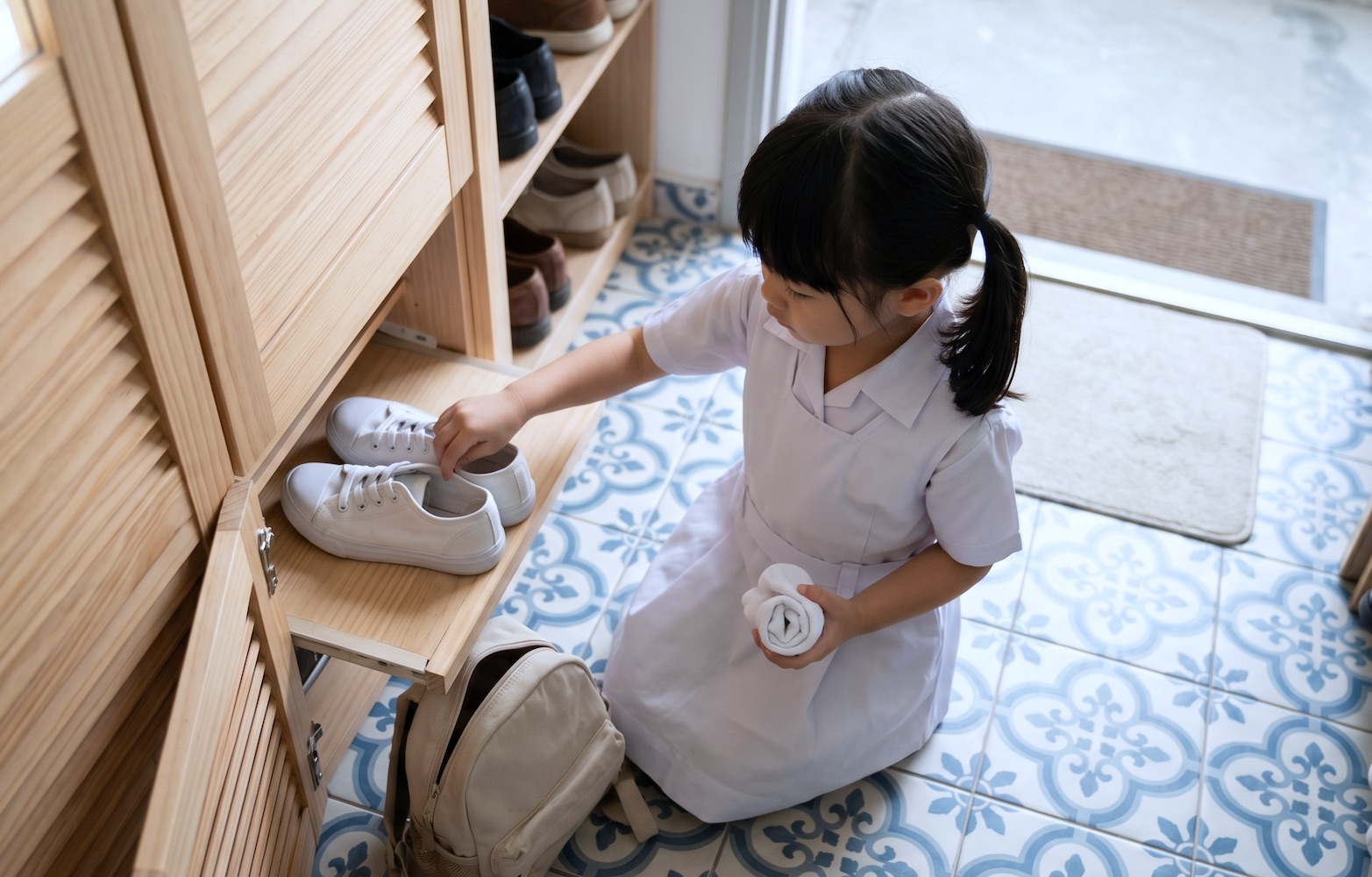
Putting on socks and shoes is often the final hurdle of the morning. Fine motor difficulty with socks leads to frustration, and tight shoe velcro makes the task feel impossible. The child often defaults to whining for help because the physical friction is too high.
Parents can design a habit that removes the physical struggle by preparing the equipment. When the barrier to entry is low, the child can focus on the success of the action rather than the difficulty of the motor skill.
Open the "velcro gates"
Parents can ensure socks are bunched up ready to slide on and shoe velcro is fully peeled back and open.
Stomp and strap
The child can stomp their foot into the open shoe and rip the velcro shut themselves without needing assistance.
Lead the way to the lift
The child wins the job of being the morning leader who gets to press the lift button and lead the family out.
5. Managing the Commute (Wait for Bus/Train)
Waiting at a bus stop or MRT platform can be chaotic for a 6-year-old. Their natural energy leads to running near the yellow lines or wandering off. This happens because waiting feels passive and boring, causing the child to seek their own stimulation.
Parents can consider a habit that turns the wait into an active observation task. This gives the child a specific role and a boundary, making the school commute safer and more focused.
Identify the "observation tile"
Parents can point out a specific tile or spot away from the edge where the child can stand safely.
Spot the arriving number
The child gets to stay on their tile and hunt for the bus number or the train's arriving lights.
Signal the boarding
The child gets to be the one who tells the parent "It's time to go!" and leads the boarding.
Cluster 2: Social Skills & Empathy
At age 4 to 6, your child is beginning to understand that their actions have a social impact. This is the stage where they move from playing side-by-side to playing with others. However, big emotions and still-developing impulse control can lead to friction at home and on playdates. These habits are designed to give them a "social script" to follow, helping them navigate complex feelings like disappointment and social shyness with confidence.
6. Waiting for a Turn to Speak
Preschoolers often have "urgent" thoughts and tend to burst into adult conversations. This happens because their working memory is short; they fear that if they don't say it right now, they will forget it forever. To help them, parents can introduce a habit that provides a silent physical anchor, allowing the child to signal their need without breaking the social flow.
Teach the "arm-touch" cue
Parents can explain that placing a hand on a parent's arm is the secret way to say "I have something to share."
Place hand and stay connected
The child can place their hand on your arm and gets to wait quietly until you acknowledge the touch with a reciprocal pat.
Receive undivided attention
The child receives full eye contact and a listening ear the moment there is a natural pause in the conversation.
7. Managing Disappointment (Losing a Game)
Whether it is a board game or a race at the playground, losing can trigger a significant emotional crash. At this age, a child's self-worth is still very closely tied to being the best or the winner. Parents can build a habit that focuses on the ritual of completion, teaching the child that being a "good sport" is a win in itself.
Define the "GG" handshake
Parents can establish a rule before the game starts: "The game isn't finished until we shake hands and say 'Good Game'."
Shake hands and say "Good Game"
The child gets to perform the formal handshake and speak the phrase, regardless of how the game ended.
Pick the next activity
The child wins the right to decide on a rematch or choose the very next activity for being a great teammate.

8. Greeting Helpers and Elders
In Singapore, social greetings (like "Hi Auntie" or "Hi Grandpa") are a fundamental sign of respect. However, children often stay silent due to social anxiety or because they are distracted by getting home. Parents can design a habit that makes the social acknowledgement a natural requirement for crossing the threshold.
Pause at the threshold
Parents can place a small "hello" sticker on the back of the front door or at the helper's station as a visual cue.
Use the "active name" greeting
The child can look at the person and use their specific name in a greeting before heading into their play area.
Unlock home comforts
The child receives a warm social response and the immediate freedom to enjoy their home environment.
Cluster 3: Home Responsibility
Aged 4 to 6 is the prime time to shift your child from being a "guest" in the house to a contributing team member. This isn't about giving them difficult chores, but rather building habits around their own impact on the home. These five habits reduce the mental load on parents and helpers while teaching the child that their contribution is both needed and valued.
9. Setting the Table for Meals
Most children this age sit and wait to be served, missing the chance to practice spatial awareness and planning. Parents can introduce a habit that reinforces their role as a valuable provider for the family, turning the pre-meal wait into a purposeful mission.
Stock a low-access shelf
Parents can place napkins and child-safe cutlery on a shelf or drawer that the child can reach easily.
Lay a place for everyone
The child can place one set of cutlery at each seat on the table as soon as the "dinner is ready" call begins.
Ring the "dinner bell"
The child gets the official job of shouting "Dinner is served!" to the whole family, signaling the start of the fun.
10. Clearing the Meal Plate
Primary school canteens require children to clear their own trays, yet at home, many parents or helpers clear the table for them. This creates a skill gap. Parents can design a habit that makes the kitchen sink the natural and only "exit route" for every finished meal.
Designate a "dish landing" tub
Parents can place a small plastic basin on a low stool near the kitchen sink to make it physically accessible.
Return plate and cup to the tub
The child can carry their own plate and cup and place them gently into the landing basin after swallowing their last bite.
Unlock the "exit-ticket" play
Clearing the plate becomes the child's special "ticket" to go straight back to their play or hobbies.
11. Switching off Screens on Time
The transition from high-dopamine screen time to dinner or bath is a frequent source of conflict. This happens because a child's brain experiences a sudden drop in dopamine when the screen is removed, making them feel irritable and resistant. Parents can build a self-regulation habit that moves the "off" switch from the parent's hand to the child's hand, reducing the sense of powerlessness.
Set a physical visual timer
Parents can let the child physically set a countdown timer or a loud phone alarm before the show even begins.
Press the "power off" button
The child gets to be the one who physically shuts down the device as soon as the alarm rings, taking charge of the ending.
Earn a "power-user" point
The child receives a sticker or point toward a weekend "bonus movie" for stopping without any negotiation loops.
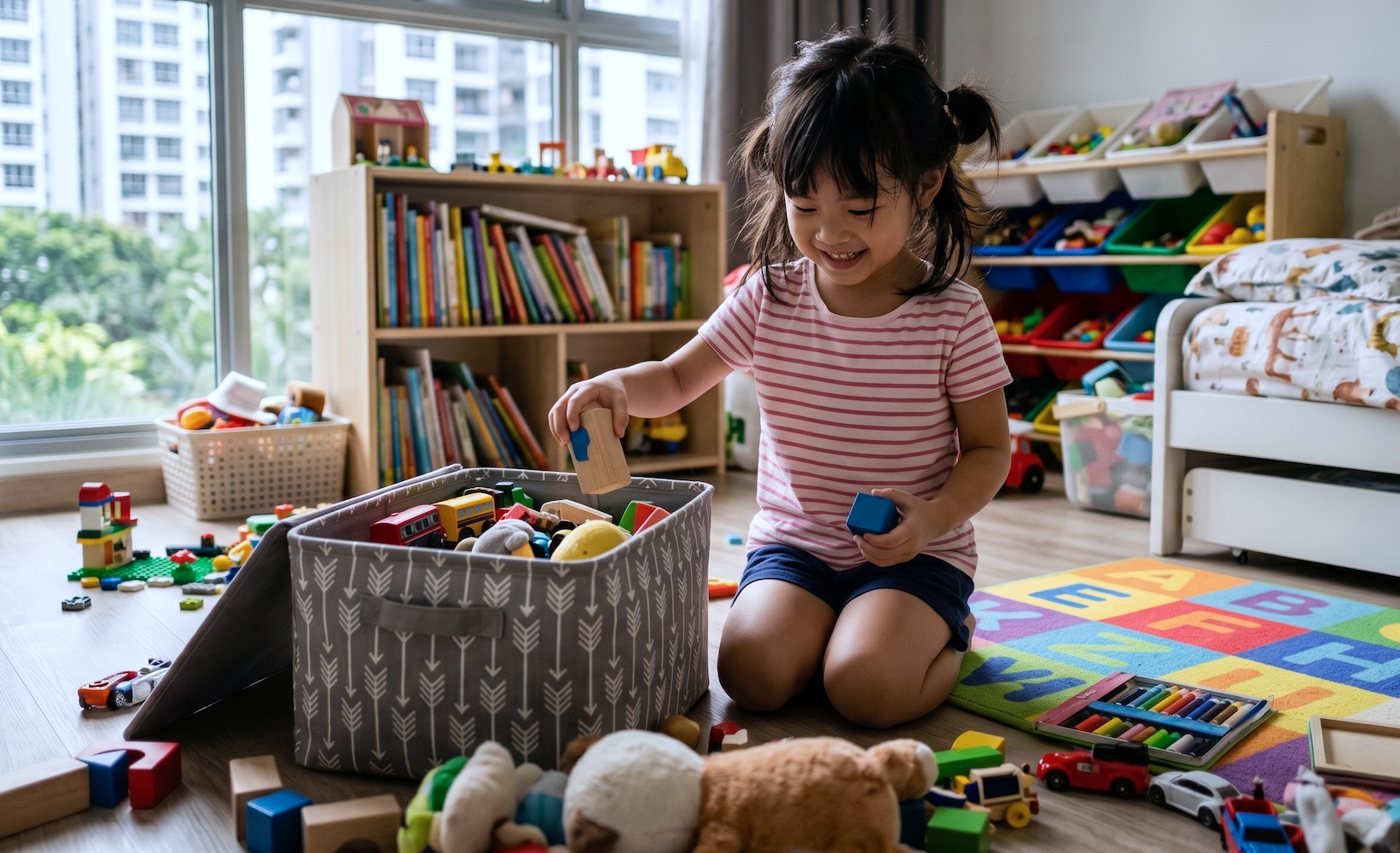
12. Tidying Small Toys (Lego/Blocks)
Cleaning up hundreds of tiny pieces feels like an impossible task for a 5-year-old, leading to procrastination or flat refusal. This resistance usually stems from visual overwhelm—the mess looks too big to fix piece-by-piece. Parents can design a habit that uses a bulk-cleaning tool, making the cleanup feel like a quick and efficient "mission" rather than a chore.
Bring out the "sweep" shovel
Parents can provide a dedicated small dustpan or a flat piece of cardboard to use as a block-gatherer.
Sweep blocks into the bin
The child can sweep the scattered parts into the toy bin in large groups rather than picking up every single piece individually.
Unlock the "clear floor" dance
The child gets to do a celebratory 10-second "dance" on the now-safe floor before moving to the next room.
Cluster 4: Hygiene & Health
As your child enters the Primary school environment, their personal hygiene habits become their first line of defence against common illnesses. At age 4 to 6, the goal is to move beyond "parent-monitored washing" and toward "automatic self-care." These final habits ensure that your child remains healthy, stays comfortable, and develops a strong sense of pride in looking after their own body.
13. Independent Teeth Brushing
Kindergarteners strongly desire to "do it myself," but they often rush the process and miss the back molars. This friction happens when the task feels like a boring hurdle to bedtime. Parents can build a habit that pairs the child's need for autonomy with a fun, non-negotiable quality control step that ensures their dental health.
Load the "tiny dot" brush
Parents can prepare the brush with a pea-sized amount of paste and hand it over as the child enters the bathroom.
Brush for the full song
The child gets to brush their own teeth for the duration of a specific 2-minute "brushing track" or fun timer.
Receive the "shiny check"
The parent performs a funny, 5-second "quality inspection" followed by praise for their minty-fresh Primary 1 smile.
14. Sneezing and Nose Manners
With Primary school comes increased exposure to germs. Children often forget to cover their sneezes simply because they aren't prepared with the right tools in the moment. Parents can design a habit that makes tissue-usage or "elbow covering" an automatic physical reaction rather than something that requires a verbal instruction.
Anchor the "pocket-pack"
Parents can ensure a small pack of tissues is always placed in the child's school uniform or shorts pocket the night before.
Perform the "elbow-dab" catch
The child can practice sneezing into their elbow "dab" style if they can't reach their pocket tissue in time.
Enjoy a "germ-shield" high-five
The child receives praise for being a "Germ Shield" and protecting their classmates and siblings from getting sick.
15. The Bedtime Reading Habit
Building a love for reading shouldn't feel like another "academic requirement." If reading is associated only with homework, the child may begin to resist it. Parents can design a habit that makes reading the most comfortable and relaxing choice at the end of the day, setting them up for a lifetime of literacy.
Create a cozy "book nook"
Parents can place a small basket of three favourite books right next to the child's pillow or nightlight.
Flip through three pages
The child can choose to look at the pictures or read the words of just a few pages before the final lights-out.
Enjoy the "final whisper" chat
The child receives a few extra minutes of calm, dedicated "whisper time" with the parent to talk about their day.
Growing Together: Steps for a Confident "Big Kid"
You are guiding your child through one of the most exciting and transitional phases of their young life. As they move closer to their Primary school years, these habit designs serve as an essential scaffolding for their growing independence. By shifting from "doing for them" to "designing for them," you are giving your little explorer a valuable gift: the belief that they are capable, responsible, and ready for the world. Stay patient, keep the rewards logical, and enjoy watching your Kindergarten milestone-maker thrive as they master their own daily rituals. Every small win today is building the self-reliance they'll use for a lifetime.