
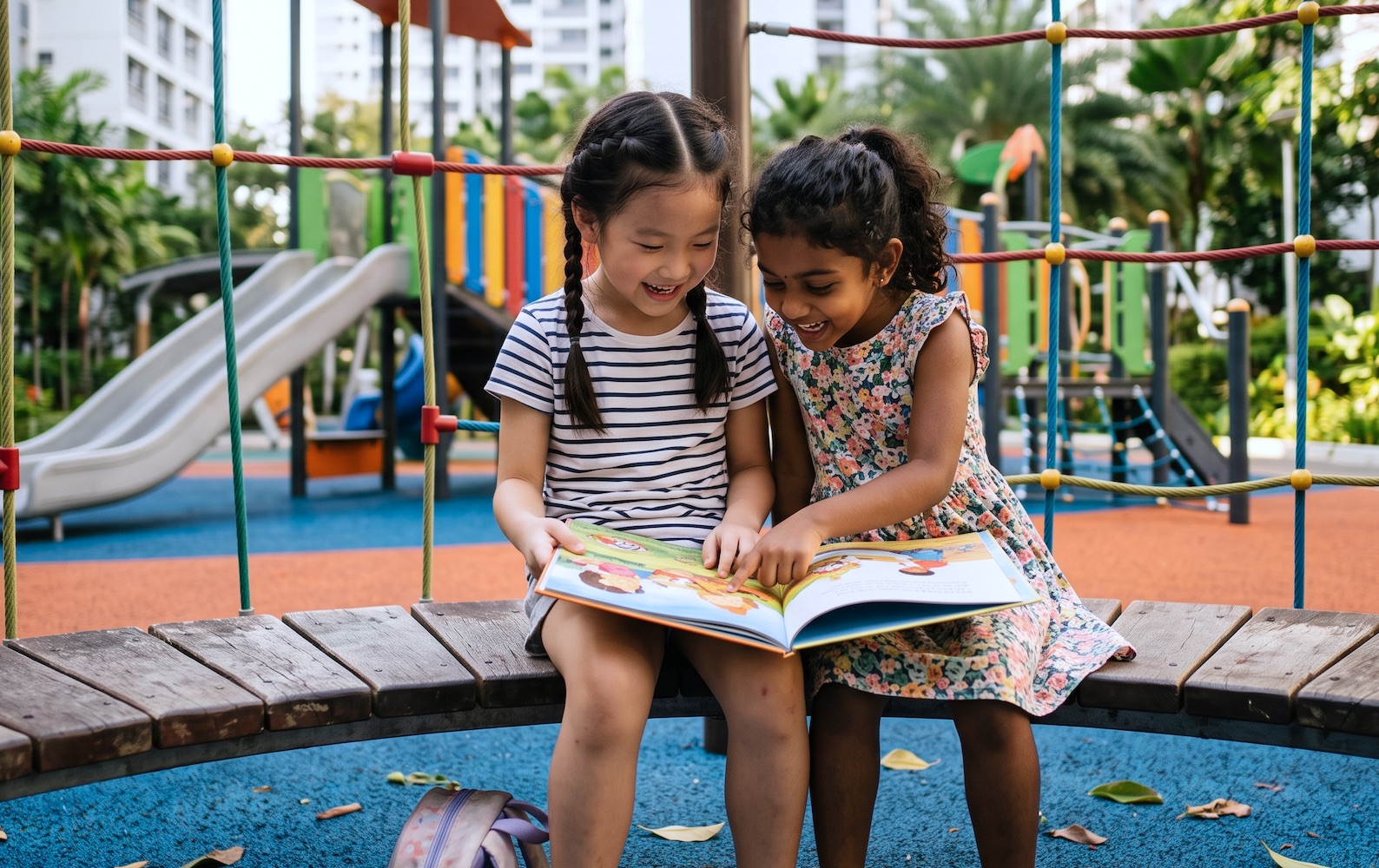
You are at the indoor playground after a long week, trying to enjoy your iced latte while your toddler plays. Suddenly, another child approaches, and your little one clutches their toy car tightly, screaming a loud no.
The other parent is watching, and you feel the weight of social judgment in the room. It easily feels like an evaluation of your parenting skills on the spot.
Phrases We Blurt Out When Sharing Goes Wrong
When pressure mounts in public spaces, we often resort to quick corrections that fix the moment but confuse our children about true generosity.
🛑 1. Share your toy right now.
Forced sharing teaches compliance rather than empathy. Your child learns that bigger people can take their things away arbitrarily, which increases their possessiveness next time.
🛑 2. Don't be so selfish.
Labeling a normal developmental stage as a character flaw damages their self-esteem. Toddlers do not understand ownership yet, so they only hear that they are bad.
🛑 3. If you don't share, we are going home.
Threats create anxiety instead of teaching social skills. The focus turns to the punishment rather than learning how to navigate turn-taking with their peer smoothly.
🛑 4. See how nice the other child is?
Comparisons breed resentment toward the other child. It discourages cooperative play and makes your child feel less favoured, which can trigger more stubborn behaviour.
🛑 5. You are the older one, just let them have it.
This places an unfair burden on elder siblings or older children. It teaches them that their boundaries do not matter, while reinforcing that younger children get everything.

🛑 6. It is just a silly plastic car.
Dismissing their feelings invalidates their reality. To your child, that object represents security, and ignoring their attachment breaks their trust in your guidance.
🛑 7. Give it to them or I will take it away.
This models aggression as a conflict resolution method. Your child learns that power determines who gets the object, copying this exact behaviour during future playground interactions.
Gentle Scripts to Guide Generosity
Shifting our language helps children feel secure enough to let go of their items, turning a stressful standoff into a valuable learning opportunity.
🟢 1. You can finish your turn, and then pass it to your friend.
This respects your child's current boundary while setting a clear expectation for the near future. It reduces urgency, making them feel safe to release the item voluntarily.
🟢 2. I realise you want to protect your toy. Let us see if there is another toy we can offer.
Acknowledging their protective instinct makes them feel heard. Offering an alternative teaches proactive problem-solving and introduces the concept of trading rather than losing something valuable.
🟢 3. It is hard to wait, but your turn will come right after they finish.
This validates the emotional difficulty of waiting for both sides. It builds emotional regulation and structure, reassuring the child that objects always return eventually.
Rethinking Generosity in Early Childhood
True generosity cannot be forced by adult intervention. Children need to feel secure in their own sense of ownership before they can genuinely offer something to a playmate.
Our role is to facilitate structured turns rather than demanding instant sacrifices. When we respect their developmental timeline, they naturally grow into giving individuals who share out of genuine kindness.