
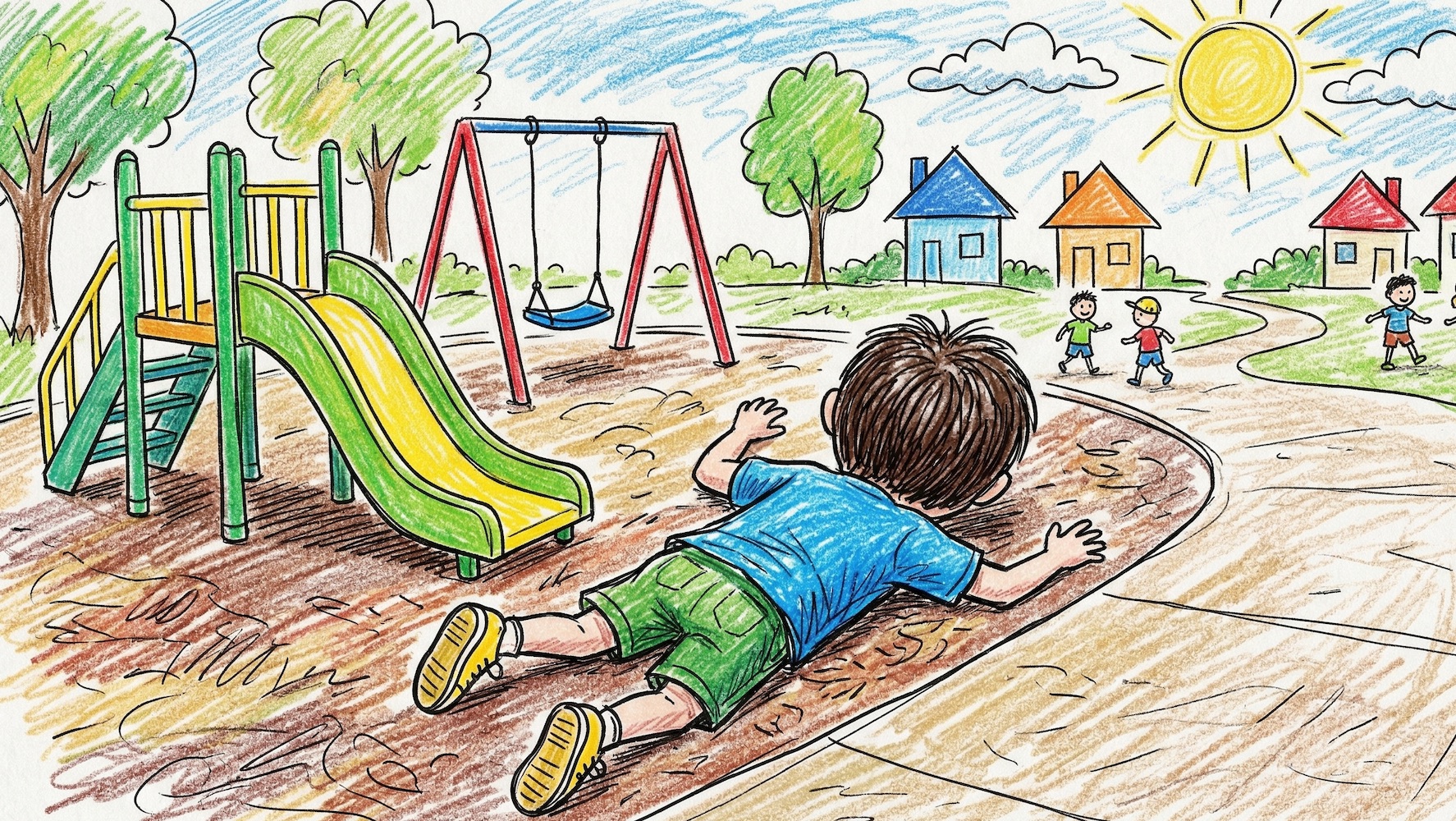
You see your child—this little person you are raising with so much love—standing completely still while their sister wails after a fall or a friend at the playground skin their knee on the pavement. You expect a hug or a worried look, but instead, you get a shrug or, worse, total silence. It makes you wonder if you have missed something fundamental in their upbringing. Please take a deep breath. You are not raising a cold-hearted person; you are raising a child whose emotional map is still being drawn, one messy crayon stroke at a time.
Why does my child look away when others are in pain?
Children do not always have the "wiring" ready to process someone else's big distress. Sometimes, the brain simply hits a circuit breaker. When a sibling screams, the noise and the raw emotion can be so loud that a young child's mind just shuts the door to protect itself from the chaos. It looks like they do not care, but they might actually be feeling too much to function. I remember a humid afternoon at the Punggol Park playground where my own son just stared at a crying toddler as if he were watching a leaf fall, but later he told me the crying "hurt his ears inside." He wasn't mean. He was overwhelmed.
Another reason is quite simple: they haven't made the link between the action and the feeling yet. They see the tears, they see the blood, but the internal "translation" hasn't happened. To them, it is a fact of the environment, like the rain starting or the lift door closing. Their prefrontal cortex is still under construction, and the part that handles "putting yourself in another's shoes" is often the last bit to get the finishing touches. They are observers before they are participants in the world of feelings.
What if the blank stare isn't what you think it is?
We often project our adult fears onto their tiny actions. We see a lack of a hug and fear a lack of a soul. But what if we looked at that indifference as a "pause" button instead? If we stop seeing it as a moral failing, we can see it as a developmental gap. Reframing this helps you stay calm. If you stay calm, they learn that big emotions are not scary things to run away from. Your child isn't "bad"; they are just currently "unskilled" in this specific area. It is a move from "Why don't they care?" to "How can I show them how to care?"

How can we build bridges to their heart?
1. Narrate the visible "Ouch"
Instead of asking "Why are you being so mean?", try becoming a sports commentator for feelings. Say something like, "Oh, look at Sarah's face. Her eyes are watery and her mouth is turned down. That fall on the pavement really hurt her knees." You are giving them the words to describe what they are seeing without the weight of shame. It helps them connect the dots between the physical sight and the internal feeling.
2. Focus on the hurt party first
In the heat of the moment, our instinct is to scold the "indifferent" child. Try the opposite. Run to the child who is crying and offer comfort loudly and clearly. Let your child watch you. They learn more from seeing your hands brush away tears than from hearing your voice lecture them about kindness. I've seen this work wonders at the water play area in Vivocity where one child slips, the water splashes everywhere, the mother gasps, and the sibling just continues pouring their bucket as if the world hasn't just tilted for someone else. Watch me. See how I help. That is the lesson.
3. Use "Body Clues" games
Make it a game when you are out for tea or walking to the supermarket. Point at people and guess how they feel based on their "body clues." Is that Uncle over there happy because he is whistling? Is that Auntie sad because her shoulders are slumped? This builds the "muscle" of observation that empathy requires. It turns a scary emotional task into a puzzle they can solve.
4. Read stories with a "Heart Lens"
When you are tucked in at night, don't just read the plot. Stop and ask, "How do you think the rabbit felt when his carrot was taken?" If they say "I don't know," give them two choices. "Do you think he felt grumpy or do you think he felt excited?" This narrows the world down for them. It makes the abstract idea of "feelings" something they can hold and pick between.
5. Model the "Repair"
Show them how to fix things. If they see you accidentally bump someone and say, "Oh, I'm so sorry, are you okay?", they see the script. Empathy is often just a script that we practice until it becomes a part of who we are. Give them the lines to say. "Would you like to bring the tissue to your brother?" Small actions lead to big changes.
Where does the change actually begin?
You are doing a good job. The fact that you worry about this shows how much you value kindness, and that value will eventually seep into them through the floorboards of your home. They will get there, but it won't be because you forced them to say "sorry" a thousand times. It will be because they watched you be the person you want them to become. The next time they stand there with that blank look, just remember: their heart isn't closed, it's just waiting for the right key.
At the next "cold" moment, can you find the strength to be the warmth they are currently missing?