
A reader recently sent in this note after a weekend breakfast run:
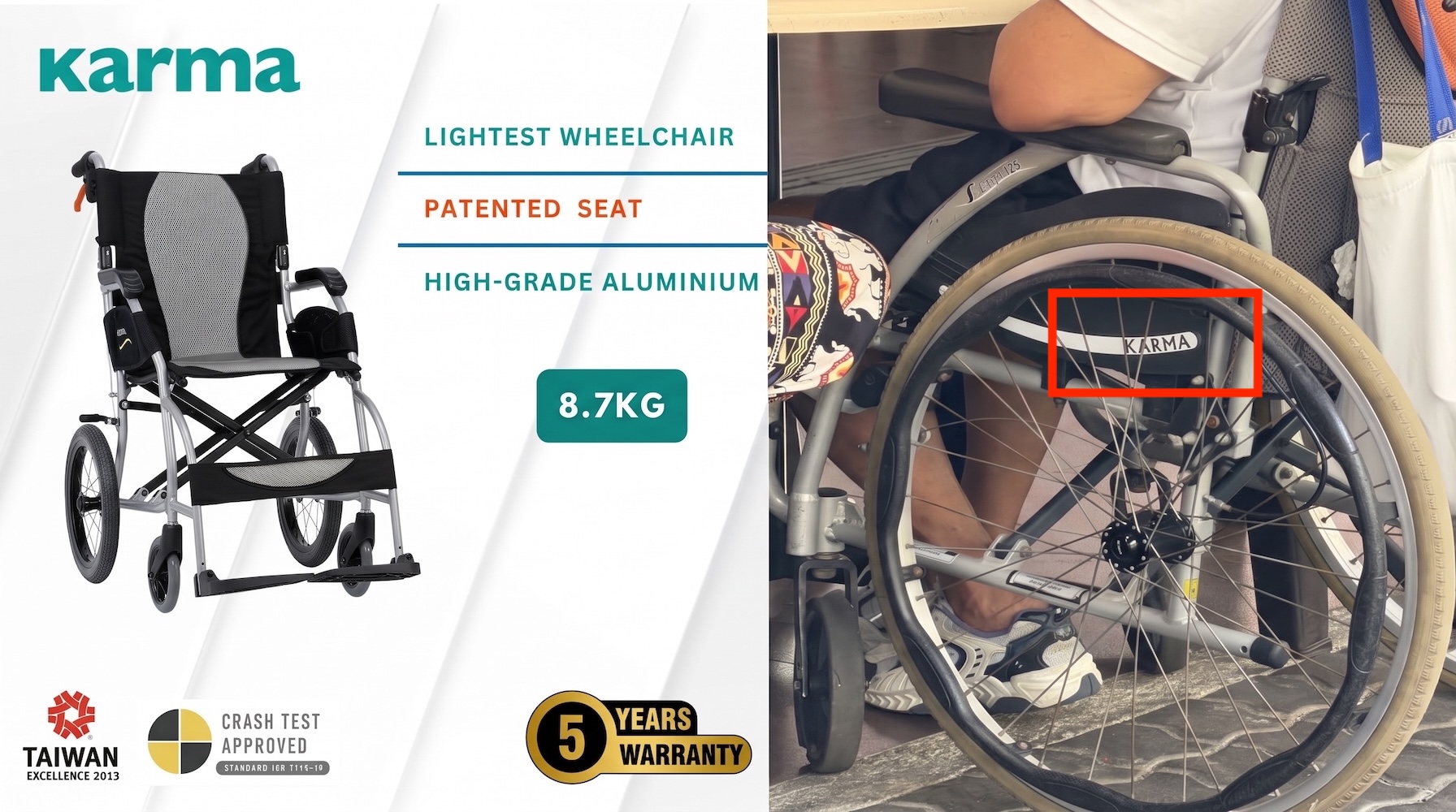
I was having breakfast at a coffeeshop in Hougang last weekend when I saw an elderly uncle in a wheelchair. As he passed by, the brand name on the frame caught my eye: Karma.
I could not help doing a double take. Did he buy the wheelchair himself, or did his adult children buy it for him? If the children bought it, did they realise what the brand is called, and how that looks on an elderly parent? I was left both amused and puzzled.
We did a bit of checking on the brand
If you have ever shopped for eldercare equipment in Singapore, you will know that Karma is not a rare brand. It is sold in several medical supply shops across the island, including Rehab Mart, Rainbow Care, and The Homecare Shop. For most grown children, buying one is simply an act of filial duty. You head down to a shop, pick a lightweight model that fits into a car boot, pay for it, and bring it home. Nobody is thinking about the brand name.
Interestingly, the manufacturer's own website does not mention why they picked the name. But according to product descriptions on local distributor listings like The Homecare Shop, the word comes from Sanskrit and means "action", where personal actions shape future outcomes: "what you give in life, you will get in return." The write-up adds that the name is meant to bring positive energy and remind users "not to be idle, but instead take action."
Where the irony comes in
In Singapore, people rarely use the word karma to mean positive energy or neutral action. At a coffeeshop, karma almost always means payback for doing something bad. Explaining the brand by saying "what you give in life, you will get in return" makes it sound like the person sitting in the chair did something wrong in the past.
Then there is the advice not to be idle and to take action. A wheelchair is something an elderly parent needs precisely because their legs cannot take action anymore.
The children who bought the chair probably just wanted something sturdy for their parent's weekly clinic visits. But to someone sitting two tables away eating wanton mee, it ends up looking like the family is making a very blunt point.
Have you ever bought something practical for your elderly parents or in-laws, only to realise later that the brand name sounded a bit wrong?