
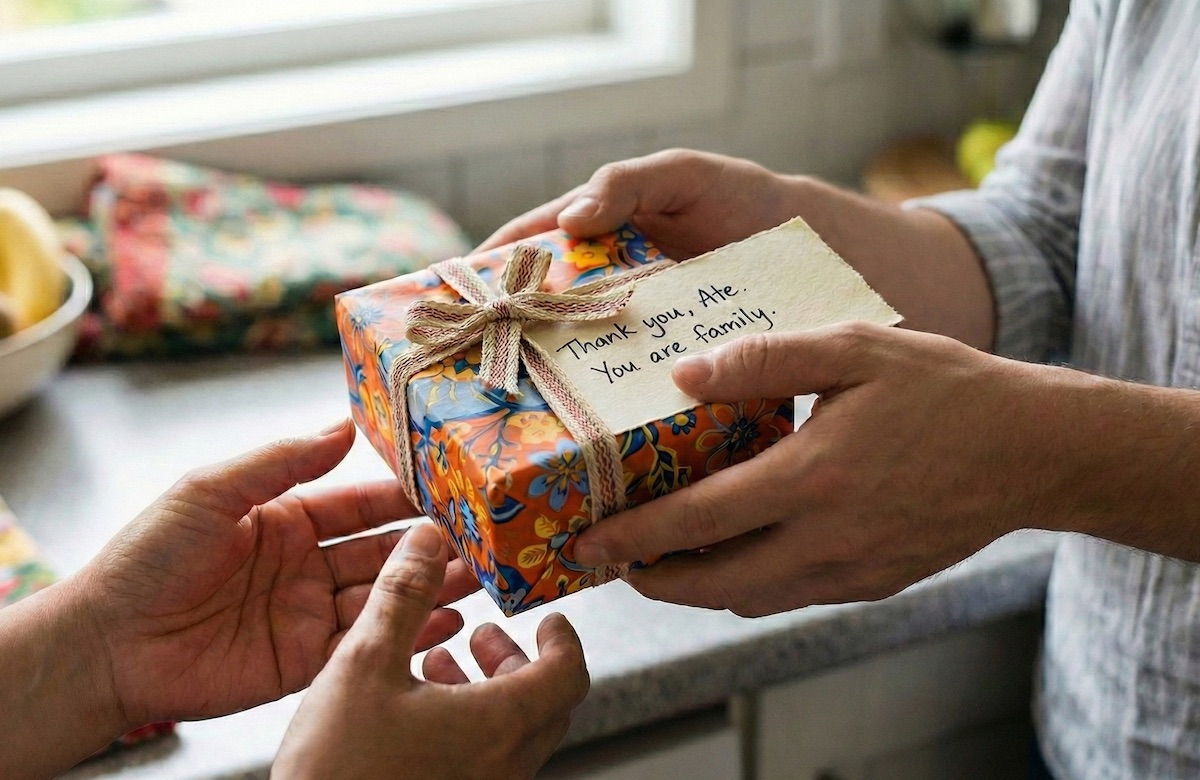
Last night, I got reminded by my mummy's chat group that Teachers' Day is just around the corner. This morning, in the quiet moments before the school bus arrives, I thought about the hands that will hold theirs for the next six hours. It isn't just me raising them; it's a quiet collective. This village includes the teachers who explain the world, the nanny who knows exactly how they like their fruit cut, and the babysitters who allow me a moment to breathe.

We aren't just raising children; we are teaching them how to see the invisible hands that hold our lives together.
Honouring your village involves choosing gifts that prioritise wellness and personal connection. Whether for teachers or nannies, the goal is to build a legacy of kindness by acknowledging their hard work with heartfelt notes and restorative tokens of appreciation. This practice strengthens the community bond and teaches children the value of genuine gratitude toward those who support their growth and well-being every single day.
"Mummy, I think Teacher Sarah likes the blue flowers best," my son said as we walked past a stall at the Cold Storage last week. "Thank you for taking care of my babies," I whispered later that evening to our nanny as she packed her bag. These small exchanges are the foundation of what we do.
Moving Beyond the Goodie Bag Culture
The efficiency of a 40-year-old brain often screams for the easiest path. It is tempting to buy ten identical mugs and call it a day. However, I have realised that when we treat gifting as a transaction, we lose the chance to teach our children about real gratitude. If the gift feels like a chore to us, it will feel like a checkbox to the person receiving it. It takes away the soul of the gesture.
I saw this mentioned in an ECDA press release recently—the "Best Gifts come from the Heart" initiative. It really hit home. They encourage parents to share heartfelt messages rather than just expensive items. I've seen this play out in my own son's classroom; his teacher didn't remember the brand of the pen we gave her, but she kept the drawing he made of her "helping him with big maths."
It's not about being perfect, it's about being seen. My hack is to keep a simple box under the bed filled with blank cards and nice pens. When the kids mention something kind a teacher did, we write it down immediately. We don't wait for the official day. It's about capturing the feeling when it is fresh and raw.
The Restorative Gift: Prioritising Wellness
Teachers and nannies spend their entire day pouring out energy. By the time my daughter comes home from school, she is a bundle of stories and occasional tantrums. I am exhausted after two hours; the educators have been dealing with that energy multiplied by twenty. The logic here is simple: if they care for our children, we should care for their peace. They deserve to go home and feel human again.
A gift guide on SingaporeMotherhood listed wellness items as the top choice for "feel-good" gifts. Things like sleep mists or hand creams aren't just objects; they are a subtle way of saying, "I know you are tired, and I want you to rest." I used to think these were cliché, but after a long day of parenting, I'd give anything for a quiet five minutes with a nice cup of tea.
In our house, we've moved towards "experience" wellness. We might give a voucher for a local foot reflexology centre or a high-quality tea set. It's a blunt way of telling them to take a break. The kids help me pack it, usually adding a sticker or two that doesn't quite match the aesthetic, but that's okay. It shows them that taking care of others includes taking care of their spirit.

Honouring the Silent Village of Nannies and Babysitters
While there's a set date for Teachers' Day, there's no "Nanny/Helper Auntie Day" on the calendar. These are the people who see our homes at their messiest—the pile of laundry on the sofa, the burnt toast, the "skid marks" on the clothes, the morning grumpiness. It can feel awkward to give a gift to someone who is essentially "family" but also an employee. We worry about the balance between professional respect and personal warmth.
SingaporeMotherhood discusses this village concept quite a bit. They highlight how crucial childminding is when family support isn't available. While we should be "generous," it's hard to know where the boundary is. I've worried about overstepping or making things weird with a gift that's too personal. I've heard from other mums that they often feel the same hesitation.
Instead I try to focus on utility and dignity. I noticed our regular babysitter always carried an old, leaking water bottle. For her birthday, the kids chose a high-quality, insulated one. We also include a "day off" voucher sometimes—literally just a card saying we'll handle the evening so she can leave early. The look on her face was better than any expensive perfume could have prompted. It's about noticing the gap in their day and filling it.
Kindness is the only thing that grows when you give it away without expecting a receipt.
Handwritten Notes as Emotional Anchors
A fragment of a thought: a piece of paper can weigh more than a gold watch.
I was reading through some MOE compliments pages, and the common thread isn't the gift value. It is the specific detail. A parent thanking a teacher for noticing their child was lonely during meal time. A note about helper auntie who stayed up late when the mother is stuck at a work meeting. These are the anchors that keep caregivers going when the job gets tough. It validates their choice to be in this profession.
It's a legacy of recognition. My daughter, being six, still struggles with spelling, but her "Thank you for hags" (hugs) note to her form teacher was the one that got a tearful reply. We make sure the kids lead this. I provide the paper; they provide the heart. It's a messy, imperfect process that results in something far more precious than a store-bought card. It shows the teacher that their influence has reached all the way to our dinner table.

Timing and the Art of the "No-Reason" Gift
The heavy rain. The sound of thunder over the rustle of leaves. The sudden quiet of an empty kitchen. These sensory moments remind me that time moves fast, and appreciation shouldn't be scheduled like a dentist appointment.
Most people wait for the end of the year or a holiday. But the most impactful gifts I've given were on a random Tuesday when I could see the fatigue in our nanny's eyes. The gift trends suggest that thoughtful timing makes a gift feel more like a rescue than a tradition. It catches people when their guard is down and they need the boost most.
If I see her struggling, I'll grab an extra pack of her favourite snacks from the FairPrice at the mall. It costs five dollars. It takes two minutes. But it says, "I see you." And honestly? It works. It changes the atmosphere in the house from one of survival to one of mutual support. Sometimes, the best gift is just the acknowledgement that today was hard, and they did a good job anyway.
P.S. If you are struggling with time, remember that a voice note or a quick WhatsApp message of appreciation during the day can be just as restorative as a physical gift.
References: