
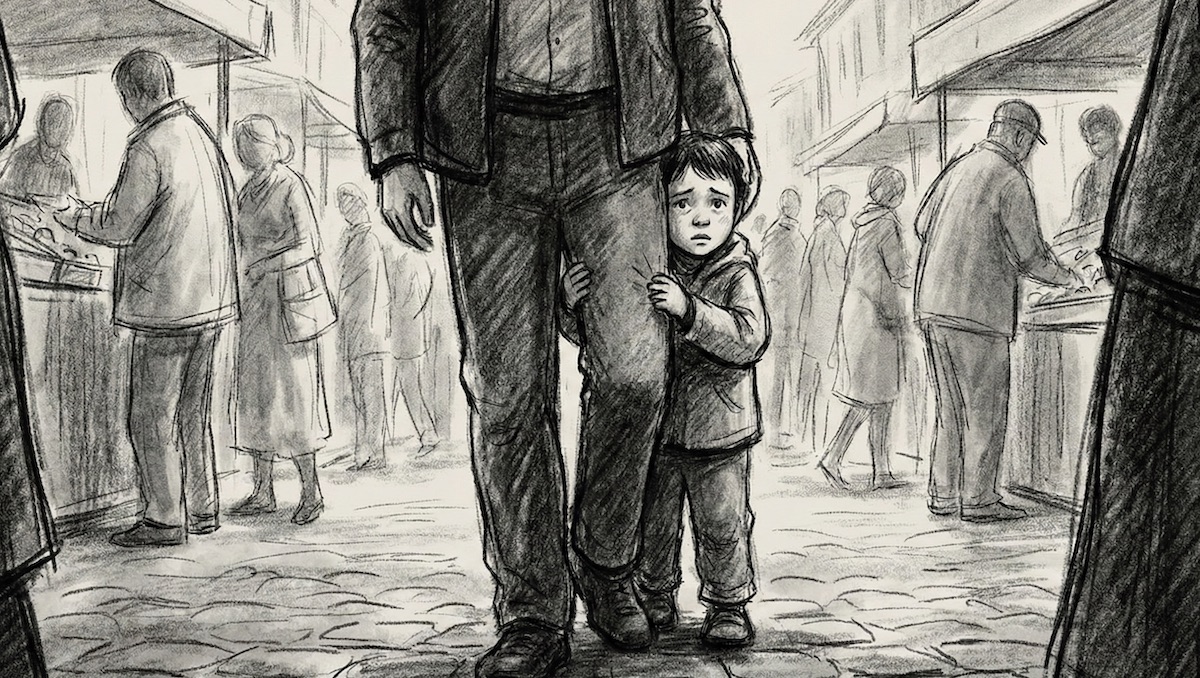
A gentle approach to childhood anxiety focuses on emotional validation, active listening, and providing consistent reassurance. By acknowledging fears rather than dismissing them, parents create a secure environment where children learn to regulate emotions and build long-term resilience through connection. This method prioritises the child's internal safety over immediate outward compliance.
"I don't want to go, Mummy. My tummy feels like it has rocks in it," she whispered. I knelt down on the pavement. "I know, darling. Those rocks feel very heavy, don't they?"

"Anxiety isn't a problem to be solved; it's a feeling that needs a safe place to land."
The humidity was thick when we left home last Saturday, the kind that makes your clothes stick to your skin before you even reach the pool. My six-year-old daughter was clutching my hand so hard her knuckles were white. She didn't want to go to her swimming lesson. It wasn't the water; it was the noise, the splashing, and the fear of being watched by the other parents on the benches. I felt that familiar tug in my chest—the urge to tell her she was being silly, that she loved swimming once she was in the pool. But I stopped. I looked at her small, trembling frame and realised that my job wasn't to push her through the fear, but to hold her hand while she felt it.
The Power of the Emotional Echo
Logic tells us that if we minimise a fear, it will shrink. We think that by saying "there's nothing to be afraid of," we are giving our children courage. In reality, we are just teaching them that their internal compass is broken. When we dismiss their worry, they stop trusting their feelings and start feeling anxious about being anxious. It's a heavy cycle to break.
The Ministry of Education highlights that validating emotions—using phrases like "I can see this is hard for you"—actually helps children regulate negative feelings. I've seen this play out in my own living room. When my eight-year-old son gets frustrated with his homework and starts to spiral into "I'm not good at anything," my old reflex was to list his achievements. It never worked. He just got louder.
Now, I use the "Echo" technique. I repeat back what I hear: "It sounds like you feel really stuck right now." I don't offer a solution. I just sit there. And true enough, the spiral stops much faster. We eventually get back to the maths, but only after the rock in his chest has softened. It's about being a mirror, not a hammer.
Vulnerability as a Teaching Tool
Children often think adults are fearless. They see us dealing with the mess of daily life—the bills, the burnt toast, the traffic—and assume we have it all figured out. This creates a gap. They feel "wrong" for being scared because they don't see us being scared. Bridging that gap requires us to take off the "perfect parent" mask and show them our own wobbles.

Advice from HealthHub suggests that sharing our own stress-management strategies shows children that nervous feelings are normal. I started doing this during our drives to school. I'll mention that I'm feeling a bit nervous about a presentation at work. I'll tell them I'm going to take a long walk at lunch to clear my head. They listen. They see that worry isn't a dead end; it's just a part of the road.
Anchoring the Separation Storm
The lift doors opening. The sound of the school gate. The specific "clack" of my work shoes. These are triggers for my daughter. Separation anxiety is a physical experience. Her heart races, her palms get sweaty, and she shrinks into herself. It's heartbreaking to watch when you're already running ten minutes late for a meeting in Raffles Place.
Research on HealthHub notes that consistent reassurance and physical comfort, like cuddles, are essential during these transitions. It sounds easy, but when the MRT is calling and the bag is heavy, it's not so easy afterall. I've had to adjust our morning rhythm. We leave five minutes earlier now—not for the commute, but for the "Anchor."
The Anchor is a three-minute long hug at the door. No talking. Just holding. I tell her exactly when I'll be back, using markers she understands, like "after your afternoon nap." That physical connection acts like a battery charge for her courage. It doesn't stop the worry completely, but it makes it small enough for her to carry.
The Art of Listening Without an Agenda
The smell of rain on hot concrete. We were sitting on the floor, LEGO bricks scattered between us. My son started talking about a boy at school who didn't want to play with him. My brain immediately jumped to "call the teacher" or "find a new friend." I had to bite my tongue.
The MOE Parent Kit for school transitions emphasises active listening—affirming effort and feelings without jumping to a fix. It's a difficult shift. As a parent born in the 80s, I was raised to be a "fixer." But when I just listen, really listen, he finds his own way. He doesn't need me to solve the playground politics; he needs me to hear that it felt lonely. Wait, that's not quite right—it's more about the presence than the silence.
After about ten minutes of me just nodding and saying "that sounds tough," he stood up and said, "Maybe I'll ask him again tomorrow, or I'll play catch with Sarah." He solved it himself because I didn't get in the way. Sometimes, our "help" is just noise.
"When you hold their hand through the storm, they learn that the wind might blow, but they will never be swept away."
Building a Sanctuary at Home
The world is loud and demanding, especially for a child who feels things deeply. School is full of social hurdles and academic pressure. If home is also a place of high expectations and "hurry up," there is nowhere for their nervous system to rest. We have to be the soft place for them to land.

For children with social anxiety, SingaporeMotherhood suggests creating non-judgmental spaces. At our house, this means "Quiet Hour" after school. No questions about grades. No talk about tomorrow. Just books, drawing, or staring at the sky outside. We've lowered the bar on being "busy." It's okay to just be. This restorative time is what allows them to face the world again the next morning.
If the anxiety starts to interfere with their sleep or appetite, MindSG advises looking into more formal support like Cognitive Behavioural Therapy. But the first line of defence is always the kitchen table. It's the safety of knowing that no matter how big the worry, it won't push us away. We are steady.
The Bottom Line
If we spend all our time trying to build a world where our children are never afraid, we leave them completely unprepared for the one they actually live in. Is the goal a child who never worries, or a child who knows they are never alone in their worry?
Next time they're clinging to your leg at the lift lobby, try not to look at your watch. Look at them instead. The meeting can wait two minutes; the foundation of their safety cannot.
References
- MOE: Parenting with Empathy Infographic
- HealthHub: My Child/Teen Coping with Stress
- UNICEF: Supporting Child Well-being and Emotional Safety
- SingaporeMotherhood: Is it Shy, Introverted, or Social Anxiety Disorder?
- HealthHub: Coping with your 2-year-old
- MOE Parent Kit: Starting Your Primary 1 Journey
- HealthHub (MindSG): Managing Anxiety Disorder in Children