
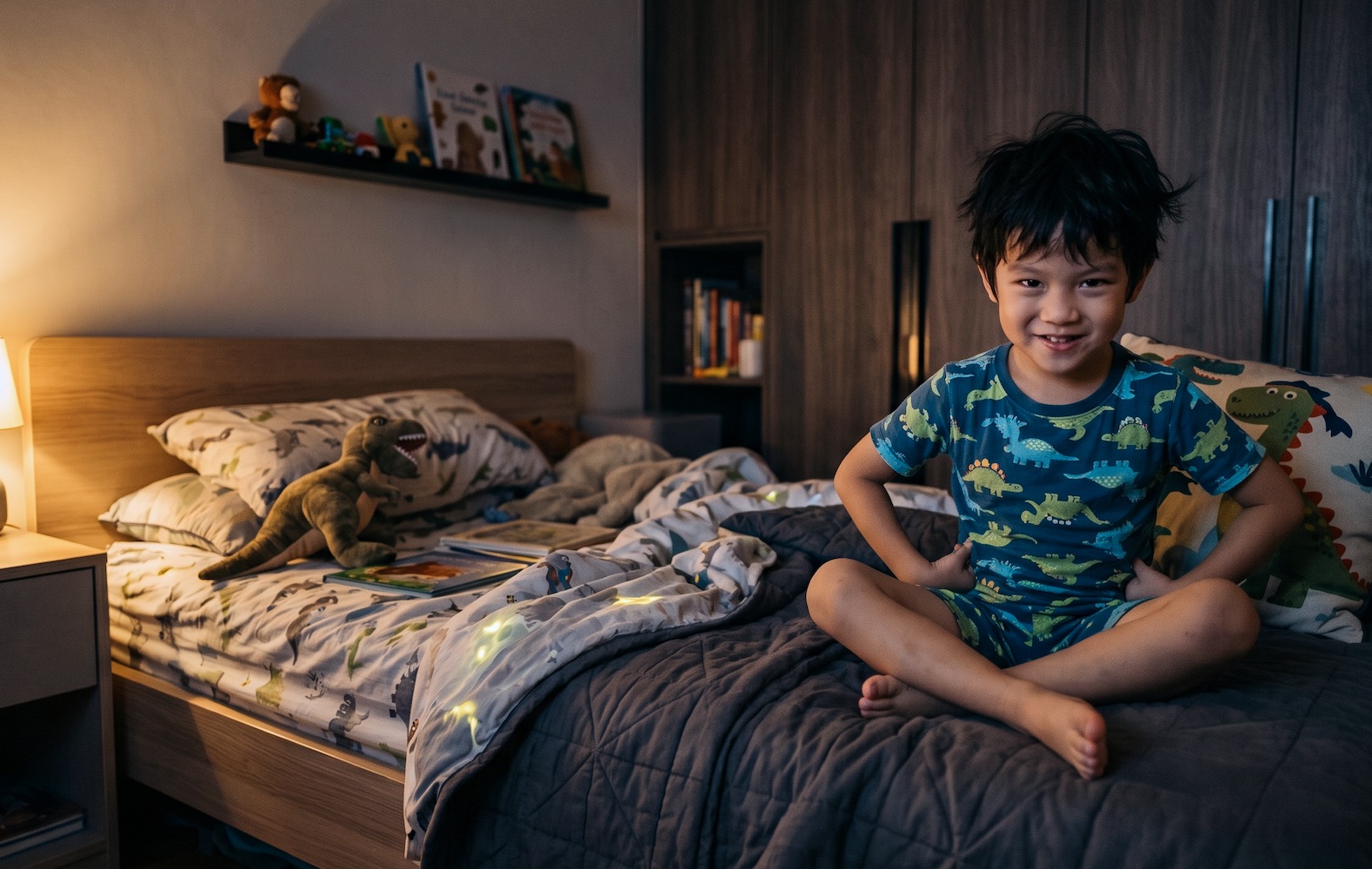
It is 10 PM on a Tuesday, your work laptop is still open, and you have an early morning meeting at the office. Instead of finishing your reports, you are ushering your child back into their room for the fourth time tonight.
Bedtime resistance tests our patience like nothing else, especially when the school bus arrives before dawn. We just want to finish our chores and sleep, but our children seem to have endless energy.
Bedtime Reactions That Only Keep Them Awake
When bedtime becomes a multi-hour negotiation, our patience wears thin and we often resort to quick, reactive statements that only prolong the battle.
🛑 1. "If you don't go to sleep right now, you won't get any screen time tomorrow."
Threats create anxiety, which raises cortisol levels and keeps children awake longer. It links sleep to punishment rather than relaxation, turning bedtime into a power struggle.
🛑 2. "Look at the time, you are going to be so exhausted at school tomorrow."
Children do not understand future consequences well. Telling them they will feel awful tomorrow just induces worry, making their busy minds spin even faster.
🛑 3. "There is nothing to be afraid of in the dark, stop being silly."
Dismissing their fear invalidates their emotions and makes them feel unsafe. If they feel misunderstood, they will keep seeking your presence for security.
🛑 4. "Just close your eyes and go to sleep."
Sleep is an involuntary biological process that cannot be forced on command. Giving an impossible instruction frustrates children who are genuinely struggling to settle down.
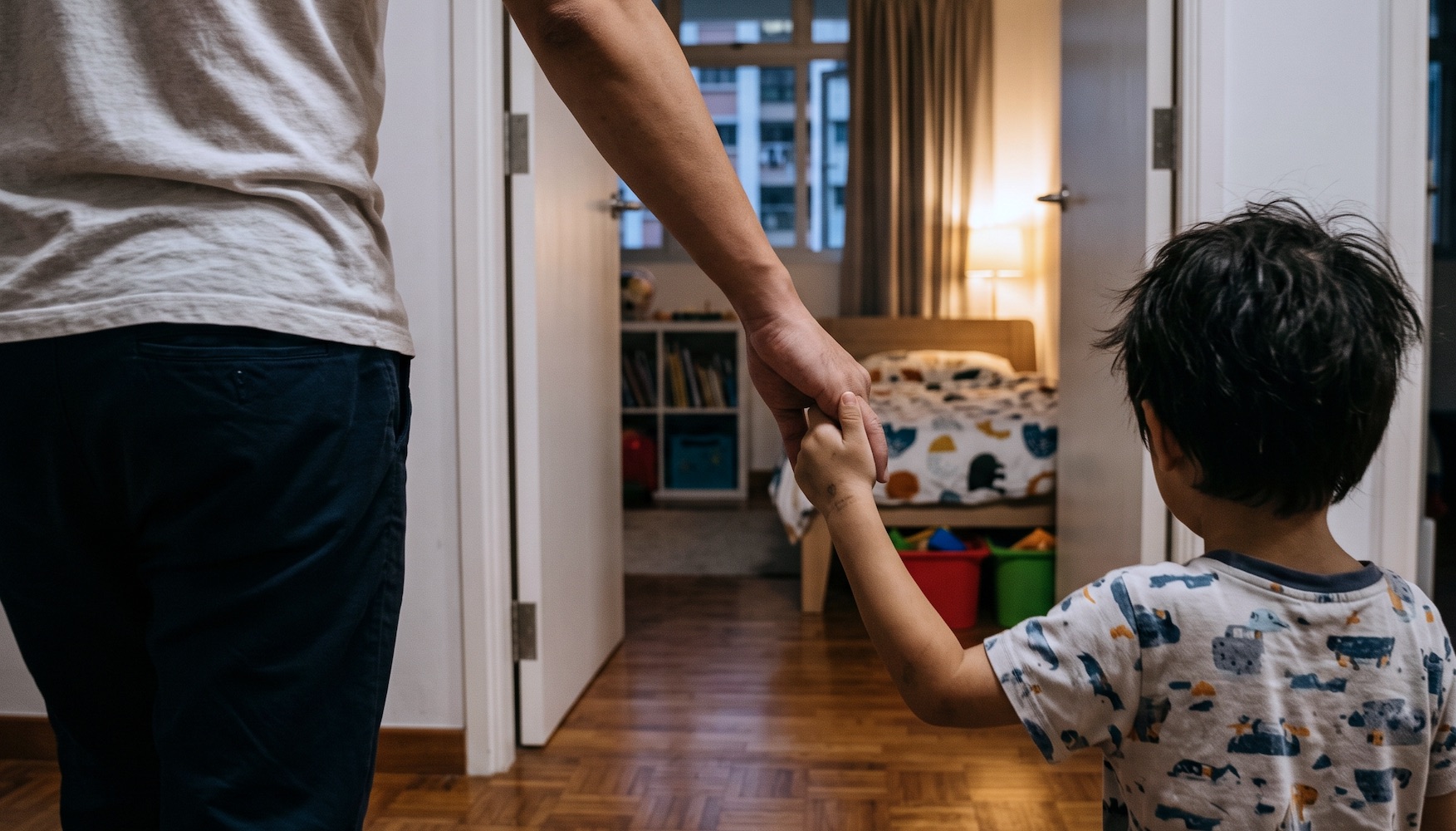
🛑 5. "If you come out of this room one more time, I am locking the door."
This threat triggers fear and panic, causing an adrenaline rush. A frightened child cannot rest and will likely cry harder, making sleep impossible for hours.
🛑 6. "Your brother is already asleep, why can't you be more like him?"
Comparisons fuel resentment between siblings and damage self-esteem. It adds emotional stress to their nighttime routine, keeping their minds active instead of calm.
🛑 7. "You are ruining my evening, I still have so much work to do."
Guilt-tripping places adult stress onto young shoulders. Children process this parental frustration as rejection, which makes them clingier and more reluctant to let you leave.
Gentle Scripts That Bring Peace to the Bedroom
Reframing our nighttime language helps lower our children's alertness levels, making it much easier for them to transition into a restful state naturally.
🟢 1. "It looks like your body is still full of energy, let us do two deep belly breaths together."
This acknowledges their physical state without judgment. Co-regulation helps lower their heart rate, moving them away from daytime excitement and preparing their system for rest.
🟢 2. "I can see you want to stay near me, so I will check on you in exactly five minutes."
Providing a predictable check-in reduces separation anxiety. It assures them that you are still accessible, allowing them to relax and fall asleep without constantly checking.
🟢 3. "Your bedroom is safe, and your only job right now is to let your body rest."
Taking the pressure off the actual act of falling asleep removes performance anxiety. Focusing purely on resting the body feels achievable and calms an overactive brain.
The True Secret to Peaceful Bedtimes
Bedtime resistance is rarely about deliberate defiance. It is usually a sign that our children are struggling to transition from the active daytime routine into quiet isolation.
When we prioritise connection over strict enforcement, we build long-term emotional safety. A child who feels secure will eventually settle down without a prolonged evening battle.
This gentle approach preserves your relationship and ensures everyone gets the rest needed for the upcoming morning routine.