
When kids push boundaries, parents often struggle to find consequences that actually work beyond standard timeouts. A parent turned to Reddit to ask, what is the most strangely unique punishment you ever received as a kid? Adults shared memories of creative, odd, and memorable discipline methods.
While some responses highlight absurd moments that dissolved tension, others reveal how overthinking discipline can backfire. Here are 15 notable discipline stories shared by the community and what we can learn from them.
1. Writing Structured Essays with Research Citations
"My dad made us write essays about what we had done wrong, why it was wrong, and what we should have done instead."
"For example, you left the dishes in the sink after being told way too many times? Pretty soon you were writing a short essay about germs and proper food handling."
"I had to write a 20 page essay about what the consequences of teenage drinking were to my 16 year old brain."
Forcing kids to research their misbehaviour turns a tense moment into a constructive educational exercise. Writing requires quiet focus, which helps passionate emotions settle down naturally before any family discussion begins.
This approach works best for older children who can articulate their thoughts clearly on paper. It shifts the emphasis away from arbitrary restriction toward understanding actual consequences and developing self-reflection habits.
2. Memorising Shakespeare Passages Together During Arguments
"My sisters and I would have to memorise passages from Shakespeare together. It was horrible to be fighting and then sit together for half an hour or more."
"One wrong word and he'd leave us for a while. Probably the worst part is it made me hate Shakespeare."
Pairing sibling conflict resolution with forced academic memorisation creates unintended associations. While forcing feuding siblings into the same room halts fighting, making classical literature the obstacle breeds resentment toward great writing.
Forced joint tasks can work when focused on shared household chores. Using classic plays as penalty material simply guarantees your children will avoid theatre when they grow up.
3. Researching Historical Scandals After Breaking Curfew
"My best friend and I snuck out and walked to the nearby convenience store late at night in 6th grade."
"My father made me write a 20 page research paper on Watergate. I have no idea why he chose the topic but the knowledge has come in handy."
Assigning an elaborate history report for sneaking out seems disconnected from the actual safety risk. However, requiring focused mental effort prevents adolescents from sneaking off again while the assignment remains uncompleted.
Consequences work best when directly tied to the broken boundary, such as reduced independence. Still, turning misbehaviour into general knowledge beats yelling, provided the workload remains reasonable for their age.
4. Confessing Misdeeds To Religious Elders
"In high school my friend got caught smoking weed by his mom."
"His punishment was that he had to tell his 95 year old strictly religious great grandmother, who thinks weed is just as bad as heroin."
Leveraging social embarrassment through respected family figures creates intense accountability. Young people often care far more about the opinion of respected elders than standard grounded rules from their parents.
This method should be handled cautiously to avoid damaging family trust or causing genuine distress. Relying on social shame too frequently can lead adolescents to become far more secretive in the future.
5. Copying Random Encyclopedia Pages By Hand
"My parents would make my older brother and sister chose one of the Encyclopedias, turn to a random page, and start copying everything down."
"turn to a random page, and start copying everything down until my parents told them to stop."
Handwriting reference books keeps energetic children quiet, but it serves little purpose beyond occupying time. When consequences feel entirely random, young minds fail to connect their behaviour with the actual outcome.
Task-based discipline works far better when tied to restoring order, such as cleaning up a shared space. Mindless copying usually breeds frustration rather than genuine understanding or personal responsibility.
6. Rejoining Long Queues After Displaying Impatience
"My dad made us all go to the back of a 45minute line at the theme park because i was being impatient and bratty."
"if anyone complained about dinner or how long it took to cook they would eat after everyone else."
Rejoining the queue directly addresses impatient behaviour through natural cause and effect. When children realise that complaining delays their enjoyment further, they quickly learn self-regulation in busy public spaces.
This logical connection helps youngsters recognise how their outburst impacts everyone around them. Applying similar principles at home reinforces basic respect for family members preparing daily meals.
7. Watching Hours Of Political Debates
"After a while, my punishment wasn't go to my room, it was watch c-span, I would have to watch politics for hours, and we would talk about it."
"I was one of the few, if only 12 year olds who could talk about the Senate, the house... As a grown up now, I'm thankful."
Sending avid readers to their bedrooms rarely works because books offer an easy escape. Replacing bedroom confinement with dry parliamentary broadcasts removes entertainment while encouraging civics awareness through discussion.
Effective parents adapt consequences to match their child's unique personality and interests. What feels tedious to a tween can surprisingly lay the foundation for valuable real-world knowledge later in life.
8. Holding T-Poses In The Classroom
"In elementary school we had this one really strict teacher that would make us T-pose in the back of the room if we were being disruptive."
"Every one of us scoffed at the idea until about a minute in and your arms are killing you."
Using physical strain to quiet disruptive students provides quick control, but it borders on physical discomfort. While it highlights how tiring holding posture can be, physical endurance tasks are rarely appropriate for school settings.
Discipline should focus on correcting behaviour rather than imposing physical discomfort. Clear verbal boundaries and loss of privileges remain far safer and more respectful choices.
9. Counting Individual Grains
"I threw a ton of glitter on my brother when he was in the bathtub. My parents bought a giant bag of glitter and dumped it on my bed."
"They made me count it and would not give my phone or laptop back until I did."
Matching the punishment to the mess made creates a memorable lesson in accountability. Requiring a tedious task before returning devices teaches kids that messy actions bring real time commitments.
However, dumping glitter onto a mattress creates an even larger cleanup problem for the household. Setting up a structured chore list achieves the same discipline without ruining bedroom bedding.
10. Restricting Access To Bedroom Comforts
"we would always be grounded from our rooms not to our rooms. It was the worst, you don't realise how much is in your room until you aren't allowed in it."
"The most unique for me was sleeping on a couch in our sun room... You would be surprised at the sudden increase of 'homework assignments' I did that required reading fiction."
Modern bedrooms are full of entertainment, making traditional room grounding feel like a comfortable retreat. Restricting access to personal gadgets and cozy sanctuaries forces children to remain part of the family environment.
Keeping grounded kids in shared living areas encourages them to face issues directly. It prevents children from retreating into private spaces where they can easily ignore expectations.
11. Destroying Personal Belongings Using Hammers
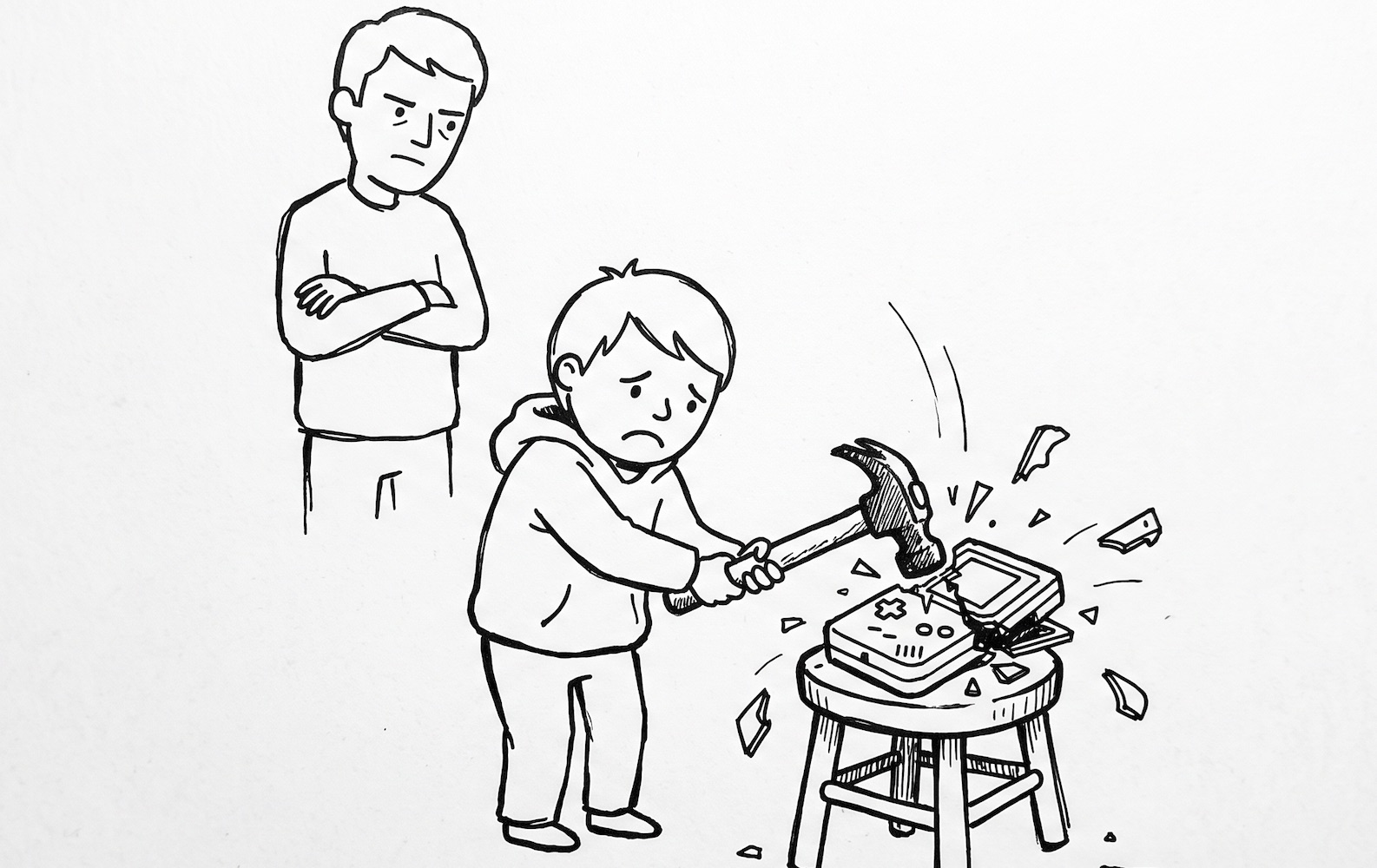
"When my brother and I got home from school he asked my brother to get his three favourite GameBoy games... told him to smash the games to bits."
"He never lashed out again and I made damn sure not to misbehave as it mentally scarred me too just from hearing it."
Forcing a young child to smash prized toys creates overwhelming fear rather than healthy discipline. While it stops negative behaviour quickly, extreme destruction leaves lasting distress that damages parent-child trust.
Discipline should build self-control rather than instill intense anxiety. Temporarily confiscating favourite items teaches boundaries without resorting to permanent property damage or unnecessary emotional distress.
12. Dumping Untidy Room Contents Outside
"When my dad was a teenager, if he didn't clean his room when his mother told him to, she would empty the contents of his room on to the front lawn"
"for him to discover when he would get home from school."
Dumping messy belongings outdoors creates a drastic visual statement, but it relies heavily on public shame. While teenagers quickly realise the inconvenience of packing things back inside, exposed possessions risk public embarrassment.
Public humiliation can strain relationships and make teenagers defensive. Keeping room management internal within the home keeps the focus on personal responsibility without involving the entire neighbourhood.
Key Takeaways For Creative Discipline
Looking through these unique childhood stories shows that creative discipline works best when it builds understanding rather than fear. While extreme measures might stop bad behaviour briefly, thoughtful consequences teach self-regulation and keep relationships strong.
Every family finds its own balance when guiding children through growing pains. Focus on calm reflection, logical outcomes, and mutual respect to help your kids learn from mistakes while feeling completely supported.