The Bow and the Arrow: The Law of Cosmic Stewardship
In 1923, the Lebanese-American poet and philosopher Kahlil Gibran published The Prophet, a masterpiece containing an enduring piece of parental wisdom. In the chapter on children, a young mother holding a baby asks the prophet Almustafa to speak to the crowd about parenting. He stands before them and shatters the conventional, possessive definitions of family layout with a single, sweeping cosmic truth.
"Your children are not your children," he declares openly. "They are the sons and daughters of Life's longing for itself. They come through you but not from you, and though they are with you yet they belong not to you." With these words, Gibran introduces the profound metaphor of the archer, the bow, and the arrow to explain the true architecture of parental responsibility.
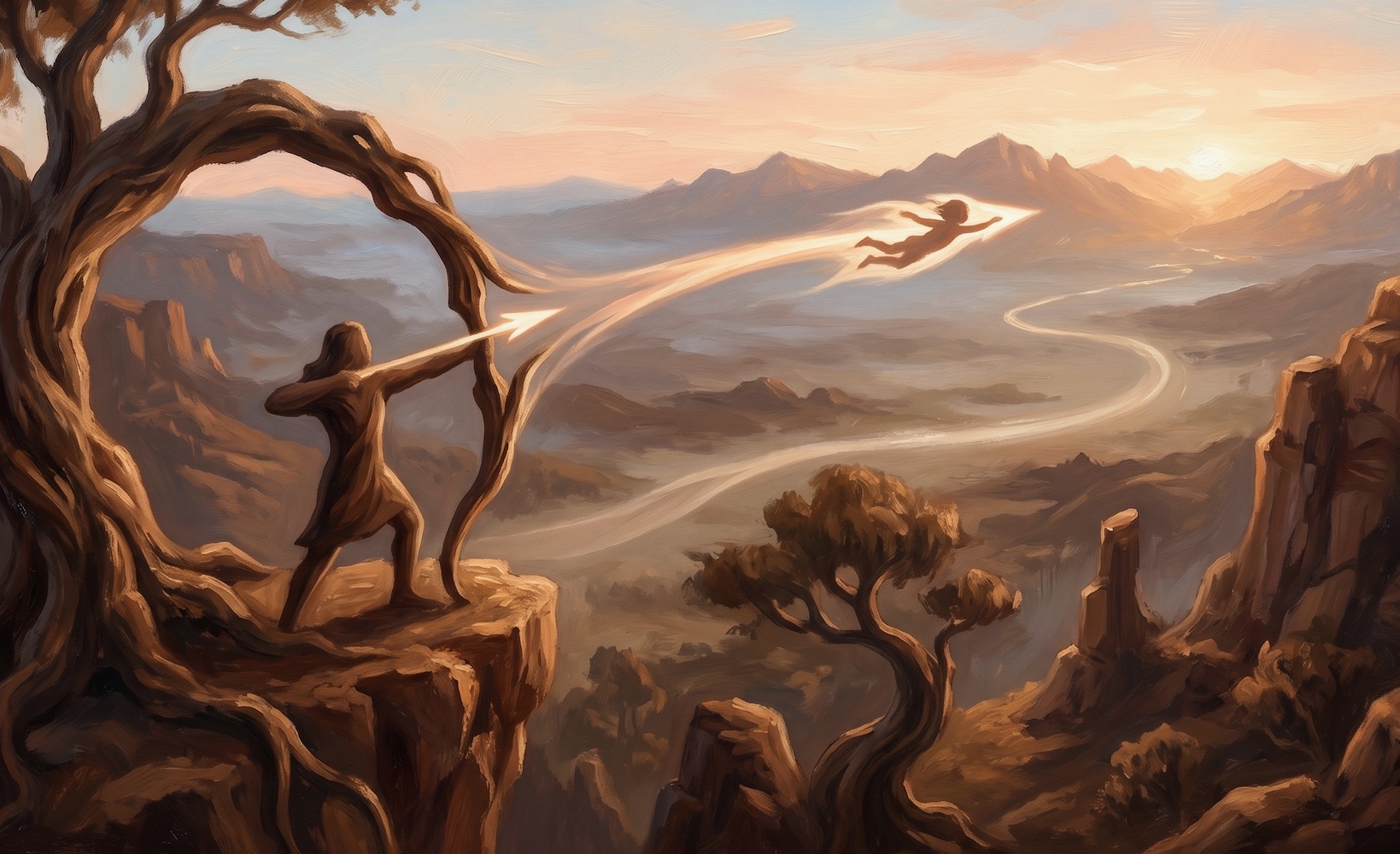
He asks parents to picture themselves as a wooden bow held in the hands of an infinite Archer. The Archer sees a target stretching far out into the distance, and He bends the wooden frame with His immense might so that His arrows may go swift and far. The bending of the bow is not a gentle, passive process; it requires deep tension, strain, and structural pressure. Yet, Gibran urges the bow to celebrate this pressure. "Let your bending in the Archer's hand be for gladness; for even as He loves the arrow that flies, so He loves also the bow that is stable." The arrow requires the absolute stability and resilience of the bow to find its trajectory, but the moment it leaves the string, its destination belongs entirely to the sky.