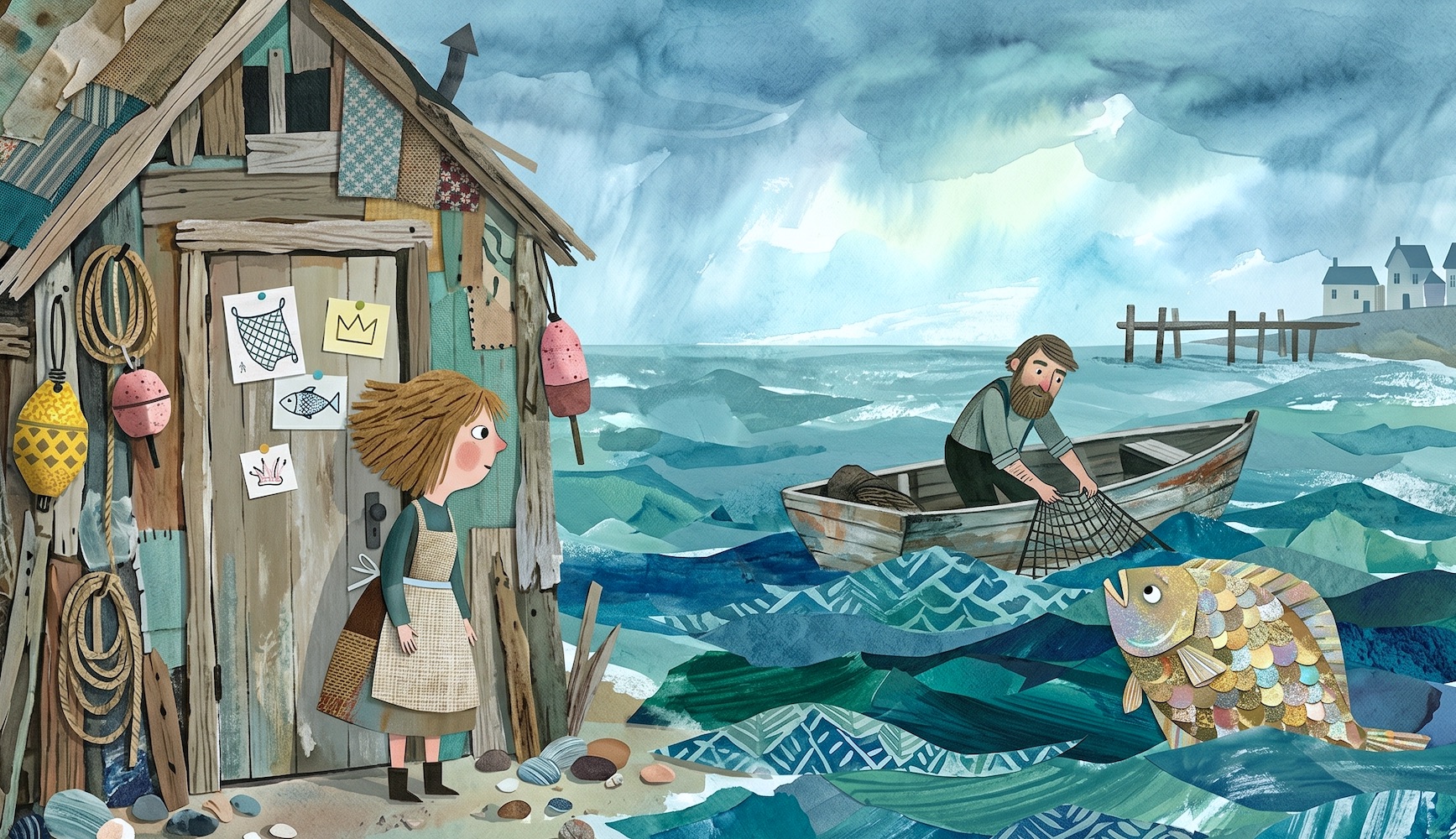
The Fisherman and His Wife: The Magic of Being Content

A magical fish, a series of mounting wishes, and the danger of "never enough." This classic fairy tale is a gentle but firm lesson for young children on the value of gratitude. It explores how constant wanting can blind us to the beauty of our current lives, proving that a heart that is never satisfied will eventually lose the very treasures it already holds.

GratitudeContentmentRespect

The Fisherman and His Wife

Once upon a time, a kind fisherman lived with his wife in a small, scruffy hut right by the sea. They didn't have much, but they had the sound of the waves to sleep to. Every day, the fisherman went out to fish. Swish, swish, swish went his line into the water.

One day, he caught a fish that looked like a rainbow—a shimmering, glowing Flounder. But then, the fish spoke! "Please, kind man, let me go!" the fish pleaded. "I am an enchanted prince!" The fisherman's eyes went wide. "A talking fish?" he said. He was a kind man, so he put the fish back. Splash!

When he told his wife, she folded her arms and looked very grumpy. "You let a magic fish go for nothing? Go back! Tell him I want a pretty cottage with a garden!"

The fisherman went back. The sea was calm and bright blue. He called out, and the fish appeared. "Of course," said the fish. When the man got home, the scruffy hut was gone! His wife was sitting in a lovely house with flowers everywhere. But the next morning, she wasn't smiling. "Too small!" she shouted. "I want a giant stone castle!"

The fisherman went back. The sea was now a murky green. The fish gave the castle. Then the wife wanted to be a Queen. Then an Empress! Every time the fisherman went back, the sea got angrier. It turned dark purple, then stormy grey, then inky black.

Finally, the wife stomped her feet. "I want to be the boss of the Sun and the Moon! Go tell the fish!" The fisherman was trembling. He went to the shore. The wind was howling and the waves were crashing like THUNDER!

The fish rose from the dark water. He didn't look happy. "Go home," the fish said. "You will find her back in your scruffy hut." And there they stayed. They had a roof, they had the sea, and they had each other. They finally learned that being thankful for "enough" is the best magic of all.

Bringing the Story Home

Use these notes to translate the story into a meaningful conversations.

Lesson behind the Tale

When children are constantly chasing the next toy, screen milestone, or reward, they miss the value of what they currently have. Gratitude acts like a lens shift for a child's perspective. By intentionally anchoring their focus on family connection and current blessings, you help them realise that a home is made rich by the people inside it, not the material items accumulated.

Relating to Our World

In Singapore, our children are surrounded by messages that "Bigger is Better." Whether it's wanting the latest series of blind boxes, the biggest LEGO set, or a trip to the fanciest indoor playground, the "Wife's Voice" can be very loud in a 3-7 year old's head. It's the "Just One More" trap.

We can use this story to establish the Boundary of Enough. We want to teach our children to pause and say "Thank you" for the toy they are currently holding before they ask for the next one. It's not about denying them treats; it's about protecting their ability to feel joy. A child who is always wishing for the "Moon" will never enjoy the "Sun" that is shining on them right now.

Opening the Dialogue

"The fisherman's wife got a cottage, a castle, and a palace, but she still didn't look happy. Why do you think she felt even more grumpy every time she got what she wanted?"

  • If they say 'She was greedy' "Greed is like being thirsty but drinking salty water—it just makes you want more! If she had stopped to play in her first garden, she might have been the happiest woman in the world. What is one thing in our house that always makes you feel happy when you look at it?"
  • If they say 'She wanted to be the boss' "Being the boss of the Sun and the Moon sounds very lonely, doesn't it? She forgot that the best part of the castle was having her husband there. Sometimes we get so busy wanting 'stuff' that we forget the people are the best part."

"The sea changed colour every time the fisherman asked for more. Why do you think the sea was getting so angry?"

  • If they say 'The fish was tired' "Even magic fish have limits! It's hard to be around someone who never says 'Thank you.' How does it feel when you give someone a gift and they just ask for another one straight away? It makes the 'sea' in our hearts feel a bit stormy, too."
  • If they say 'It was a warning' "Exactly. Nature was telling them to stop and look at what they already had. If you were the Fisherman, would you have told the wife 'No' earlier? It takes a lot of courage to say 'We have enough'!"

Putting it into Practice

Grab a small basket or a "treasure bag." Spend ten minutes walking through your home together and find three things that are "Just Right." It could be a favourite well-worn teddy, a comfortable pillow, or even a half-finished drawing. For each item, say out loud: "I am glad I have this because..." This simple act helps switch the brain from "Searching Mode" to "Appreciating Mode." Finish the hunt by giving each other a "High Five for Enough!"

Build Character, One Story at a Time

Nurturing values like integrity and courage doesn't happen overnight. Explore our full library of stories designed to help parents navigate every milestone.

Browse More Stories About Life

Recommend for You