The Myth of Icarus: The High Cost of the Ultimate Rush
Daedalus was a brilliant inventor who was completely trapped. Locked away in a massive maze by a king who feared his mind, he looked up at the sky—the only space the guards couldn't touch. He spent months collecting dropped feathers, tying them with string, and sealing them together with heavy beeswax. He was building a way out, a miracle made of wood and wax.
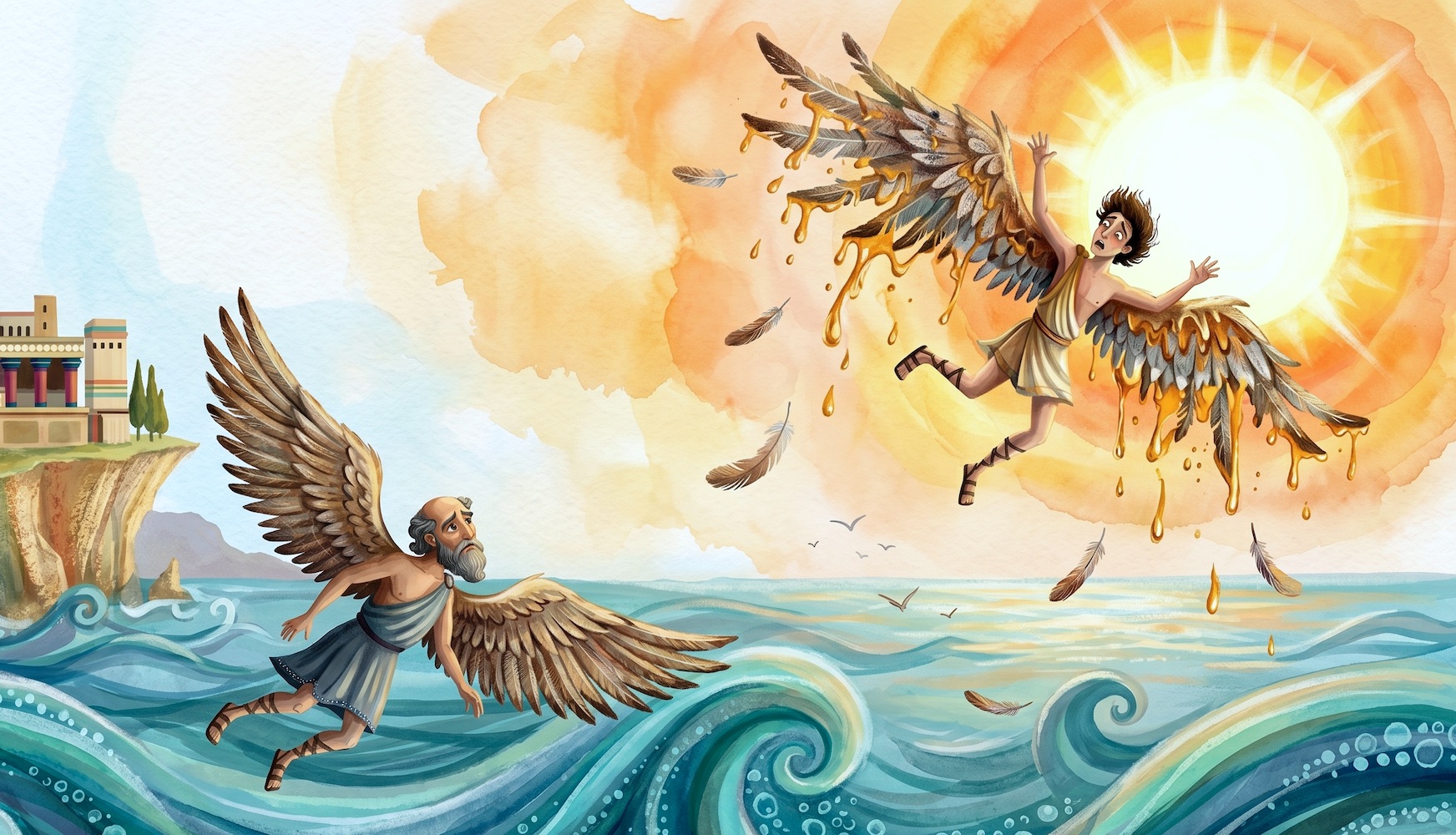
As he strapped the wings onto his son, Icarus, Daedalus didn't just give commands; he gave a survival briefing. "Listen to me, Icarus," he warned. "You have to stick to the middle path. If you fly too low, the ocean spray will soak the feathers and drag you down into the waves. If you fly too high, the hot sun will melt the wax and strip you bare. Survival isn't about flying the highest or being the fastest; it's about staying in the safe zone."
Then, they jumped. The first few minutes were terrifying, but that fear quickly turned into pure adrenaline. For a teenager who had spent his entire life staring at stone walls, the feeling of flight was like a drug. Icarus felt the wind howling past his ears and the incredible power in his shoulders. He felt absolutely invincible. He looked down at the tiny world below and decided that his father's "middle path" was just for cautious, old men. Why settle for the middle when the sun was right there?
Icarus pumped his wings harder, climbing straight up through the clouds. He ignored the frantic shouts of his father, which were completely drowned out by the roar of the wind. He flew higher and higher, driven by the ultimate flex. He didn't notice the first drop of hot wax hit his shoulder. He didn't see the feathers beginning to drift away like autumn leaves. It was only when his arms started flapping against empty air that the rush stopped. The silence that followed was total. He had touched the sun, but he had traded his entire future for a few seconds of excitement. He fell into the sea, not as a god, but as a boy who forgot that breaking the safety rules always has a price.