The Ship of Theseus
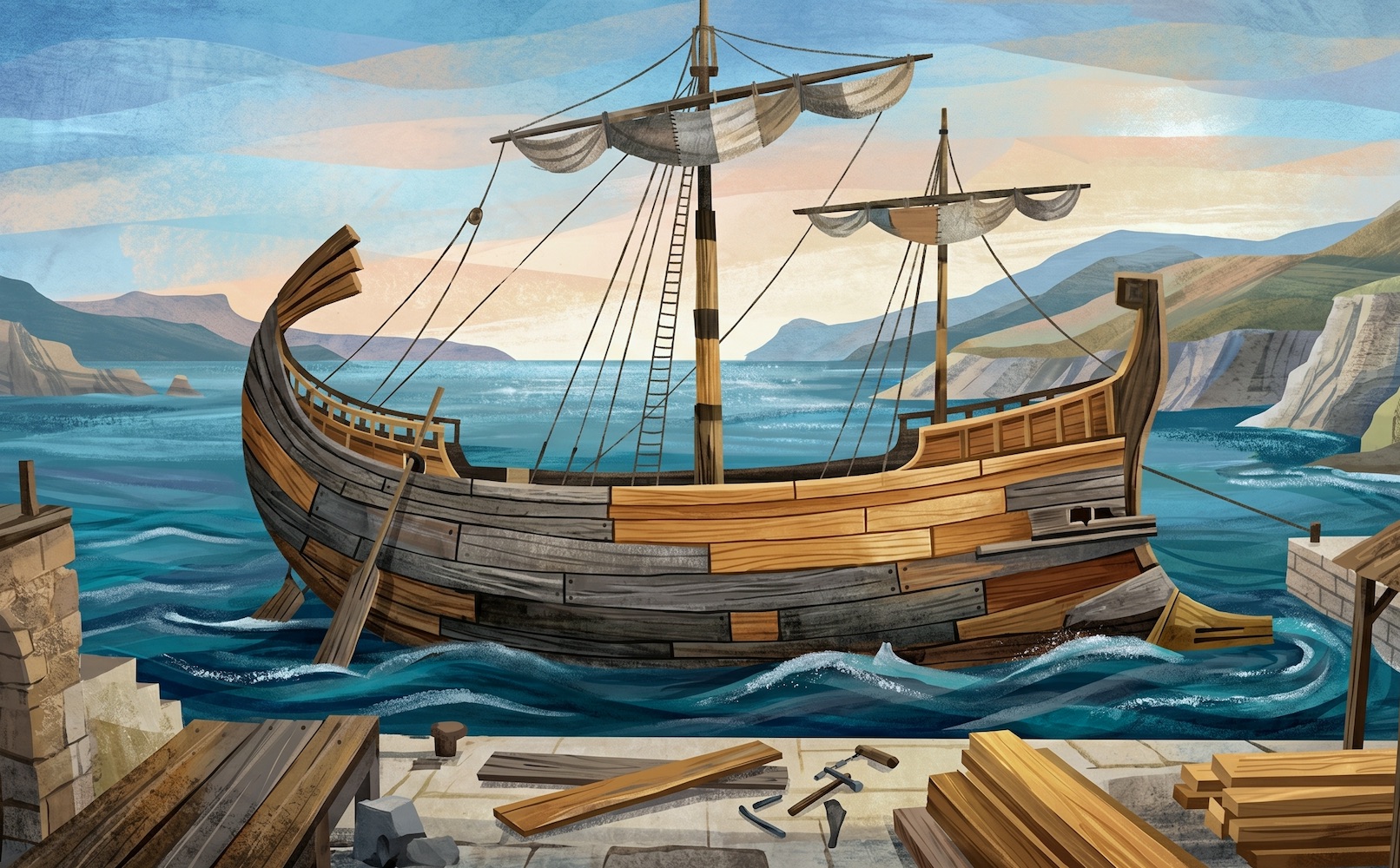
After the hero Theseus defeated the Minotaur and returned to Athens, his ship was preserved in the harbour as a grand memorial. It was a symbol of victory and courage, and for decades, the people of Athens looked upon it with pride. But as the years passed, the harsh salt air and the beating sun began to take their toll. The wooden planks began to rot, the oars grew brittle, and the sails started to fray.
To keep the memorial alive, the Athenians began to maintain the ship. When a plank rotted, they removed it and replaced it with a fresh piece of strong timber. When a rope snapped, they wove a new one. This went on for generations. Piece by piece, the old ship was stripped away and replaced with something new.
Eventually, a group of philosophers stood on the docks and asked a question that would echo for centuries: "If every single piece of the ship has been replaced—if there is not one sliver of wood or one thread of rope left from the original day Theseus sailed—is it still the Ship of Theseus?"
Some argued that it was a completely different ship because its "matter" had changed. Others argued that it was the same ship because its "form" and its story remained the same. To make it even more confusing, another philosopher asked: "What if someone had saved all the old, rotten planks and built a second ship out of them? Which one would be the 'real' ship then?" Theseus was gone, and his ship had changed entirely, yet the world still knew it by the same name. The ship proved that being "the same" is more about the journey and the purpose than the physical parts we are made of.