

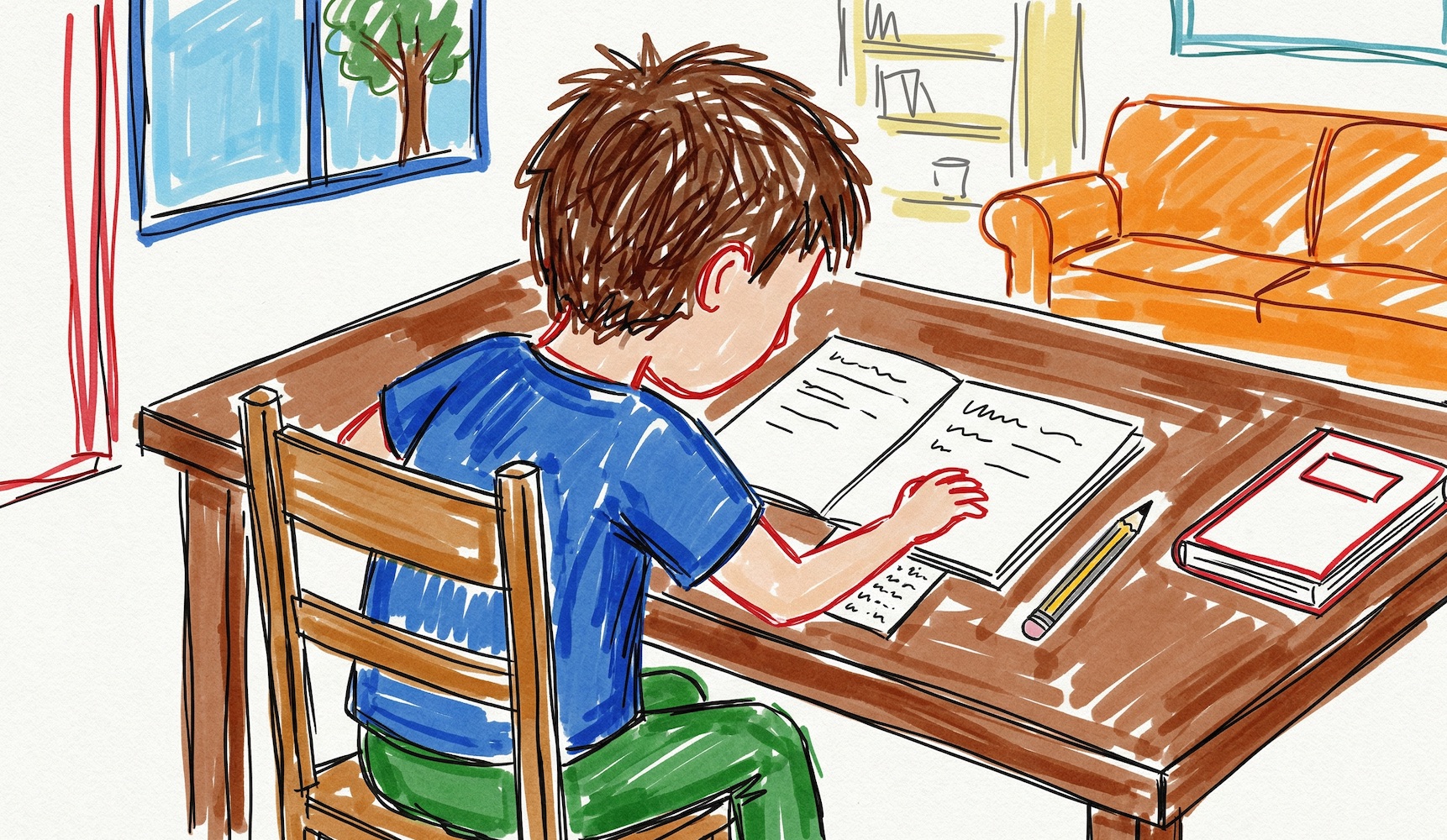
My son, who is now in Primary 3, was sitting at the food court table with his Chinese spelling list. His face was pale, his knuckles white against the pencil, and I saw his eyes darting toward my phone every time a notification lit up the screen. It was that look. The look of a small person trying to find an escape hatch from a pressure they cannot quite name yet. If you have caught your child using a calculator for a "closed-book" maths worksheet or peeked at their browser history to find they have been searching for science answers, please take a deep breath. You are not raising a dishonest person; you are raising a child who is trying to survive a moment they feel unequipped for.
Why the Browser History Tells a Deeper Story
The blue light of the smartphone reflecting in the window at dusk. My son's shoulders were hunched, tight as a coiled spring, and the maths paper was still blank after twenty minutes of staring. He eventually reached for the iPad. It is easy to think this is about laziness or a lack of integrity, but often, it is a panic response. When the gap between what a child knows and what the paper demands feels like a canyon, they grab the nearest bridge. Sometimes that bridge is a calculator.
Our children may be feeling trapped. In our local school context, the fear of falling behind can make a ten-year-old feel like their entire future depends on one practice paper. They "cheat" because they are more afraid of disappointing you—or themselves—than they are of the long-term consequences of not learning the material. It is a short-term survival tactic for a long-term worry.
Seeing the SOS in the Digital Crutch
A crumpled worksheet in the bin. It wasn't just paper; it was a weight he couldn't carry. When we see a child using Google for a closed-book task, we should try to see it as a data point rather than a moral failure. It is a clear signal that the work is currently too hard, or the stakes feel too high. If they felt safe enough to fail, they wouldn't need to hide the help.
We can choose to look at that calculator as an SOS flare. It tells us exactly where the foundation is shaky. Instead of a lecture on honesty, we can look at the "cheating" as a request for a different kind of support. It is a moment to pause and ask what is making the "honest" path feel so dangerous to them right now. The parent-child relationship works better when we lower the heat.
Simple Shifts for a More Honest Study Time
1. Normalise the "I Don't Know"
Make it a rule that "I don't know" is a valid answer. I started telling my daughter that I would rather see a blank page with a "help me" note than a perfect page that she didn't understand. We have to explicitly give them permission to be stuck. When they realise that being stuck doesn't lead to a sigh or a frown, the need to hide the calculator starts to fade away.
2. The "Open-Book" Transition
If they are struggling, give them a "cheat sheet" instead of letting them sneak one. The idea is to scaffold the task. Tell them, "You can use the textbook for the first three questions, then try the next three without it." It acknowledges their struggle while still pushing for independent work. It turns a "crime" into a strategy.
3. Time-Boxed Effort Over Completion
Focus on the clock, not the marks. Tell your child they only need to work for 25 minutes, and whatever they finish is enough. The pressure to complete a massive pile of "Top School" past-year papers is often what drives children to look for shortcuts. When the goal is just to try for a set time, the "need" to finish by any means necessary disappears.
4. Remove the Audience
Sometimes, we are the problem. Even if we aren't saying anything, our presence at the edge of the table can feel like a spotlight. Try moving to another room to fold laundry or wash the dishes. Give them the space to struggle privately. I noticed my son is much more likely to admit he is stuck when I am not hovering over his shoulder, waiting for the right answer.
Beyond the Marks on the Page
The smell of rain on hot asphalt always reminds me of those long afternoons spent over textbooks. We want our children to be people of character, but character is built in places where it is safe to be weak. If your child is hiding a calculator today, they are telling you they don't feel strong enough yet. Your job isn't to be the police; it is to be the person who makes the struggle feel okay.
Next time you see that tab quickly close as you enter the room, take a breath before you speak. Ask yourself: what is my child so afraid of that they feel they have to hide their process from me?