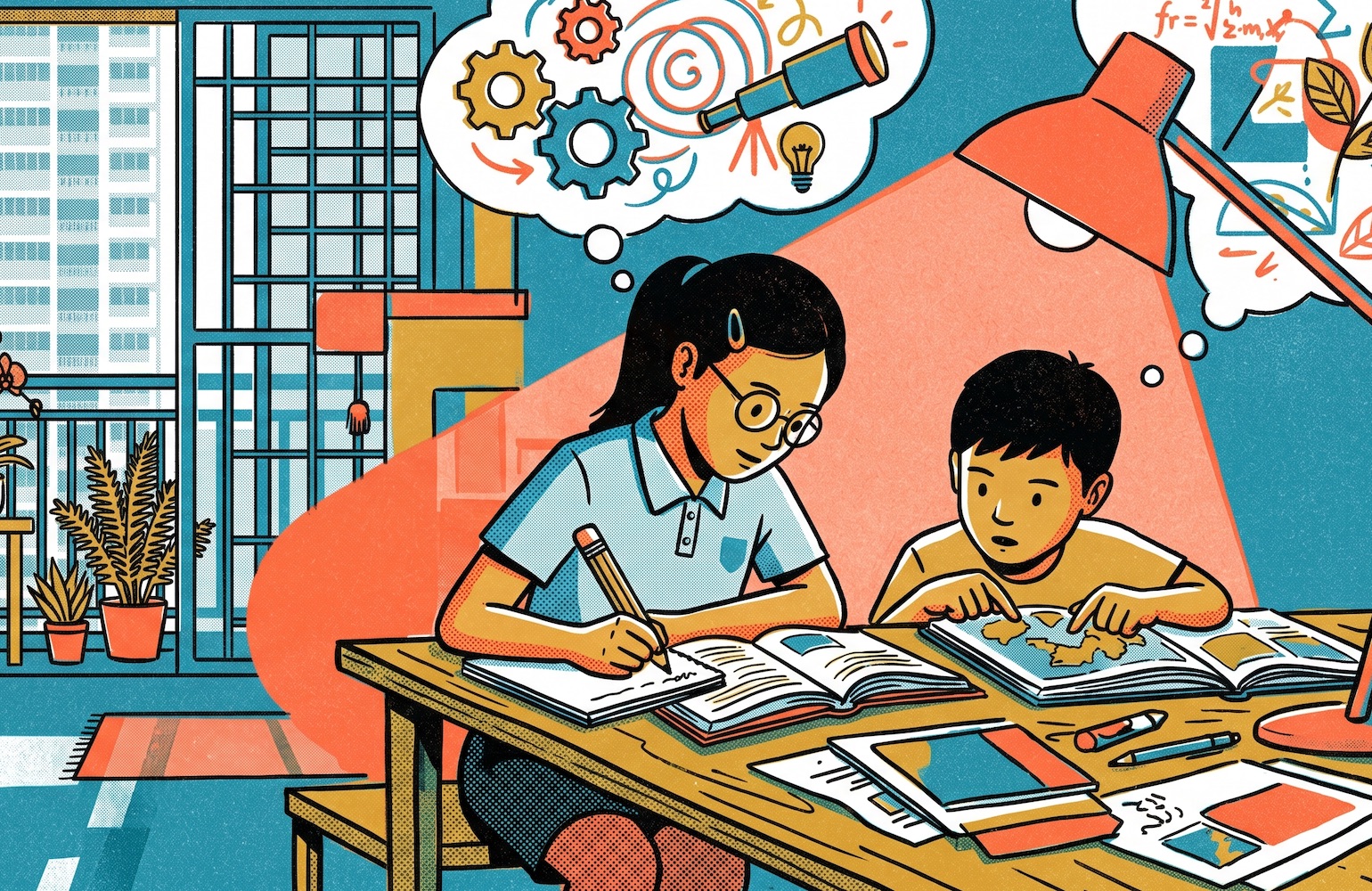
Transform the daily homework struggle into a productive routine. Learn 20 essential study rules to help your child focus, manage deadlines, and build independent learning habits.
In Singapore's competitive academic landscape, homework can often become a source of evening friction. These rules are designed to shift the focus from "getting it done" to "learning to focus," helping your child build the independent study habits they need for long-term success.
Homework & Study: The Top 5 Core Anchor Rules
The foundation of academic discipline. These five "anchors" ensure that study time is respected as a priority and that children learn the value of finishing their responsibilities before seeking leisure.
#1: Work Before Play ⚖
All homework, revision, and school projects must be completed to a satisfactory standard before any screen time, gaming, or outdoor play is allowed.
#2: The Digital Blackout 📵
Smartphones and non-essential tablets are prohibited during study hours. Devices must be placed in a "charging station" outside the study area.
#3: Designated Quiet Hours 🤫
Establish a fixed "Quiet Hour" daily (e.g., 4:00 PM – 5:30 PM). Even if there is no homework, this time is used for reading or reviewing the day's lessons.
#4: No Studying on Beds 🛏
Work must be done at a desk or the dining table. Studying on the bed leads to poor posture and tells the brain it's time to sleep rather than focus.
#5: The Independent First-Try 🧠
Children must attempt every question on their own before asking for help. We value the "struggle" of learning over just getting the right answer.
The Study Environment
A focused mind requires a focused space. These rules help minimize external distractions and ensure your child has everything they need to stay on task.
#6: Stationery Readiness ✏
Before starting, ensure all pencils are sharpened and all necessary books are on the desk. No "walking around" to find supplies mid-session.
#7: Clean Surface Policy ✨
The study desk must be cleared of toys, snacks, and clutter before work begins. A tidy desk leads to a tidy mind.
#8: Proper Lighting 💡
Study time requires bright, clear lighting. No working in dim "mood" lighting, which causes eye strain and lethargy.
#9: Water Only at the Desk 💧
Keep a water bottle nearby to stay hydrated, but snacks are for scheduled breaks only to prevent sticky fingers and distracted eating.
Planning & Execution
Effective studying is about strategy. Use these rules to help your child manage their workload and avoid the "Sunday night panic" over forgotten assignments.
#10: The Daily Portal Check 📋
The first step of study time is checking the school handbook or online portal (like SLS) and writing a "To-Do" list for the day.
#11: Hardest Task First ⛰
Encourage children to tackle their most difficult or least favorite subject first while their mental energy is at its highest.
#12: The Pomodoro Pace ⏱
Work in focused blocks (e.g., 25 minutes of work followed by a 5-minute movement break). This prevents burnout and keeps focus sharp.
#13: No "Last Minute" Projects 📅
For long-term projects, a small portion must be done each day. We do not leave entire posters or essays for the night before they are due.
#14: Review the Mistakes 🔍
When work is returned by the teacher, the rule is to review the mistakes and understand the correct answer before filing the paper away.
Behavior & Mindset
Success isn't just about grades; it's about the attitude toward effort. These rules foster resilience and a growth mindset within your child.
#15: Use "Indoor" Brains 🤫
During Quiet Hours, the whole house respects the silence. No loud music, shouting, or heavy housework near the study zone.
#16: Neatness Counts ✍
Work must be legible and organized. If the handwriting is too messy for the teacher to read, it must be erased and redone.
#17: Ask Specific Questions 🙋♂
Instead of saying "I don't get it," the rule is to identify exactly which part is confusing. This encourages active thinking.
#18: The "Done" Verification ✅
Before closing the books, the child must double-check that they haven't missed a back page or a second section of the worksheet.
#19: Pack for Tomorrow 🎒
Immediately after finishing homework, all books and signed forms must be placed directly into the school bag.
#20: Effort Over Grades ❤
The final rule is that we celebrate the hard work and focus shown during the session, regardless of how difficult the subject matter was.
Master Every Situation
Setting boundaries doesn't stop here. From hawker centres to screen time, explore our full collection of situational rules designed for Singaporean families.
See All Family Rules & Routines