
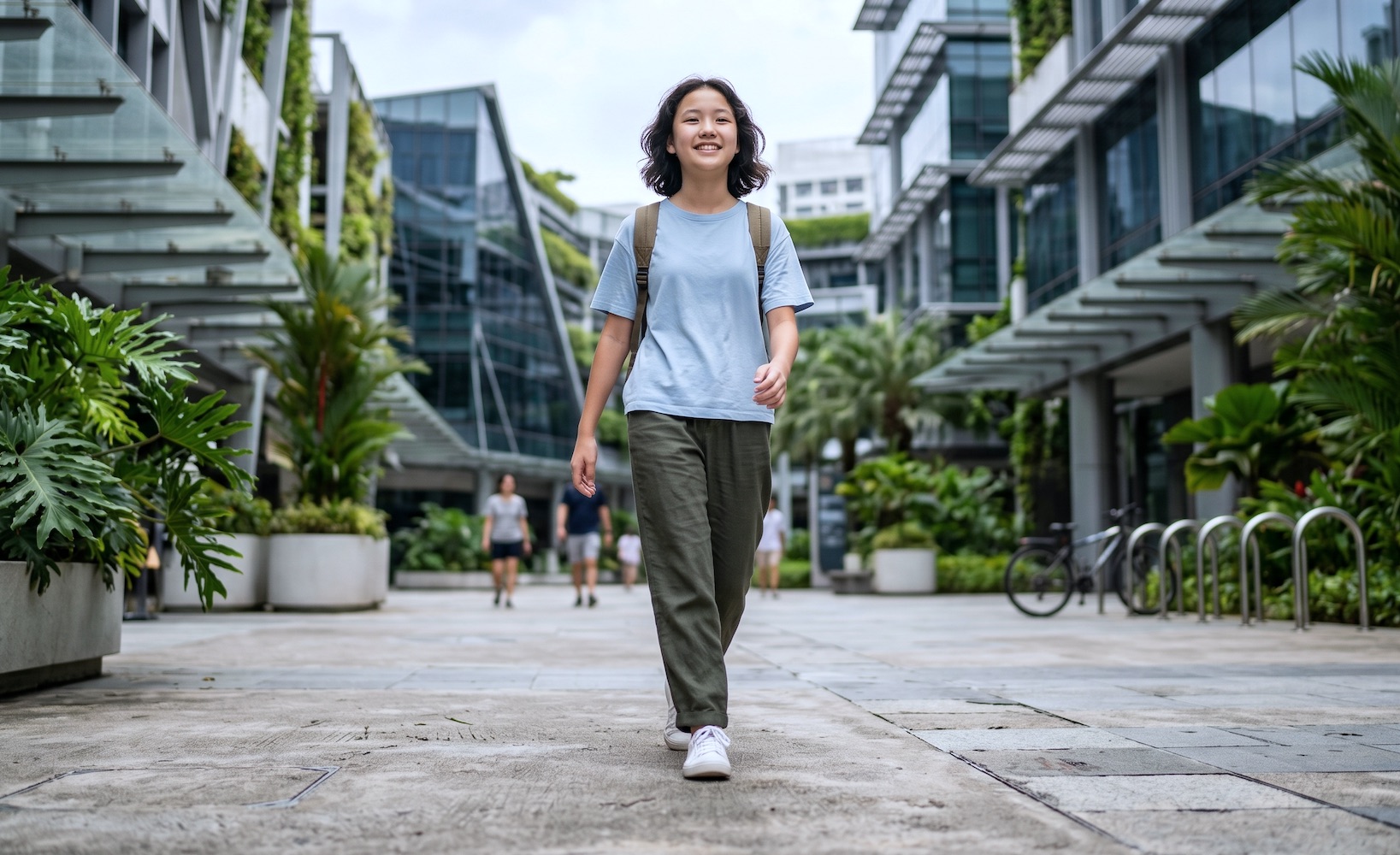
The Lower Secondary years (ages 13 to 14) are a period of rapid recalibration. Your child is suddenly juggling 8 to 9 subjects, longer school days due to CCAs, and a social life that is increasingly digital. At this stage, habit building moves from "partnership" to consultancy. Your role is no longer to manage their time, but to help them design the systems that allow them to manage themselves.
In this guide, we apply our 3-stage framework to the unique demands of the Singaporean secondary school experience. By focusing on environmental design rather than verbal reminders, you help your teen build the executive function skills they will need for the O-Levels, N-Levels, and beyond. Here is the framework for this phase:
Jump to a Lower Secondary situation and learn how to build the habit:
- Self-Directed Study Start
- CCA Gear & Late Returns
- Using a Digital Planner
- Subject-Based Revision
- Managing Transport Funds
- Group Chat Etiquette
- Managing Infinite Scroll
- Reporting Digital Risks
- Refusal Skills (Advanced)
- Open Communication
- Independent Laundry Care
- The Tech-Free Bedroom
- Common Area Respect
- Self-Monitoring Health
- Bouncing Back from Fails
Cluster 1: Academic Independence & Schedule Management
The jump from 4 subjects in Primary school to 8 or 9 in Secondary school is the biggest shock for Sec 1 students. The workload is no longer manageable via last-minute cramming. The goal of this cluster is to help your teen build a sustainable study rhythm and take full ownership of their increasingly complex weekly schedule, including late-night CCAs and project work.
1. Initiating Self-Directed Study Blocks
In Secondary school, homework is replaced by "self-study." Resistance happens because the teen feels they have "no homework" if nothing is due tomorrow, ignoring the need for consistent revision. Parents can consider a habit that focuses on time-blocking rather than task-completion, making study a non-negotiable part of the afternoon regardless of deadlines.
2. Managing CCA Gear & Late Returns
Lower Secondary CCAs can end as late as 6:30 PM or 7:00 PM. Exhaustion leads to gear being dumped in the living room and forgotten for the next session. Parents can design a habit that makes gear maintenance a prerequisite for the post-CCA shower, ensuring they are always ready for the next practice.
3. Using a Digital or Analog Planner
With subject-based banding and different elective timings, a Sec 2 student's schedule is no longer a simple grid. Relying on memory leads to missed submissions. Parents can build a planning habit that moves the schedule from the "mental cloud" into a reliable, external system.

4. Subject-Based Revision (The "Active Recall" habit)
Lower Secondary exams require higher-order thinking. Simply re-reading notes (passive learning) is no longer effective, leading to a gap between effort and grades. Parents can consider a habit that switches the child's study method to active recall, ensuring their revision time actually sticks.
5. Managing Transport & Canteen Funds
With independence comes the need for financial tracking. If a teen constantly asks for "emergency" top-ups for their EZ-Link or lunch, they remain in a child-like dependency. Parents can design a habit that turns pocket money into a professional-style monthly budget, teaching them to forecast their needs.
Cluster 2: Digital Life & Social Maturity
Between ages 13 and 14, your teen's social life moves almost entirely to the digital sphere. They are likely managing multiple WhatsApp and Telegram groups, navigating TikTok trends, and dealing with the first wave of real-world peer pressure regarding vaping or risky behaviour. The goal of this cluster is to build internal filters. By designing habits that encourage a "think-before-action" mindset, you help them navigate digital drama and social risks with their integrity intact.
6. Managing Group Chat Overwhelm
Secondary school students often belong to dozens of chats—class, CCA, project work, and gaming groups. The constant pings and the "fear of missing out" (FOMO) can lead to digital exhaustion or getting dragged into "keyboard warrior" drama. Parents can design a habit that helps the teen take control of their notifications, teaching them that they are not obligated to be "on-call" 24/7.
7. Managing the "Infinite Scroll"
TikTok and Instagram algorithms are designed to keep pre-teen brains locked in a loop of quick dopamine hits. Many teens lose hours of sleep or study time because they lack a physical stop-cue. Parents can consider a habit that uses a sensory shift to break the trance, helping the brain transition from the digital world back to reality.

8. Reporting Digital Risks (Cyber-Safety)
Singaporean teens are high-value targets for gaming scams or impersonation. Often, a 13-year-old who makes a mistake (like clicking a dodgy link) stays silent because they fear their phone will be confiscated. Parents can build a habit that prioritises communication over punishment, ensuring the teen feels safe to report a digital "oops" before it becomes a crisis.
9. Advanced Refusal Skills (Vaping/Risk)
Lower Secondary is often when "dares" and social pressure regarding vaping or late-night wandering peak. Saying "no" to a group of friends is socially terrifying. Parents can design a habit that gives the teen a graceful exit script, allowing them to save face with their peers while remaining safe.
10. Maintaining Open Communication
As teens seek more privacy, they often stop sharing the details of their day. This distance is normal, but it can make it hard for parents to spot signs of stress or bullying. Parents can build a habit that focuses on side-by-side connection, which is less confrontational than face-to-face interrogation.
Cluster 3: Personal Space & Health
Lower Secondary is the time when the home environment shifts from a "shared playroom" to a collection of individual lives. Your teen is biologically wired to seek privacy and distance, which can often manifest as a messy bedroom or a complete withdrawal from family spaces. The goal of this cluster is to build habits that respect their need for autonomy while maintaining the standards of a healthy, functioning household.
11. Independent Laundry Care
Relying on a parent or helper to wash, iron, and fold everything creates a competence gap that becomes obvious during school camps or later in life. Often, teens leave their favourite hoodies at the bottom of the hamper and get upset when they aren't ready for the weekend. Parents can design a habit that makes the teen the primary manager of their own wardrobe logistics.
12. The Tech-Free Bedroom (Sleep Hygiene)
Secondary 2 students often face "social pressure" to stay online late, leading to chronic sleep deprivation and irritability. Simply banning phones in the room feels like a violation of privacy. Parents can design a habit that uses a shared "Power Down" ritual, shifting the focus from "policing" to "health optimisation."

13. Common Area Respect (The "Stuff" Basket)
A teen's life often spills into the living room—school bags, sneakers, and half-finished projects. Constant nagging about the mess leads to the teen retreating into their room even more. Parents can design a habit that provides a "buffer zone," allowing the teen to keep their things in one spot without cluttering the whole house.
14. Self-Monitoring Health (Body Awareness)
Teens often hide "small" health issues (like a persistent cough, skin rashes, or extreme fatigue) until they become major problems. This happens because they fear a trip to the doctor will disrupt their social or CCA schedule. Parents can build a habit that encourages reporting symptoms as "data points" for better performance.
15. Bouncing Back from Assessment Failure
Secondary school grades can fluctuate wildly, especially in new subjects like History or Literature. A "bad mark" can crush a 14-year-old's confidence, leading to a fixed mindset ("I'm just bad at this"). Parents can build a resilience habit that turns the report card from a judgment into a strategy session.
Growing Together: Navigating the Teen Years with Partnership
You are successfully guiding your child through the high-pressure transition into young adulthood. In Singapore's Lower Secondary environment, it is easy to focus only on grades, but the true win of these years is the development of your teen's character and self-reliance. By moving from a "manager" to a "consultant" through these habit designs, you are giving them the tools to handle the O-Levels and beyond with confidence. Remember to stay patient during the messy days and keep celebrating the maturity they show when they manage their own time, tech, and health. You're building a foundation of trust that will last a lifetime.