
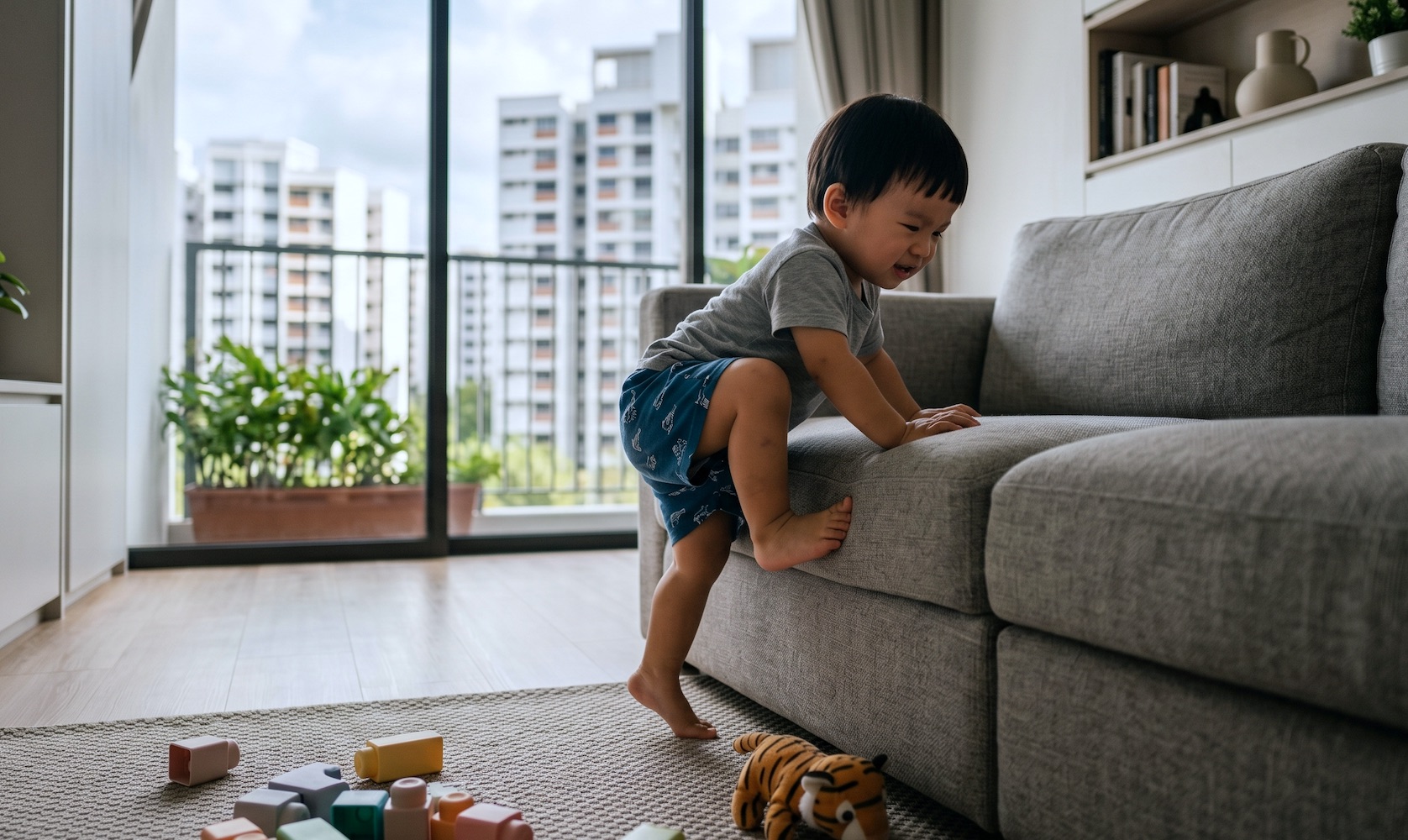
Raising a toddler in Singapore is a busy reality. Between the morning rush for infant-care and navigating weekend crowds at the mall, parents of 1-to-3-year-olds often feel like they are in a constant state of negotiation. This is the age where independence begins to show, often leading to the "Terrible Twos." Habit building isn't about rigid control; it's about designing simple rituals so the right choice becomes the automatic choice.
In this guide, we review common case studies that every local parent will recognise. To help navigate these situations, we use a 3-stage framework. By following this sequence, you can move away from nagging and instead become a designer of your child's success. Here is how to understand the loop we will use to solve each case study:
Jump to a situation and learn how to build the habit:
- Morning Shoe Battles
- Bath-to-Bed Resistance
- School Gate Clinging
- Car Seat Resistance
- Screens at the Table
- Picky Eating Standoffs
- Food Throwing at Dinner
- Mall Floor Meltdowns
- Playground Sharing
- Manners with Helpers
- Hitting when Frustrated
- Living Room Toy Mess
- Teeth-Brushing Battle
- Sandy Hands on Sofa
- Furniture Climbing
Cluster 1: Daily Rituals & Transitions
Toddlers don't really have a sense of time, which is why moving from home to school or play to bath often leads to a struggle for control. By building habits around these daily shifts, we provide the predictability they need. It turns high-pressure moments into calm, rhythmic rituals for the whole family.
1. The Shoe Battle (Leaving the House)
You're rushing to catch the school bus, but your toddler is doing a "victory lap" around the flat instead of putting on their shoes. Every time you try to catch them, it just turns the morning commute into a game of tag.
This resistance usually happens because leaving the house feels like an unstructured disruption to their play. To resolve this, parents can create a habit that provides a dedicated "staging area," signalling that play has ended and the journey has begun.
2. The Bath-to-Bed Struggle
The second you mention "bath time," your toddler treats it like a starting gun to run away and hide behind the sofa. What should be a relaxing evening routine becomes a test of your patience.
For a toddler, stopping high-energy play for hygiene feels like a boring end to the fun. Parents can consider building a habit that turns the transition into a sensory game, removing the friction of having to "stop" playing.
3. The School Gate Clinging
You reach the school gate and suddenly your child is clinging to your leg with surprising strength. The heartbreak of leaving them while they are upset can stay with you for the rest of your workday.
This response is driven by separation anxiety and a lack of closure. Parents can design a symbolic ritual habit that helps the child feel like they are carrying a piece of your presence with them into the classroom.

4. The Car Seat Resistance
Every car trip starts with your toddler stiffening their spine like a board, making it impossible to buckle them in. You find yourself physically wrestling them into the seat while they protest loudly.
Toddlers value their independence, and being strapped down feels like a sudden loss of autonomy. Parents can use a habit that rebrands the car seat as a "control centre" where the child has an active, important job.
Cluster 2: Mealtimes & Nutrition
Mealtimes in a fast-paced city can easily turn into a race against the clock. Establishing good table habits now helps children learn to explore food and enjoy social connection, preventing a long-term dependency on screens just to finish a meal.
5. Screens at the Table
You're at a crowded hawker centre, and the only way to get your child to sit still and eat is by putting on a video. You worry they aren't even tasting their food because they are so distracted.
This dependency forms because screens provide easy dopamine during the "wait" for food. Parents can create a habit that replaces the passive screen with active, hands-on play that keeps little fingers busy.
6. The Picky Eating Stand-off
Your child takes one look at a piece of broccoli and acts as if you've served them something terrible. Mealtime becomes a battle of "just one bite" that nobody wins.
A fear of new textures (neophobia) is a biological phase for toddlers. Parents can introduce a habit that lowers the pressure by separating "exploring" food from the requirement to actually eat it.
7. Throwing Food at Dinner
Dinner ends with a "clatter" as your toddler joyfully sweeps their remaining carrots off the tray and onto the floor. You're left tired and frustrated, cleaning the same spot for the third time today.
Toddlers often throw food to communicate they are "done" but don't yet have the words to say it. Parents can design a habit that provide a designated, mess-free way for the child to signal the end of their meal.

Cluster 3: Social & Emotional Regulation
At this age, emotions are huge, but the vocabulary to express them is still small. Habit design gives toddlers a physical "script" to follow when they feel overwhelmed, helping them navigate big feelings without defaulting to tantrums or hitting.
8. The Mall Floor Meltdown
You're at the mall, and your toddler has just collapsed into tears because you won't buy a toy. Suddenly, it feels like everyone in the atrium is watching you try to handle the situation.
This happens because a toddler's brain gets "locked" on the disappointment of being told no. Parents can introduce a choice-based habit that redirects the brain's focus toward a new decision-making task.
9. Playground Sharing Struggles
At the playground, your child has a white-knuckle grip on a common tricycle and won't let anyone else have a turn. You feel the pressure to intervene quickly as other parents wait.
Toddlers struggle with sharing because they don't know when—or if—a toy will come back. Parents can use a rhythmic count-down habit to provide predictability and prepare the brain for the handover.
10. Manners with Helpers & Grandparents
Your child is barking orders at your helper or parents, shouting for things without any manners. You worry they are becoming entitled toward the people who care for them.
Toddlers often view adults as "vending machines." Parents can design a habit that adds a small, polite requirement to meet before a request is fulfilled.
11. Hitting when Frustrated
When you say "no more park," your toddler lashes out and hits your arm. It can be a shocking moment that leaves you wondering where they learned that behaviour.
Toddlers hit because they experience a physical surge of adrenaline during anger. Parents can create a habit that replaces the hit with a safe, sensory-heavy movement to help them regulate.
Cluster 4: Personal Responsibility & Hygiene
Self-care starts with small, repeatable steps. Building habits around hygiene and order now ensures that tasks like packing away and washing hands become a natural, friction-free part of their everyday life.
12. The Living Room Toy Mess
The living room floor is a minefield of toys, and your child refuses to move a single block. You end up tidying it yourself just to have a clear path across the room.
For a toddler, tidying feels like a chore that stops the fun. Parents can consider a "gatekeeper" habit where packing up is stacked as the necessary key to starting the next exciting activity.

13. The Teeth-Brushing Battle
Every night is a stand-off, with your toddler clamping their jaw shut. The bedtime mood is ruined by the exhaustion of this daily struggle.
Toddlers often resist brushing because the sensation is invasive. Parents can build a habit using an audio boundary to provide a clear, predictable endpoint.
14. Sandy Hands on the Sofa
You get home from the park, and before you can speak, your child has run to the sofa with sandy hands. You're left trying to catch them before they make a mess.
This happens because the living room is far more appealing than the bathroom for a returning explorer. Parents can re-design the path home to make handwashing the easiest and most sensory-fun choice.
15. Climbing the Furniture
Your toddler treats the TV console like a climbing frame. You find yourself constantly shouting "get down," but it doesn't seem to stop them.
Toddlers have a biological urge to climb. This habit redirects that energy to a safe spot rather than just trying to shut it down completely.
Growing Together: Small Steps for a Lighter Home
You're doing a wonderful job navigating these early, high-energy years. Parenting a toddler is a journey of discovery for both of you, and these habit designs are meant to be a helpful companion to make your daily life feel a little smoother. By gently tweaking the environment and celebrating those tiny payoffs, you're helping your little explorer build confidence and independence. Remember that every small success is worth a high-five. Stay patient and kind to yourself as you find the rhythmic rituals that work best for your unique family.