
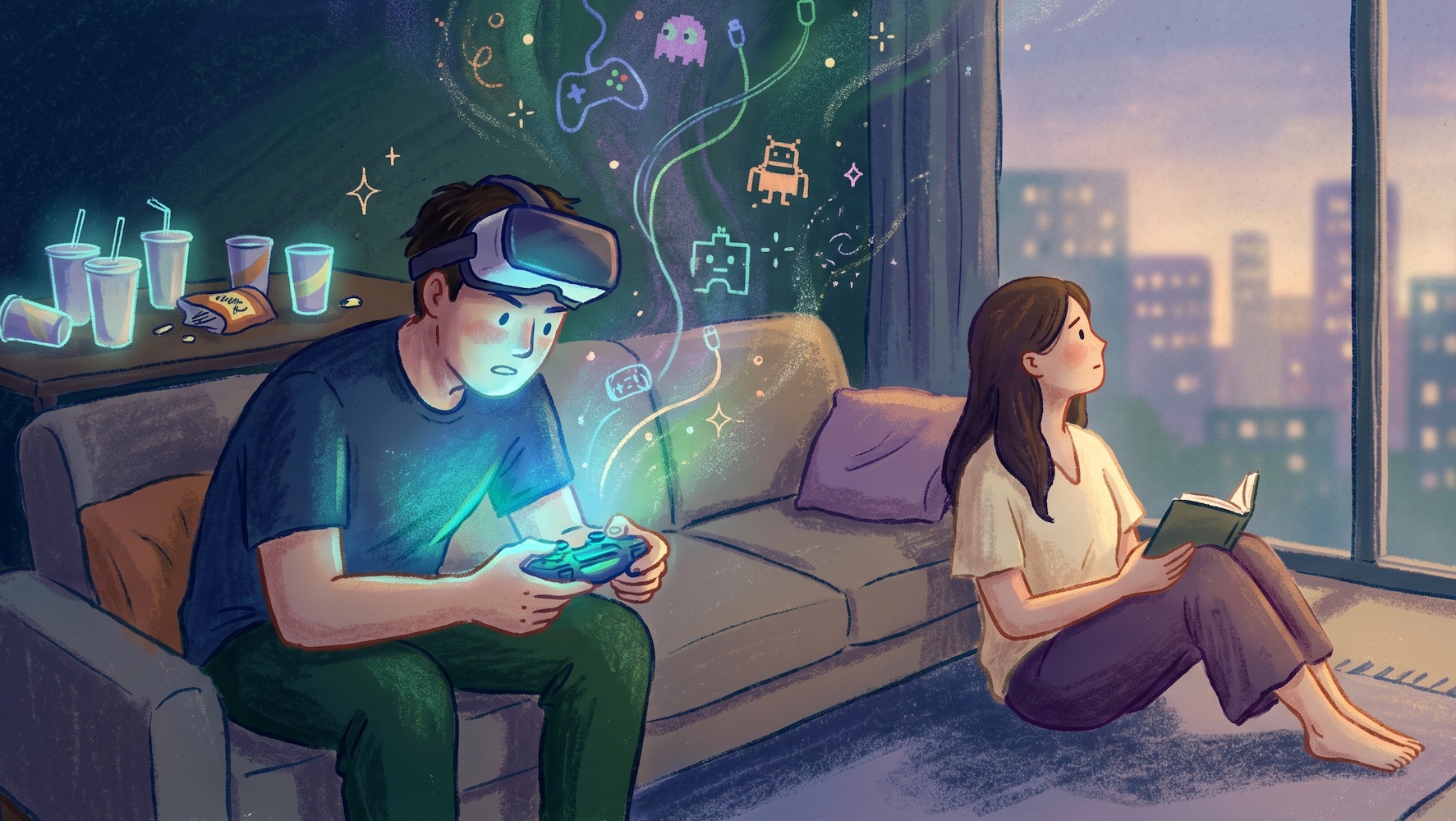
Dear Editor, I don't know who to turn to without feeling like I'm "shaming" our family. My husband is a high-flyer in a corporate job, but the moment he's home, he disappears. If it's not two bottles of wine to "decompress," it's gaming until 3 AM. He says it's the only way to cope with the suffocating work environment and the cost of our kids' fees. He's physically here, but mentally he's a ghost. I'm exhausted playing a single parent in a marriage.
The Heavy Price of the "Quiet Escape"
I hear the exhaustion in your words. Many successful professionals feel they must maintain a perfect exterior while their interior is crumbling. What your husband is doing isn't just "relaxing"; it is a form of dissociation. When the weight of being a provider becomes too heavy, the bottle or the screen becomes a sanctuary where no one asks for anything. However, while he thinks he is "offing" his brain, he is actually switching off his connection to the people who love him most.
To move forward, we have to stop viewing this as a "habit" and start seeing it as a maladaptive coping mechanism for chronic burnout. The perspective shift needed here is moving from "How do I make him stop?" to "How do we rebuild a life he doesn't feel the need to escape from?" This requires radical honesty and a collective look at the family's priorities versus the "Singaporean Dream."
Steps Toward Reclaiming Your Household
1. Initiate a "State of the Union" conversation
Pick a time when he is sober and hasn't started gaming. Instead of accusing him, use "I" statements. Tell him, "I feel lonely in this marriage," or "I miss my partner." Frame the addiction as an external enemy that is stealing him away from the family, rather than making him the villain. This reduces defensiveness and invites him to be on your team.
2. Audit the "Cost of Living" vs. "Quality of Life"
Sometimes, the pressure to maintain a certain lifestyle (the condo, the cars, the tuition) is exactly what fuels the need to escape. Sit down and look at your finances. Would a slightly more modest lifestyle allow him to take a less stressful role? If the "dream" is killing the dreamer, the dream needs to change.
3. Implement a "Digital and Drink-Free" sunset hour
Propose a strict one-hour block—perhaps during dinner or right after—where all devices are docked and no alcohol is served. This isn't about control; it's about re-establishing the habit of presence. Use this time for low-pressure connection, like a walk around the estate or simply talking about non-work topics.
4. Seek a dual-pathway intervention
Addiction in Singapore often carries a heavy stigma, but you need professional help. This involves two parts: a medical/counselling professional for his dependency (like NAMS), and a marriage therapist for the relationship. High-functioning addicts often only seek help when they realise their "functioning" status is a delusion.
5. Build your own support village
You cannot be his only anchor; you will drown. Reconnect with your own friends, join a support group for spouses of addicts, or see a counsellor yourself. When you stop centreing your entire existence around his moods and addictions, it often forces the addict to see the void they've created.
The "What Not To Do" Checklist
-
Do Not Enable the IllusionDon't make excuses to the kids or in-laws for why he is "tired" or "busy." When you cover up the consequences of his drinking or gaming, you remove his incentive to change.
-
Do Not Nag During the ActArguing with someone who is mid-game or three glasses in is a lost cause. It only reinforces their need to "tune you out" and leads to circular, toxic arguments.
-
Do Not Use the Kids as Negotiating ChipsAvoid saying "If you loved the kids, you'd stop." This triggers immense guilt, which in Singaporean culture usually leads to deeper withdrawal and more substance use to numbs that very guilt.
-
Do Not Sacrifice Your Own HealthDon't stay up late waiting for him to finish gaming or monitor his bottles. Your lack of sleep and rising cortisol won't fix him; it only ensures there are two burnt-out parents instead of one.
-
Do Not Expect a Linear RecoveryAddiction is a seesaw. There will be good weeks and sudden relapses. Do not fall into the trap of thinking one "dry" week means the problem is solved forever.
A Necessary Reality Check
Here is the hard truth: You can provide every resource, all the love in the world, and a golden bridge to recovery, but he has to be the one to cross it. In Singapore, we are conditioned to believe that if we work hard enough at a problem, we can "fix" it. But you cannot "out-work" someone else's addiction. If he continues to prioritise his escape over his family despite your interventions, you will eventually have to ask yourself how long you are willing to live with a ghost. Your children deserve to see what a healthy, present boundary looks like—even if that means you have to draw a line in the sand for your own survival.
National Support Resources
-
Located at IMH, they provide professional assessment and treatment for both alcohol and gaming addictions.
-
An addiction recovery centre that offers counselling and support groups for addicts and their families.
-
A fellowship of people sharing their experience to solve their common problem and help others recover from alcoholism.
-
Specialises in intervention for cyber-wellness and excessive gaming issues within the family unit.
-
A registered charity providing professional counselling for marital and family-related stressors.