
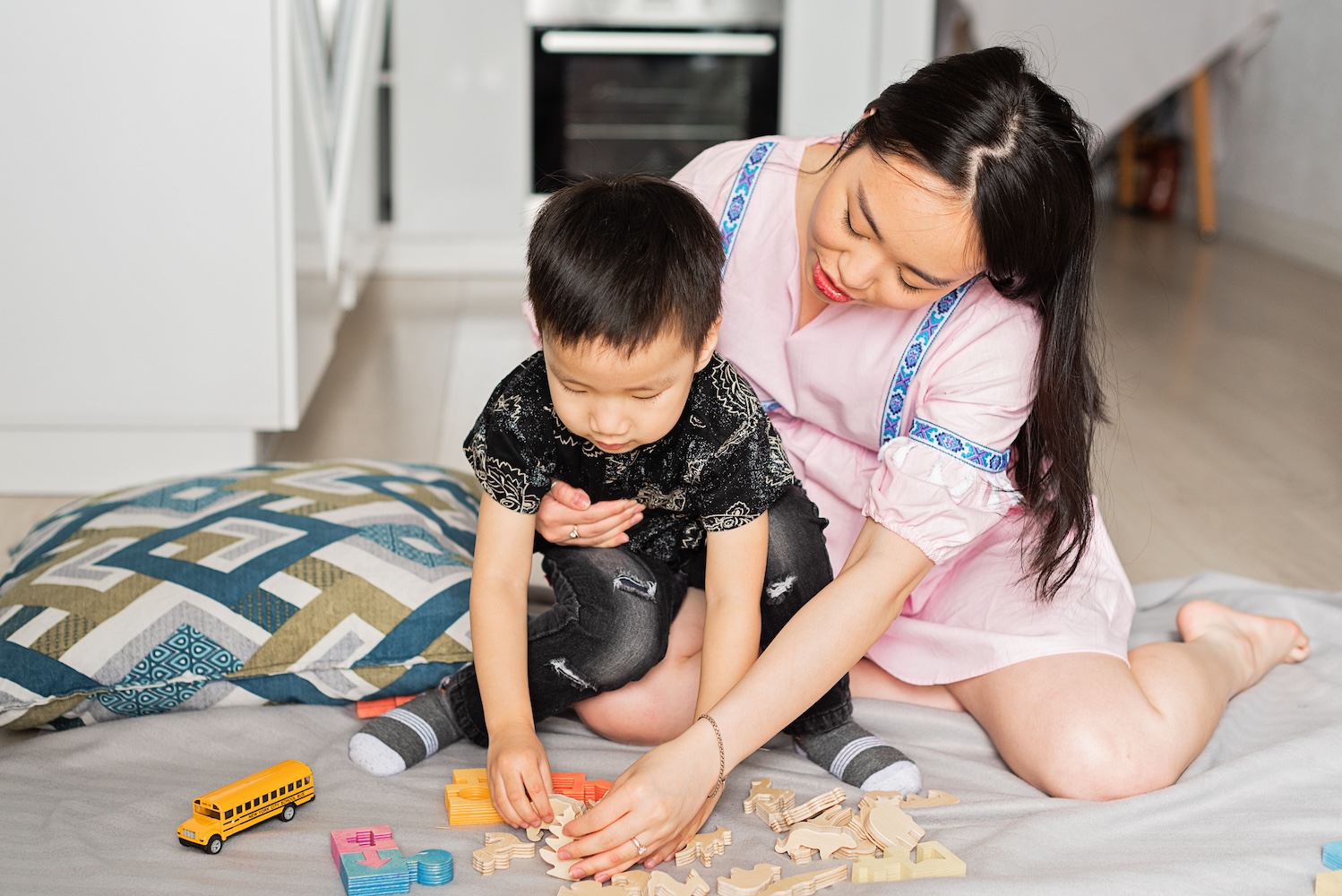
It a Saturday evening, and your living room is quiet except for the sound of plastic blocks clacking. Your only child is sitting on the play mat, building a fortress, while your domestic helper sits opposite, patiently handing over the pieces on command. You look up from your laptop, feel a wave of relief that your child is entertained, and go back to your work emails.
But let's look closer at that picture. Your helper is smiling and agreeing to every rule your seven-year-old invents, because that is her job. This is not companionship; it is a transactional arrangement that eliminates the exact social friction your child needs to grow.
The Helper Bubble, and Your Kid is In It.
Amanda, a 44-year-old mother of two, saw this unfold firsthand before having her second child. "We thought having one child with a helper meant giving her every advantage. But by primary school, she treated our helper like a servant, demanding things without a shred of gratitude. We didn't build a confident leader; we accidentally raised a household dictator who is lost when classmates refuse to bow to her wishes."
When we rely on hired help to be our child's primary playmate, we create an artificial ecosystem that sets them up for a rude awakening.

-
The compliance cushion stunts growth.Helpers are paid to maintain harmony and follow instructions. Your child never learns to negotiate, share, or compromise when their playmate always gives in.
This creates an artificial environment where the child is always the boss.
-
Transactional relationships lack emotional depth.A domestic helper provides excellent logistical support but cannot offer equal peer connection. The bond is inherently asymmetrical because of employment dynamics.
Your child misses out on learning genuine empathy through lateral relationships.
-
The playground shock is inevitable.When an only child enters primary school, the bubble bursts instantly. Classmates will not yield to their demands like a helper does.
The sudden exposure to real social competition can cause significant anxiety and isolation.
-
Parents overcompensate with material rewards.To alleviate the guilt of leaving an only child with a helper, parents often buy more toys or expensive tech. This fuels a consumerist mindset instead of fostering genuine emotional resilience.
The material goods fill a void that requires human connection.
-
The single-child pressure cooks slowly.Without siblings to share the weight of parental expectations, the sole child carries everything alone. Every school grade and future milestone is scrutinised intensely.
This concentration of attention often breeds intense performance anxiety as they grow.
Multiplying Resilience Instead of Dividing Resources
Many of us view family planning through the lens of scarcity. We calculate the cost of tuition, university funds, and housing upgrades, assuming a second child simply halves what we can offer.
But emotional resilience does not work like a bank account. By focusing entirely on material KPIs, we overlook the immense developmental asset that a sibling provides naturally.
A sibling is not another mouth to feed, but a lifelong partner who teaches your child how to share the world.
When children grow up together, they learn to navigate conflict, build empathy, and manage sibling rivalry without parental intervention. These are raw life skills that no expensive enrichment class or helper can ever replicate.
Steps Toward Organic Connection
David, a father of two living in a Jurong West, experienced this emotional relief. "We were terrified of the financial strain of a second, especially with soaring enrichment fees. But once the sibling dynamic took over, they naturally stepped away from our helper's shadow. We actually cancelled expensive weekend holiday camps because they genuinely prefer staying home and inventing games together."

If you want to break the cycle of outsourced connection, you can start making small adjustments to your household dynamics today.
-
Redirect your helper's core boundaries.Shift your domestic helper's responsibilities away from being a play companion. Direct her focus entirely toward household maintenance and meal preparation.
This forces your child to seek independent play or peer interaction.
-
Enforce structured independent play daily.Set aside an hour where your child must play without adult or helper intervention. Let them experience boredom, which triggers creative problem-solving.
This builds self-reliance and cognitive independence over time.
-
Create neighborhood mixed-age playgroups.Organise regular downstairs playground sessions with surrounding blocks or estate neighbours. Allow the children to play freely without parental interference.
This mimics the organic peer socialisation that siblings naturally experience.
-
Prioritise horizontal emotional development opportunities.Encourage activities where your child must cooperate with peers of a similar age. Favour community sports or group games over individualised tuition or solitary tablet time.
This helps bridge the gap left by outsourcing connection.
-
Normalise household conflicts without intervening.When your child faces minor disagreements during play dates, step back. Allow them to resolve disputes independently instead of letting an adult fix it.
This builds real-world negotiation skills essential for the future.
Choosing Abundance with #IWantMoreSG
It is entirely natural to look at the rising costs around us and choose the path that feels safe. We want to give our single child every possible advantage, from the best primary school registration slots to pristine living spaces.
But perhaps we need to redefine what it means to want the best for our families. True abundance is not found in a larger house or an endless cycle of premium enrichment classes.
When we embrace the spirit of #IWantMoreSG, we are choosing to want more laughter in the hallways, more shared childhood memories, and more deep-rooted emotional security for our children. It is about trading the paralysis of fear for the lasting wealth of a connected family life.