
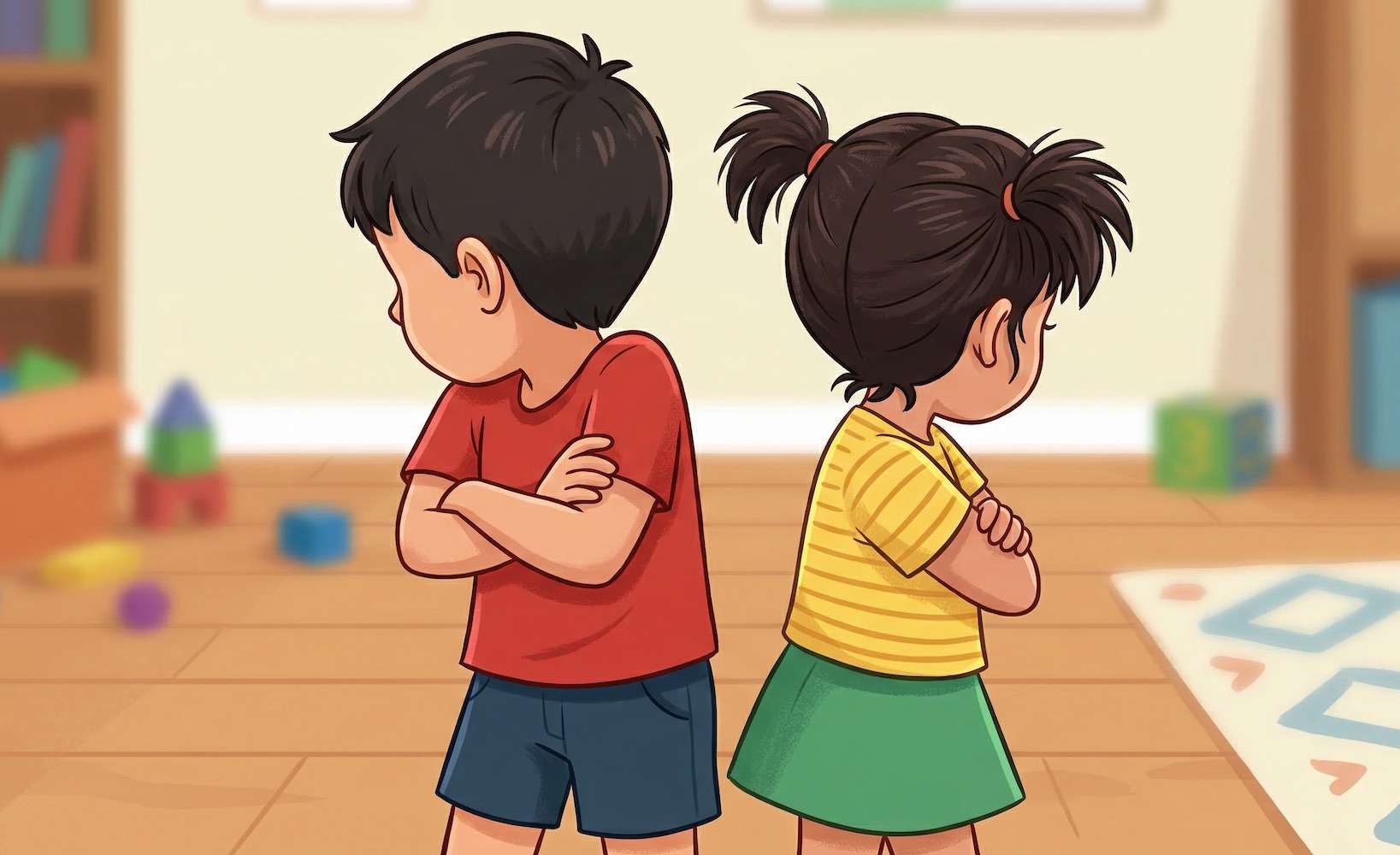
I see you. Truly. It is exhausting when the air in your home feels heavy with constant bickering over things that seem so small to us. You just want a bit of peace after a long day of work and school runs, yet here we are, measuring chocolate milk with a ruler. Please know that your frustration is normal, and your desire for a quiet home is a beautiful thing to strive for.
What they are actually looking for when they scream
The sticky fingers, the high-pitched "That's mine!", and the sudden tears over a seat near the window often have nothing to do with the object itself. I've heard from mums that their kids can turn a simple trip in the lift into a competitive sport. Often, children use these tiny physical things to test their place in the world. To a six-year-old, the bigger half of a snack isn't just about hunger; it is a visible, edible sign of being "first" or "more loved" in that specific moment.
Sometimes, it is just about control. Their little lives are managed by us from the moment they wake up until they hit the pillow. Choosing the "best" chair is one of the few ways they can exert their own will. Children use these interactions to understand boundaries. They are pushing against each other to see where they end and where their sibling begins.
The hidden lesson behind the loudest tantrums
A pile of crumpled cushions and the smell of spilled juice on the rug. That could be your Tuesday afternoon. Instead of seeing a "bad" behaviour that needs to be crushed, try to see a very messy, very loud classroom. They are learning how to negotiate, how to speak up for themselves, and how to handle the bitter taste of disappointment. It is a rough draft of the skills they will need when they enter the workforce or start their own families one day.
If they never fought over a chair now, they might not know how to stand their ground later. We aren't just referees; we are coaches for a lifelong relationship. When we stop seeing the bickering as a personal failure of our parenting, the heat in the room drops by a few degrees. They aren't trying to give you a headache. They are just trying to figure out how to live with another human being who shares their space and their snacks.

Simple shifts that might actually bring some peace
1. The "one cuts, one chooses" rule
This is a classic for a reason. If they are fighting over the bigger half of a waffle, let one child do the cutting and the other child choose which piece they want. It is a bit of genius because the one cutting will be incredibly precise to make sure both halves are exactly the same. They suddenly become very focused on being fair. It takes the "favouritism" out of your hands and puts the responsibility on them.
2. Create a "Special Chair" rotation
If there is one specific spot that causes drama, make a visible chart. Post it on the fridge. Even a simple post-it note saying "Monday: Abbie, Tuesday: Ben" can stop an argument before it starts. Children love the predictability of a system. When the rules are set in stone on the fridge, they don't have to fight you or each other for it. They just have to check the date.
3. Use a physical timer for everything
I keep a small sand timer from a toy set in my kitchen drawer. If they both want the "good" spot on the sofa, the timer decides when the turn is over. The silence that follows a ticking clock is much better than the silence that follows a shouting match. It shifts the "bad guy" role from you to the timer. The timer is impartial. The timer doesn't have a favourite child.
4. Catch them being kind
We often only jump in when things go wrong. Try the opposite. Last Wednesday, I saw my son hand the bigger piece of a biscuit to his sister without being asked. I didn't make a huge scene, but I made sure to mention it later when we were walking to the pavement outside our block. A quiet "I saw how kind you were" goes a lot further than "Stop fighting!" does. It builds a new identity for them as a "giver" rather than a "taker."
To the parents who feel like they are constantly losing the battle
It is okay to feel tired. Your home doesn't have to be a temple of perfect peace every hour of the day. Most of the time, the loudest houses are the ones where the most learning is happening. When the screaming starts again tomorrow, and it will, take a deep breath before you move. Look at the two of them—the messy hair, the stubborn faces, the absolute conviction that a chair matters more than anything else in the world—and ask yourself: If I weren't here to fix this, how would they eventually solve it on their own?